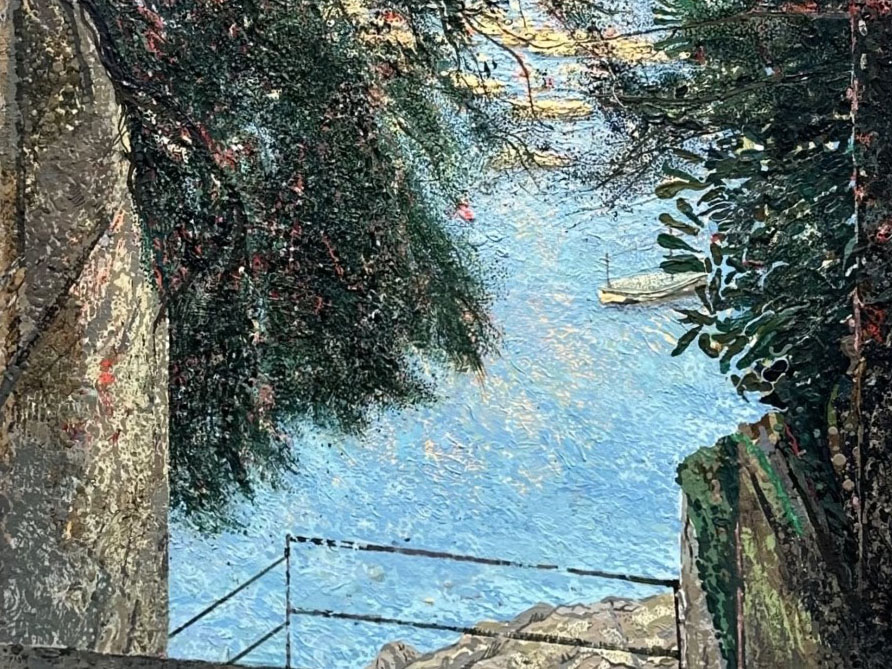
Landscape & Composition
Drawing / Oil / Painting / Landscape - Materials included
We haven’t scheduled this course yet. Please email us to register your interest for future availability.
Register InterestCourse details
Learn drawing and painting techniques to capture the landscape in oil, in a way that deepens and enriches your individual response.
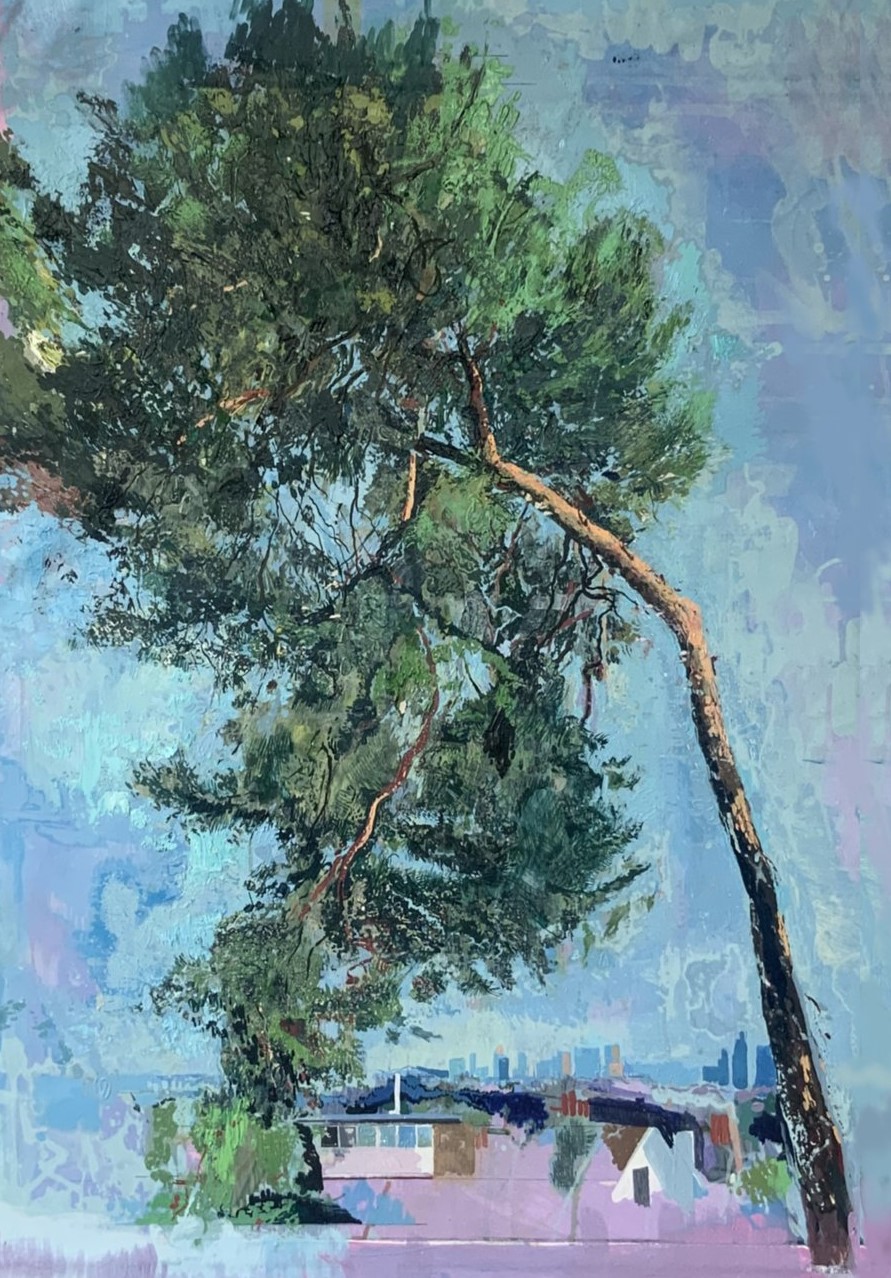
This landscape painting course introduces the work and distinctive painting style of Julian Vilarrubi, who studied at the Royal Academy Schools in London, where he was awarded the Richard Ford Award for travel in Spain. Over the years, Julian has developed a rich body of landscape paintings inspired by his travels across Europe and Russia.
‘Landscape & Composition’ provides a comprehensive learning experience with drawing being a fundamental starting point of the creative journey. There will be an emphasis on using the formal properties of picture making in combination with techniques such as collage and memory, to create a series of outcomes that embody a response to the local landscape.
Time will be spent outside in the local landscape gathering visual references, making colour notes and painting en plein air. Back in the studio, Julian will demonstrate techniques for colour mixing and paint application, including how to create impasto effects with oil paint. He will also discuss how to prepare a composition by combining elements effectively and addressing any compositional issues.
Julian will be referencing artists such as Patrick Heron, Pierre Bonnard, Gustav Klimt, Georges Seurat, Vincent Van Gogh, amongst others during the course, and sharing observations and insights into the methods these artists used to depict the landscape in their work.
You will gain techniques for transferring information, such as squaring-up and scaling and learn how to establish mood and atmosphere by employing tone and colour with acrylic grounds and oil paints. By the end of the course, you will have accomplished a series of outcomes that will pave the way for further opportunities for growth and advancement.
Day to day plan
This is a rough indication of what to expect over the course. However sometimes the structure of the days may alter depending on the nature of the group and the weather conditions.
Day 1
There will be a visual introduction to the week with contextual examples to demonstrate how artists have used compositional ideas in their landscapes. Julian will be describing his own variety of approaches to creating and developing a composition.
In the afternoon you will be in the landscape (weather permitting) at different locations, working directly through drawing and collage to arrive at a number of studies that can be developed further over the following two days.
In addition, techniques for transferring visual information from sketches and drawings to painting surfaces will be demonstrated.
Day 2
Julian will introduce and demonstrate a key colour mixing exercise, the essentials of oil painting covering application techniques, the effects of different surfaces and of coloured grounds. Techniques such as palette knife painting and impasto will be discussed.
Different oil painting approaches will be introduced and we will go out and implement these ideas directly in the local landscape in response to the previous days compositional studies.
In the afternoon you will be working through possibilities in painting, perhaps in a series of works, layering and reworking in order to push your ideas and boundaries into new directions.
Day 3
The final day will be focusing on exploiting ideas and approaches that have emerged over the previous two days. We will be working on a larger scale in oils en plein air from your own chosen view either on a single work or in a small series.
The day will end with a group summary and round up of the work. We will be discussing your thoughts, thinking about how your response to the landscape and your handling of the material has evolved whilst also considering new avenues in order to extend your work in the future.
What you will learn
- An understanding of oil painting materials and techniques
- Editing visual information for use in painting
- Combining elements to create a composition through collage and juxtaposition
- How to measure, understand scaling and transferring information e.g. squaring-up
- Creating mood, drama and atmosphere through the use of tone and colour
- Exploring painting methods of application and mark-making
- Working in a series
- Choosing appropriate materials and methods to explore a particular scenario or idea.
Who would this course suit?
This course would suit anyone at all levels who wants to extend their skills in painting and drawing whilst building their confidence in visualising, setting up painting possibilities and acting upon them to produce a series of outcomes that ideally would offer up further opportunities for development.
Taught by
What to Bring
Our studios are fully equipped and we provide you with all the materials you need for your course. However, if you have a favourite set of brushes or any specialist materials that you would prefer to use, please bring them with you.
Timings and Breaks
The first day starts at 10am and finishes at 4.30pm, please aim to arrive ten to fifteen minutes before the start time.
All course days after that start at 9.30am and finish at 4pm and there will be an hour for lunch. There are plenty of nearby places to eat and we will serve tea and coffee at break times during the day.
FAQs
Art Courses
Do I need any previous art experience?
Not always. We offer courses for all levels, including complete beginners, intermediate students and more experienced artists. You can look for the experience level listed on the individual course page to find the most suitable option for you. If you need any guidance on what course might suit you best, contact on our friendly team on 01736 797180 and they will be able to help.
Art Courses in St Ives
How do I log in to my online account?
To log in to your account, please follow these steps:
- Go to our website: www.schoolofpainting.co.uk
- Click on the ‘Log in’ button (usually found near the top right of the page)
- Enter the email address and you used when booking
- Click “Log in” to access your account
Once logged in, you’ll be able to view your bookings, outstanding payments, online courses and any relevant account information.
If you’ve forgotten your password, simply click ‘Forgot password?’ on the login page and follow the instructions to reset it.
If you have any trouble accessing your account, please email us and we’ll be happy to help.
Do you offer art classes for children and teenagers?
Yes. Our Young Artists Programme includes art workshops for children and teenagers, with sessions designed for different age groups. During the summer, we also run creative workshops for children aged 7-13.
How large are your art classes?
Our studio courses are taught in small groups of around 10 to 12 people, allowing tutors to provide individual guidance alongside group demonstrations and discussions.
What is included in an art course?
Course fees include professional tuition from a practising artist and use of the School’s studio facilities. Materials and equipment are all included in our in person courses, workshops and life drawing sessions – so you can just turn up and get started. Teas and coffees are also provided throughout the day.
Can I attend an art course on my own?
Absolutely. Many students come to St Ives School of Painting independently. Courses offer a welcoming and sociable environment, with plenty of opportunities to meet other people who share an interest in making and learning.
Do you offer beginner painting courses?
Yes. Our programme includes beginner-friendly painting courses covering materials such as oils, acrylics and watercolours. These courses introduce you to essential tools and techniques while giving you plenty of time to practise and explore your own ideas.
How do I choose the right art course?
Start by considering how you would like to work. You may want to learn a particular medium, improve a skill such as drawing or colour mixing, explore a subject such as landscape or still life, or develop a more personal approach. Each course page explains the content, materials, level and teaching approach to help you decide. Our friendly, helpful team are always available to help further.
Please call us on 01736 797180 to discuss your options or email [email protected].
Who teaches your art courses?
Our courses are led by practising artists – including Jill Eisele, Alice Mumford, Iona Sanders and Neil Canning – all with extensive knowledge of their chosen subjects and materials. Each tutor brings their own artistic experience, working methods and approach to teaching, giving students the opportunity to experience a wide range of ideas and techniques.
How do I get my work home?
Tutors have special techniques for transporting oil paintings and for our 3 day courses we will give you a plastic folder with a handle. These are also available to purchase for £3.50 or do bring a portfolio.
Please note: For the course Bigger, Bolder, Braver with Boo Mallinson, we will provide a large A1 size plastic folder for your work but please consider how you will be able to transport the larger canvases home safely before signing up for the course as we will not be able to store large paintings in the studio. On this course you will be painting on a 50cms x 50cms and a 1m x 1m canvas alongside smaller pieces.
For international students we are happy to arrange transportation of your work back home, postal costs will be borne by you.
What times do courses run?
Most of our courses start at 10am and end at 4.30pm on the first day. Subsequent days we start at 9.30am ending at 4pm.
Short workshops start at 10am in the Summer and 9.30am/ 1.30pm during September festival
In Person Courses
What art courses do you offer in St Ives?
We offer a varied programme of art courses in St Ives, including painting, drawing, printmaking, mixed media and life drawing. You can choose from one-day workshops, short summer sessions and more immersive three- and four-day studio courses. We also offer longer development courses for those looking to take their practice to the next level.
What do I need to bring?
You don’t need to bring anything with you unless we specify beforehand. All materials, aprons and tools are provided, however some people do like to bring along their favourite set of brushes or sketchbooks.
What do I do for lunch?
Courses allow an hour’s break for lunch and there are numerous places nearby or you are welcome to bring a packed lunch into the studio.
Can I bring my dog?
The studios are busy places with lots of equipment and not suitable for bringing a pet dog. We can accommodate assistance dogs with prior notice so we can make suitable adjustments. If you wish to bring an assistance dog please call 01736 797180 or email [email protected]
Choosing an Art Course
Do you run life drawing classes in St Ives?
Yes. We hold regular life drawing sessions in St Ives, including Thursday evening and Saturday morning classes. These welcoming, tutored sessions are open to a range of experience levels and provide an opportunity to practise drawing from a life model. Our life drawing sessions are held just a 5 minute walk from our studios at The Island Centre.
Do you offer art courses for adults?
Yes. We run art classes and courses for adults throughout the year, from accessible introductory workshops to more intensive courses for people looking to deepen their creative practice.
What types of painting can I learn?
Our courses cover a wide range of approaches, including oil painting, acrylic painting, watercolour, gouache, landscape painting, still life, portraiture and abstraction. We also offer courses exploring colour, composition, mark-making and creative confidence.
You might also like...
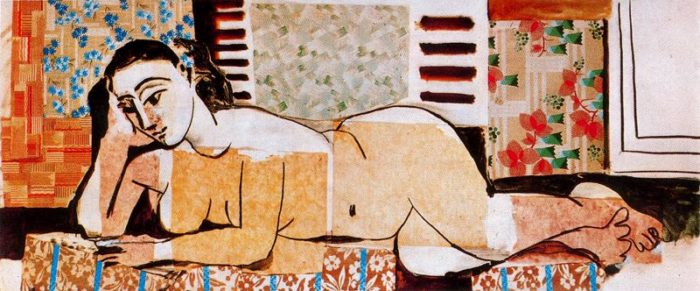
Figure - Picasso - Body in Space
Fri 22 Sep 2028 - 2 hours
Ilker Cinarel
Join artist Ilker Cinarel from our studio in St Ives for this Picasso-inspired life drawing webinar.
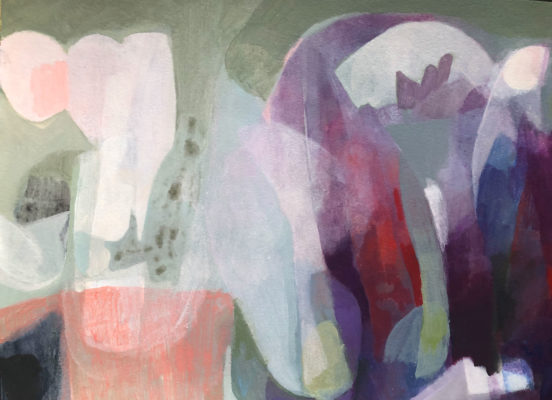
Harnessing Chance in Painting
Fri 22 - Sun 24 Oct 2027 - 3 days
Kate Southworth
Whether you are a beginner or have a creative practice, this course liberates you from expectations. Explore the techniques of parsemage and automatic drawing to create exquisite paintings in a free and unself-conscious way.
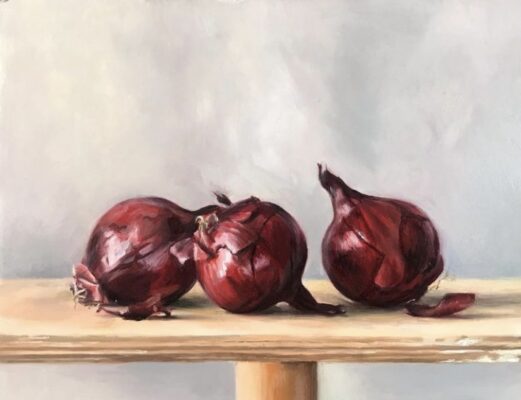
Painting Still Life in Oils
Mon 16 - Wed 18 Nov - 3 days
Emily Roberts
Craft a striking layered oil painting that evokes depth and volume through the masterful use of texture, colour, and chiaroscuro.
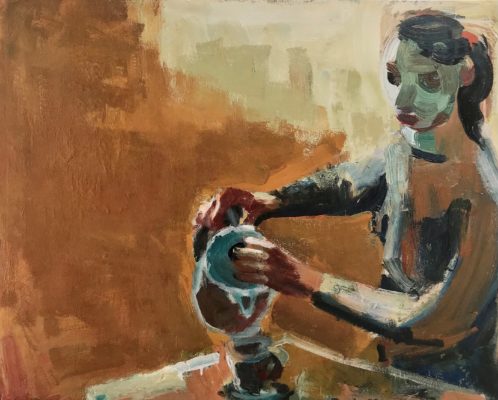
Figure - Shape, Colour + Texture
Fri 22 Sep 2028 - 2 hours
Gary Long
Join us for this two hour recording of a figure class inspired by the Bay Area Movement artist David Park. Broadcast from our studio in St Ives with a clothed model.
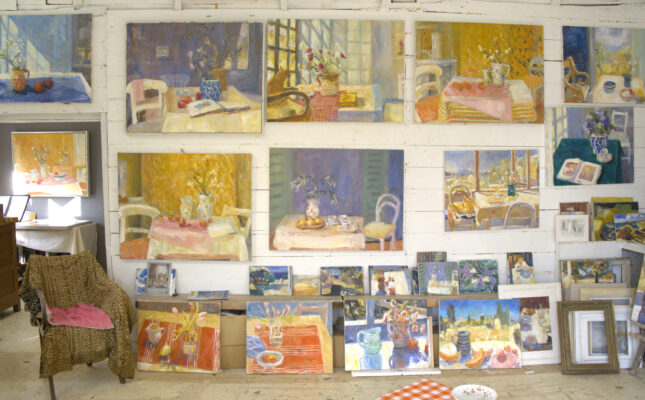
Unpicking Paintings (rec)
Fri 22 Sep 2028 - 10 part
Alice Mumford
Do you sometimes wonder why a composition works in some paintings and not so well in others? Join Alice Mumford to investigate the common themes that underpin paintings from different eras in Western Art and how this can help your work.
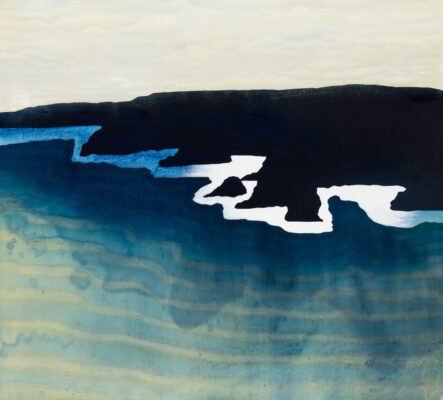
Contemporary Landscape
Mon 22 - Wed 24 Mar 2027 - 3 days
Kerry Harding
Learn to use diverse techniques and innovative painting exercises to explore your own personal approach to landscape painting today. We will look at a range of contemporary landscape painters and how they use paint to explore their individuality within this genre.
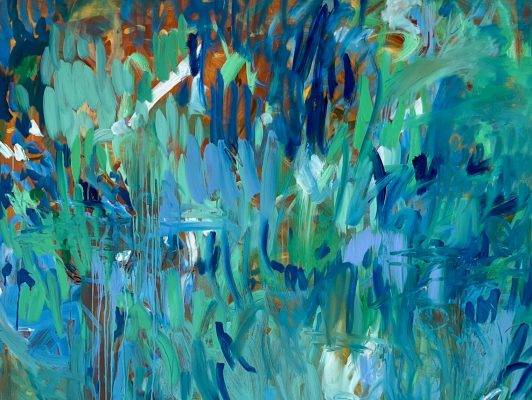
Approaching Intuitive Painting
Fri 22 Sep 2028 - 90 mins
Caroline Robinson
Join large-scale painter Caroline Robinson as she explores her practice of painting intuitively.