What You Can Learn From Kate Bryan’s 'How to Art'
At St Ives School of Painting, we’ve been welcoming artists of all levels since 1938 – from those who’ve studied for years to those discovering the joy of making art for the first time.
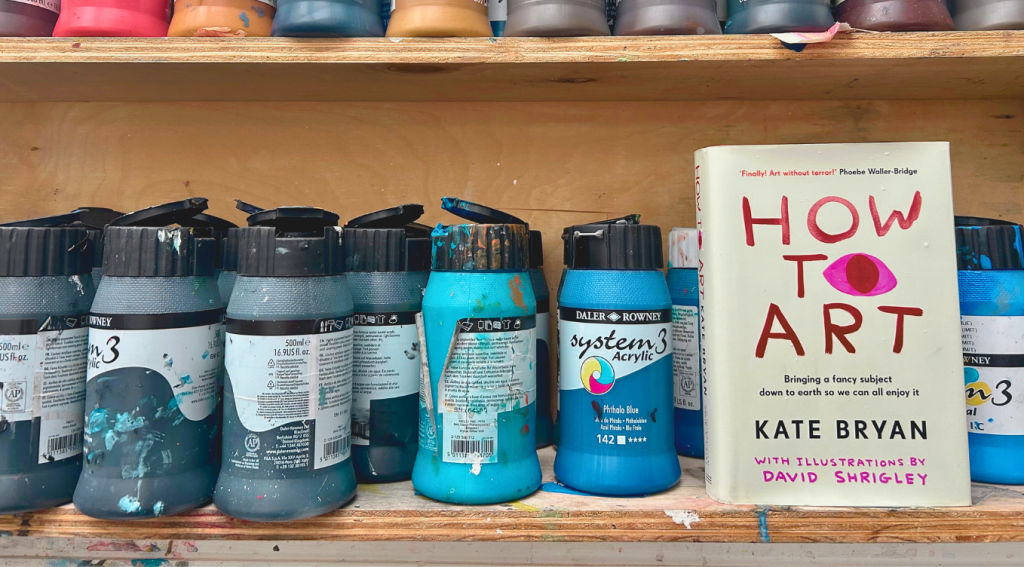
That’s why Kate Bryan’s brilliant new book, How to Art, feels like such a kindred spirit to what we do. It’s warm, funny, and gloriously down-to-earth. It’s about finding your own way into the art world – whether that means picking up a pencil, wandering through a gallery, or hanging a print you love on your wall.
And we’ll admit we were extra proud (and a bit thrilled!) to see that Kate mentions us in her book, inviting readers to come and join us here in St Ives for one of our immersive workshops or longer studio courses. Because that’s exactly what ‘How to Art’ is about: making art part of your life – not a distant, intimidating thing, but something you can do, enjoy, and live with.
Below, we’ve shared key takeaways from Kate’s book – ideas that we think every artist, beginner or expert, can hold onto.
9 Things How To Art Reminds You (and Us) About Art
1) Art is for everybody
At the heart of How to Art is one clear message: “Art is universal and it does not discriminate.” Throughout the book, we’re reminded that enjoying, creating, or taking pleasure in art doesn’t require formal study or a professional career – it simply requires curiosity and openness.
After almost ninety years of teaching, we can wholeheartedly stand behind that. Over the decades, we’ve welcomed thousands of people through our studio doors – from every background, age, and experience level. That diversity is what makes art so special. As Kate beautifully puts it, “art is intrinsic in all of us.”
We should be able to access and enjoy art as easily as we do music or food, without first obtaining some sort of certificate of authority.
Kate Bryan
2) It’s okay if you’ve never stepped foot in a gallery
How To Art opens the door to every kind of space – from national museums and the world’s most famous auction houses, to open artist studios and local art fairs.
Kate’s advice is simple: you don’t need insider knowledge to start exploring. With just a little curiosity, you’ll discover there’s art waiting to be found almost everywhere – close to home or halfway across the world. And maybe most importantly, when you do come across it, you might not like everything you see…
3) We must trust our instincts as viewers of art
Standing in front of a painting and thinking, “I’m not sure what I’m looking at,” is perfectly fine – in fact, that’s often where the magic begins. We live in a time when “traditional art” is just one of many forms; marble and oil paint now share space with video, installation, digital work, performance, and so much more. Today, almost anything can be art.
The real question is simple: how does it make you feel?
So Kate offers four key questions to help you connect with what you’re seeing – practical prompts that guide you back to your own instinct, rather than someone else’s interpretation.
4) Everyone made art as a child
Whenever you feel that you don’t quite belong in the art world – whether you’re standing in a museum, sitting in a studio, or stepping into a life drawing class – it helps to remember that “we were all once connected by childhood creativity.”
We’re born with a need to express ourselves – mark-making is one of the earliest and most natural ways we do this. Every child instinctively draws, paints, or builds – before words, before rules, before fear of “getting it wrong.” As Picasso famously said:
Every child is an artist. The problem is how to remain as an artist once we grow up.
5) Art classes are open to everyone
When people think of art courses, two common misconceptions often come up:
- That they’re only designed to make you better at making art.
- That they’re mainly for experienced or professional artists.
But let’s break down these myths. The real value of joining an art class comes from the chance to learn from practising artists, to share ideas with peers, and to build a supportive community of people who love making art as much as you do.
Art classes aren’t about conformity or competition. They’re about exploration, growth, and discovering your own unique voice. Whether you’re a complete beginner or a professional artist, there’s always something new to learn – and someone new to learn from.
I think they (art courses) are among the most valuable ways to develop your art-making: they are fun, take you away from your regular life for a length of time, and allow you to make real-world connections with fellow art-lovers.
Kate Bryan
6) There will always be doubt
It’s completely natural to second-guess yourself when making art – every artist experiences it. The key is learning to work with that doubt rather than letting it hold you back.
Embracing “happy accidents,” leaning into mistakes, and allowing yourself to experiment are all part of the process. By doing so, you free your mind and your work, helping you discover what you truly enjoy creating and which processes resonate with you.
It doesn’t have to be good, it just has to be made.
7) Art is scientifically proven to make you feel better
We should often remind ourselves that making and engaging with art isn’t just enjoyable – it’s genuinely good for us. Science backs this up: creative activity activates different neural pathways in the brain, improving focus, reducing stress, and helping us think more openly and imaginatively.
When we make art, we’re encouraged to be present – absorbed in whatever we might be making. That sense of flow is deeply calming and restorative. It’s no coincidence that during the COVID-19 lockdowns, so many people instinctively turned to drawing, painting, or crafting. In an uncertain world, art offered a quiet space to express and to find hope. As Kate writes, it isn’t just good for us – it’s a fundamental part of being human.
8) Setting goals or some structure can help
Many of our students often share that they feel creatively stuck or struggle to stay motivated. It’s something every artist experiences at some point.
How to Art offers two valuable pieces of advice that strongly resonate with us, and that we hold in mind when curating our annual programme of courses. Firstly, it’s that as humans, our lives are busy and full of distraction – yet as creatives, we crave space to make. Setting yourself a framework can help: plan ahead, mark out workshops you’d like to join, apply for residencies, or set goals for exhibitions and projects.
These anchors will shape your creative journey, helping you stay focused, inspired, and accountable – without losing the joy of spontaneous making.
And secondly…
9) We can’t be creative all the time
“Creativity is not a tap that can be turned on and off.” Some days (or even weeks and months) there will be a sense of disconnect. And that’s okay.
Accepting that you won’t always be able to create what you hoped for is part of the process. Sometimes, when you do try, something entirely unexpected emerges – and that surprise can be even better than what you imagined.
The key is to enjoy the journey: the ebb and flow of your own creative cycle. Get to know it, trust it, and give yourself permission to rest when you need to.
In the end, art belongs to everyone
Kate Bryan’s How to Art beautifully echoes what we’ve always believed at St Ives School of Painting: that art is for everyone. Whether you’re discovering it for the first time or returning after years away, creativity has a place in every life.
By sharing knowledge in such a relatable and accessible way, Kate reminds us that making art isn’t about perfection, status, or expertise, it’s about connection, curiosity, and joy. Our hope is that by sharing ideas like these in such an open and relatable way, more people will feel confident to explore their creativity – whatever that looks like for them.
You can buy a copy of Kate Bryan’s book, illustrated by David Shrigley, on Amazon or listen on Audible. It’s also available from Waterstones.
If you’re feeling inspired, here are few ways to keep that momentum going:
- Browse our 2026 studio courses and join us for a creative escape in St Ives
- Take a look at our latest online courses and series, so you can start creating from the comfort of your own home
- You can gain inspiration and ideas through our How To Series, short exercises taken from our longer online courses, available now on YouTube
11/11/2025
Share on
Related Stories
Your Monthly Roundup: December
A monthly round up of the latest news, insights and events. Sign up to our newsletter to receive this update straight to your inbox!
Your Monthly Roundup: August
A monthly round up of the latest news, insights and events. Sign up to our newsletter to receive this update straight to your inbox!
Peter Lanyon: Flight, Landscape, + the Spirit of St Ives
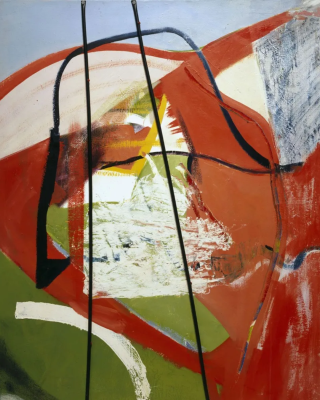
Few British artists are as inseparable from place as Peter Lanyon. His art is not just inspired by Cornwall – it moves through it, shaped by wind, cliffs, sea, and lived experience. Nowhere is this connection more felt than in St Ives, the artistic community that became both his home and the centre of his...