In Conversation: Lesley Plumridge
We’re pleased to welcome artist Lesley Plumridge to our team of artist tutors for 2026.
Based at the creative hub of Krowji in Redruth, Lesley is a mixed media designer and maker whose work thrives on experimentation, curiosity, and play. A graduate of Falmouth University (BA First Class Honours in Textile Design, 2005), her practice blends collage, Gelli printing, painting, and stitch – merging hand-made processes with digital tools like Adobe Illustrator.
Her tactile, layered works evolve from physical experimentation into contemporary stationery and textile designs – bridging the gap between traditional craft and modern design.
We caught up with Lesley ahead of her first studio course at St Ives School of Painting, taking place in May.
How would you describe your artistic style to someone encountering your work for the first time?
I would describe my artistic style as experimental; I try to adopt a ‘What if’ approach within my work and this leads to finding new and exciting ways to explore.
Was there a defining moment when you realised the direction your practice would take?
My studies indicated that I like to work with printing, especially on fabric and this led to my choice of degree, but I love to experiment trying different mediums and art forms that continue to inform my work.
Artistic Influences
Lesley is particularly inspired by Robert Rauschenberg, whose approach to layering and combining materials continues to resonate in her work.
She also draws inspiration from artists such as:
- Jean-Michel Basquiat
- Peter Lanyon
- Paul Klee
- Anselm Kiefer
Each of these influences reflects her interest in texture, abstraction, and expressive mark-making.
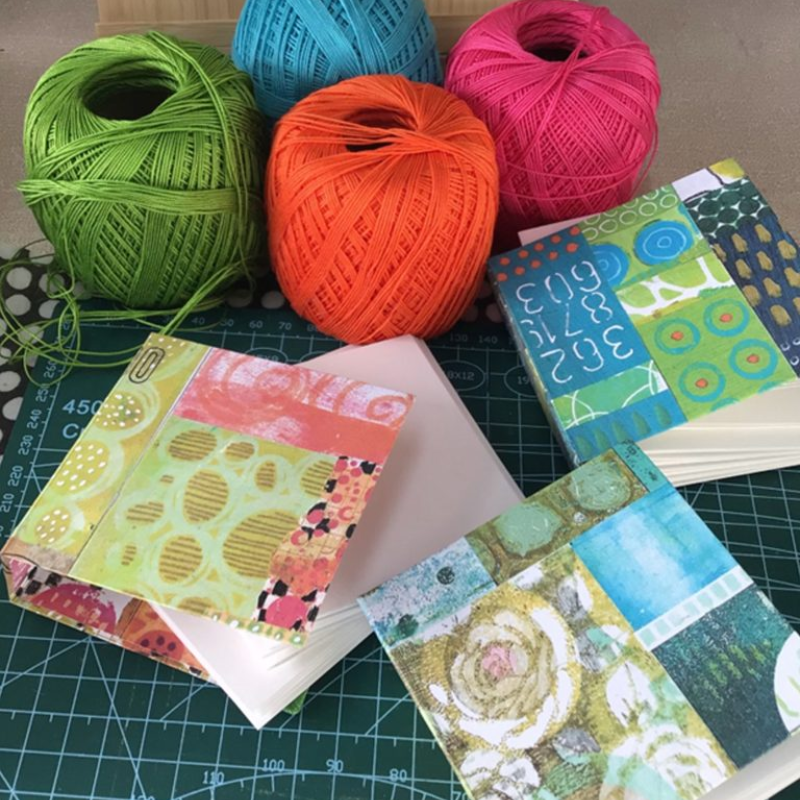
You use techniques like Gelli printing, collage, and stitch – how do you decide which processes to combine in a piece? Do you usually start with a clear idea, or does the work evolve organically as you experiment with materials?
I never really start with a clear idea, I like to collect images, motifs and textures and then then play with them to create something that works. Sometimes I may know that I want to end up with, say a book, but that is about as detailed as it gets, the rest comes organically.
I love showing students new techniques and processes and then helping them to incorporate them in their own way – and develop them into their creative practices.
Lesley
Your course emphasises experimentation and play – how important is playfulness in your own practice?
Play and experimentation is essential to my practice; discoveries are made when you leave behind the idea of a finished piece and just adopt the idea of anything goes.
Many of your techniques use accessible, everyday materials – why is that important to you?
When I left University, I no longer had access to all the equipment that I used there and so I had to find my way with what was around me and what was accessible. I think it’s important that people don’t have to think they need expensive equipment to create good work.
How do you approach “mistakes” in your work – are they something to correct or something to build on?
I love mistakes, that’s how you learn. I never correct them; I just use them and feel my work is much more human because of that.
Do you have any rituals or habits that help you get into a creative flow?
Standing up, headphones and loud Robbie Williams – works every time!
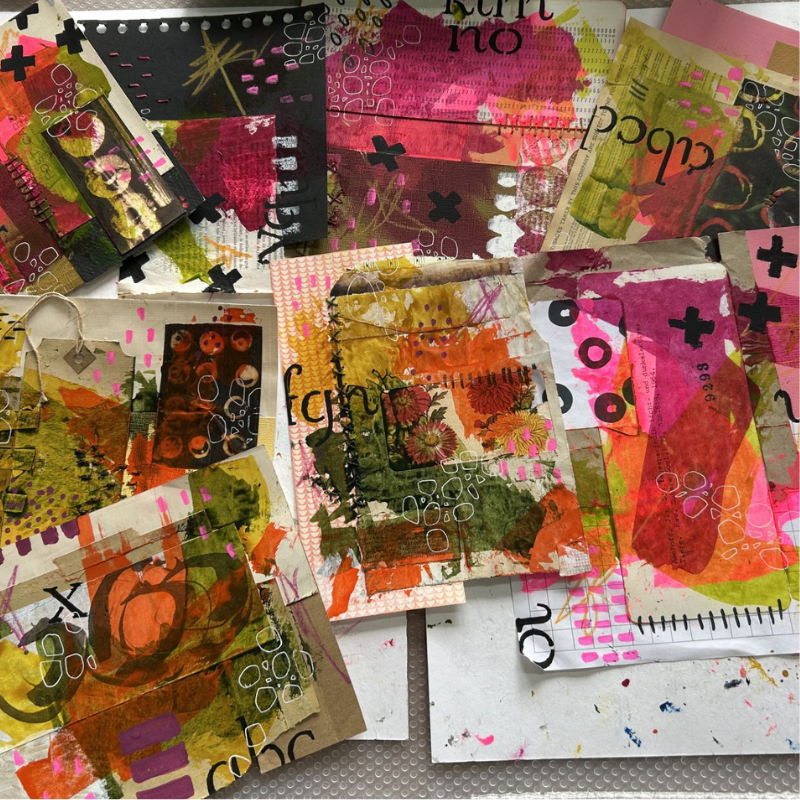
Everyone is creative in some way.
Lesley
How do you stay inspired, especially during quieter or more challenging periods?
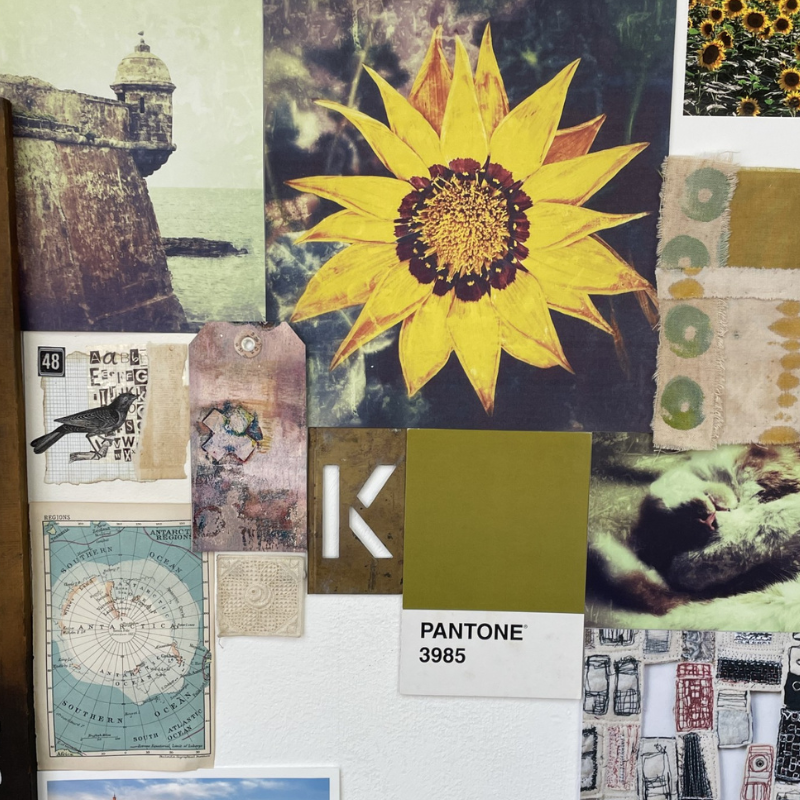
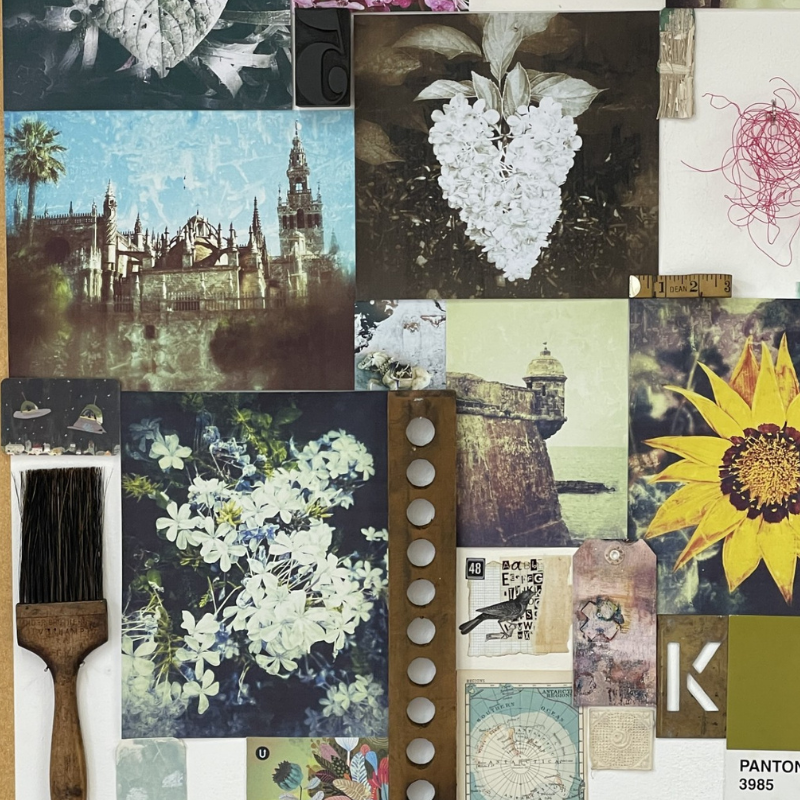
I stay inspired by surrounding myself with stuff, I collect all sorts of things from things found in nature, to broken animal toys that I find beautiful.
I try to stay curious to what is around me, always thinking ‘What if’ as this can lead to wonderful discoveries.
What’s the best piece of creative advice you’ve ever received?
Just be yourself, don’t try to be anyone else, you are unique and enough.
What would you say to someone who feels “not creative”?
Everyone is creative in some way, people automatically assume it’s being able to draw well or paint the perfect painting, but you can be creative in many ways, cooking, gardening, etc. You must just let go and play.
If you could collaborate with any artist (past or present), who would it be and why?
Robert Rauschenberg because I love printing and just the way he puts things together that seem so separate but just seem to work. It’s inspiring.
If participants could leave with just one thing from this course, what would you want it to be?
Enthusiasm and excitement to carry on being creative, not necessarily book making, or college, just in their chosen art form. I would love people to leave feeling that they will continue, being more confident that what they are doing is great and right for them.
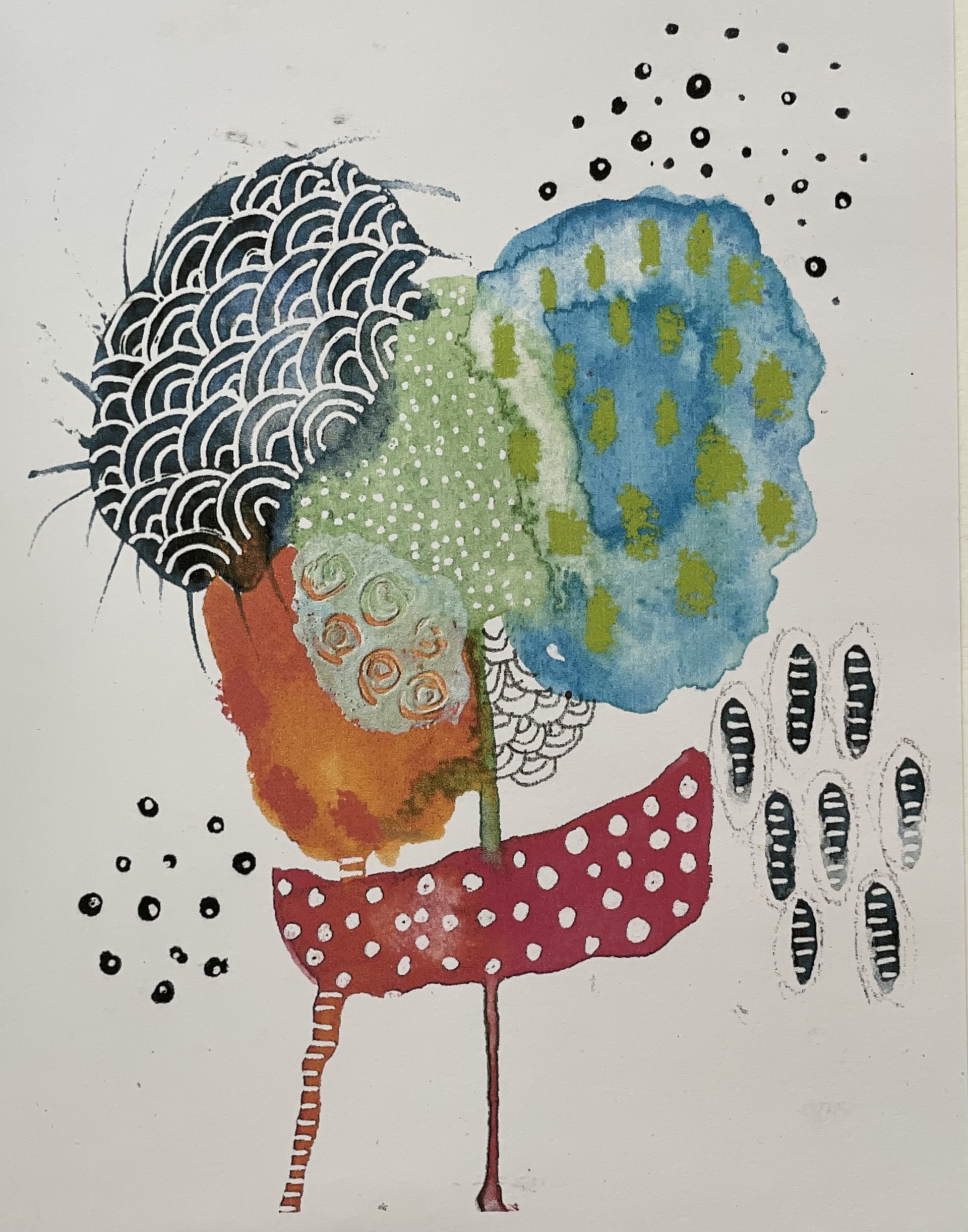
Join Lesley on her upcoming one-day workshop, Exploring Gelli Printing and her exciting, brand-new course here at St Ives School of Painting: The Alchemy of Bookmaking.
26/3/2026
Share on
Related Stories
Your Monthly Roundup: September
A monthly round up of the latest news, insights and events. Sign up to our newsletter to receive this update straight to your inbox!
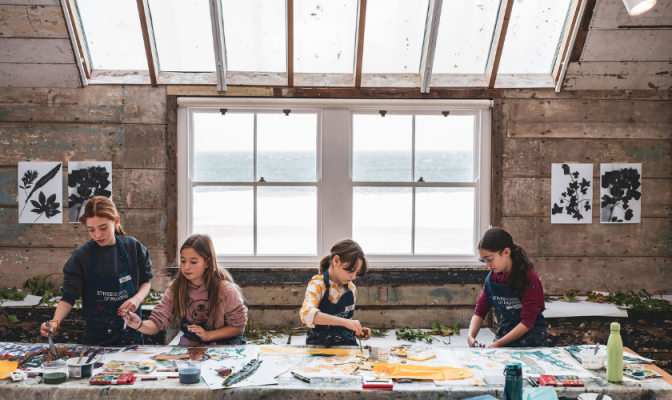
Thank You for Supporting Our Youth Programme in 2025
In 2025, our Youth Programme continued with a clear purpose: to widen access to creativity and make space for young people who need it most. Thanks to the generosity of our supporters, funders and community partners, 330 young people were able to engage with art, often at moments in their lives when that access mattered...
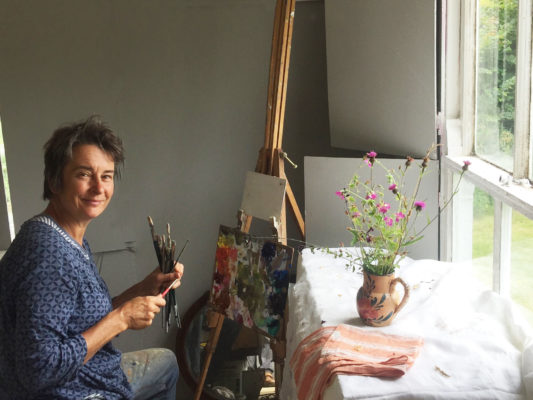
Bonnard The Revolutionary with Alice Mumford
Join Alice in our studio, as she takes her students on a gallop through the history of art, to demonstrate what a revolutionary Bonnard was. Part One Part Two Part Three