In Conversation: Julian Vilarrubi
Ahead of his upcoming courses, we caught up with Brighton-based artist, Julian Vilarrubi.
There’s something compelling about an artist who refuses to stay still – someone whose work is shaped as much by movement and observation as it is by tradition. Julian Vilarrubi is one of those artists.
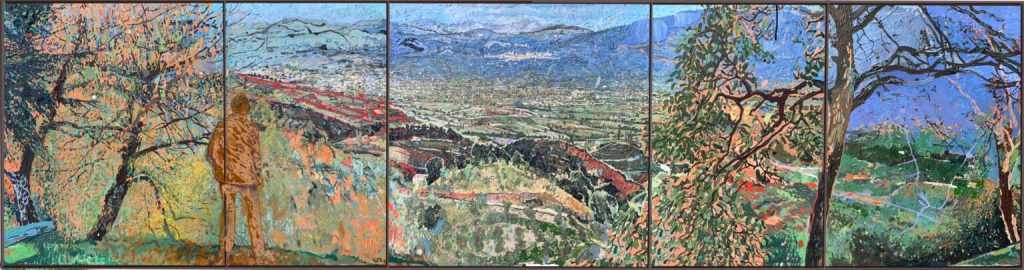
Trained at the prestigious Royal Academy Schools in London – where he was awarded the Richard Ford Award for travel in Spain – Julian has spent years exploring and painting landscapes across Europe and Russia. His work is rooted in place, with a particular pull toward the light and atmosphere of Italy and Spain. Whether working en plein air or back in the studio, drawing remains the backbone of his practice.
We caught up with Julian ahead of his upcoming courses at St Ives School of Painting.
What’s a small ritual or habit you have before (or after) you start making art?
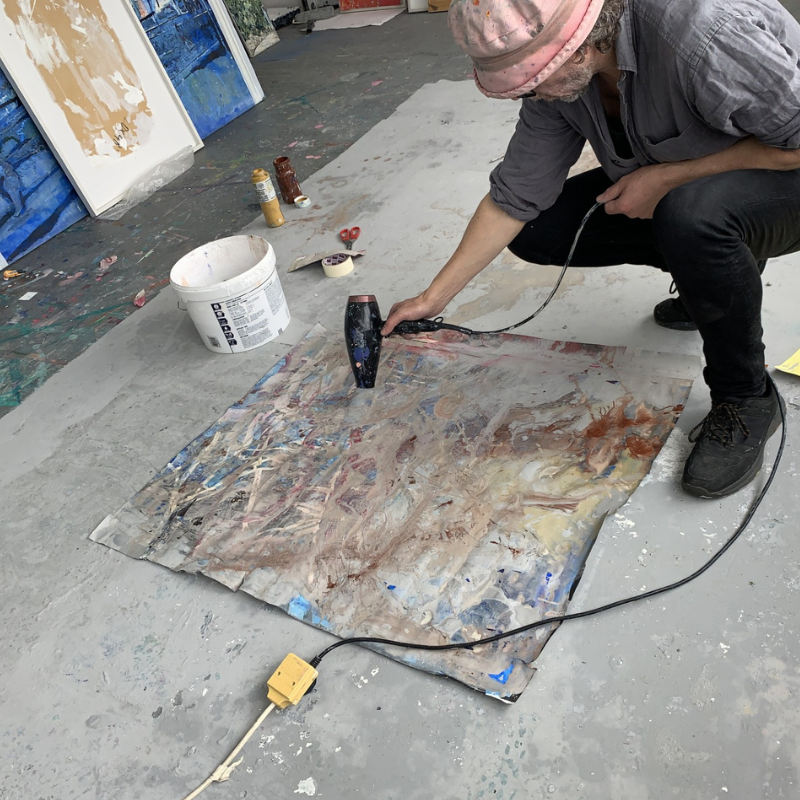
The only ritual I have before and after working is the walk to and from my studio. Even though I don’t think about it too much, I think the journey to the working space allows time for thoughts, ideas and concerns to settle – and you arrive ready to focus on the task in hand.
What’s your ideal soundtrack whilst you work, or do you prefer silence?
I do love silence above all else but occasionally, if I am in the mood, I will listen to something without voice, like Brad Mehldau or Pat Metheny.
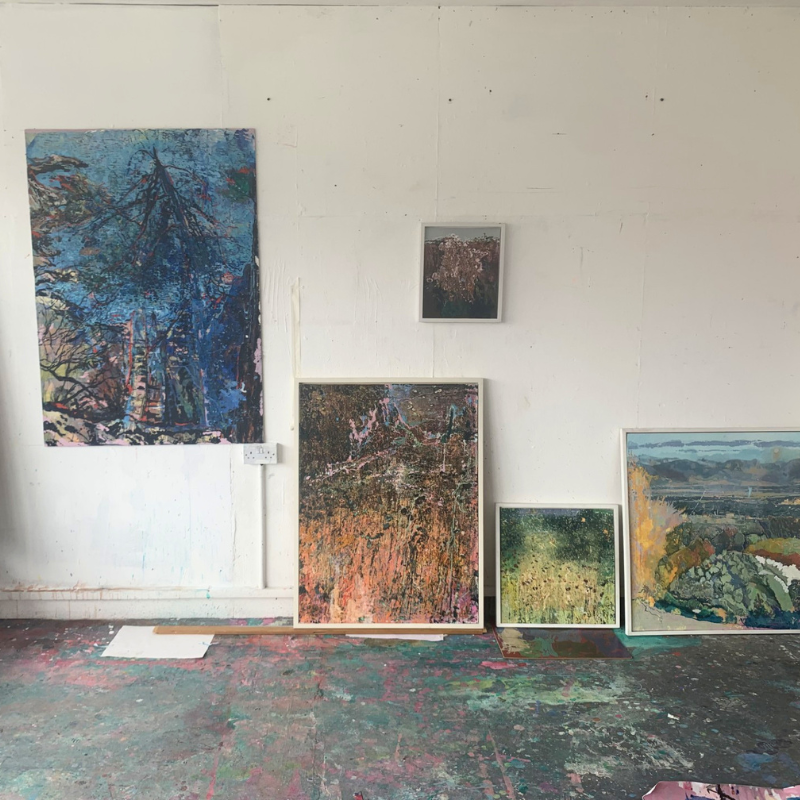
Do you prefer working from real life outdoors, or in the studio – and why?
Both. I love being outside working and grappling with visual problems. Sometimes drawings made outside are the starting point for studio work and that begins a different set of challenges.
Now based in Brighton, Julian balances studio work, commissions, and a long-standing commitment to teaching. From guiding urban sketching groups with the Royal Drawing School in East London to running life drawing sessions in Brighton for decades, his approach is as much about sharing knowledge as it is about creating.
What do you do when you hit a creative block – push through or step away?
Both really. Most procrastination comes from arguing with myself as to what to do and how to do it. Best just to get on with something as eventually it usually works itself out.
What belief about art or creativity has stayed with you the longest?
Trust that you can do it despite feeling much of the time that you might not be able to.
What’s one lesson you’ve learned that changed how you approach your art?
Sometimes you have to accept that there are some things you can do and some things you cannot.
One piece of advice you would suggest to students or someone interested in art
Look at as many artworks as possible and try to articulate to yourself what it is that you value in them.
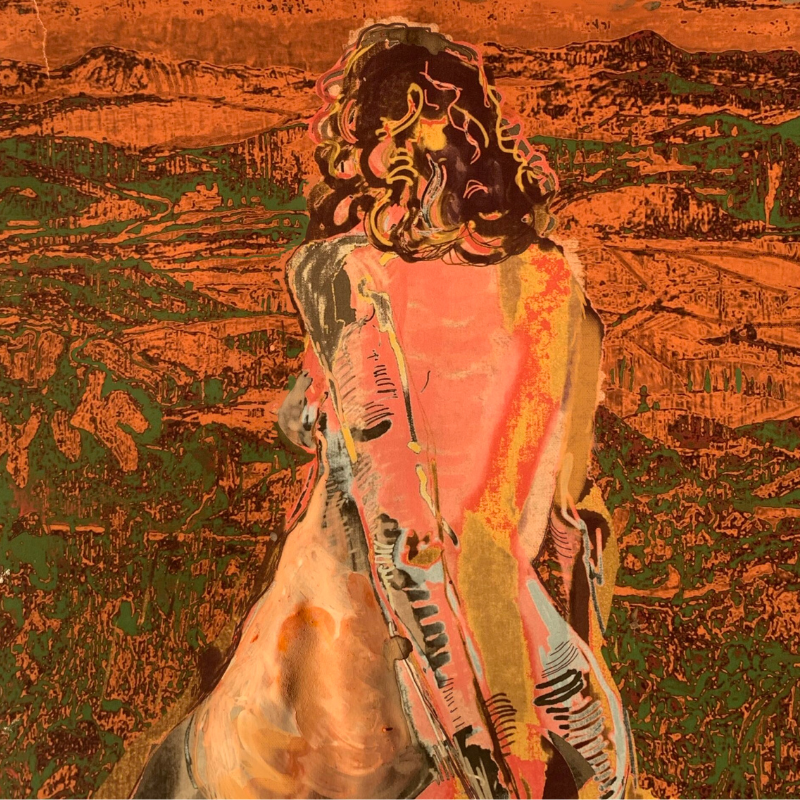
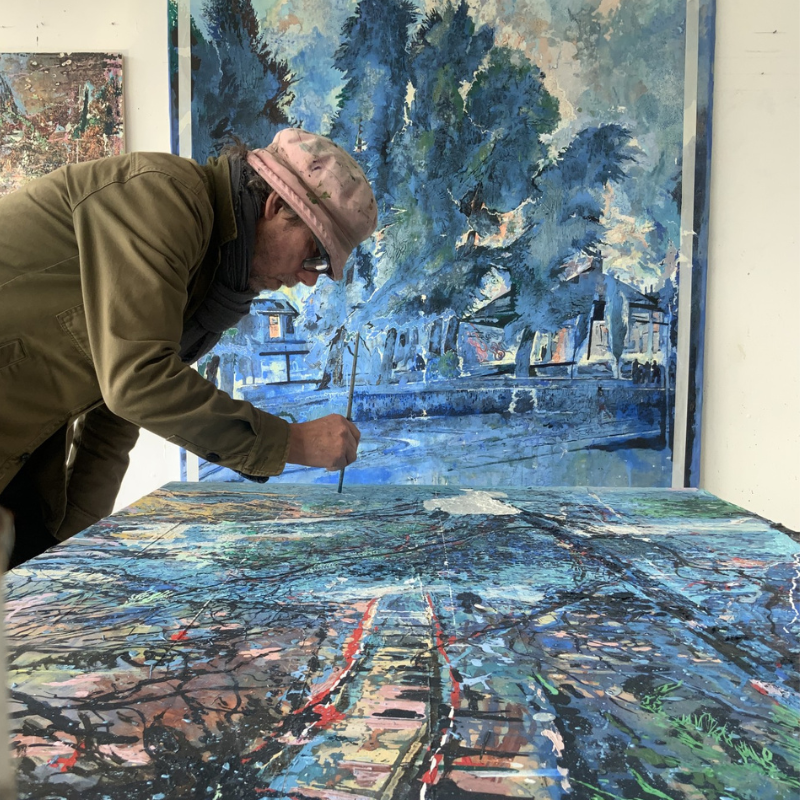
Julian’s upcoming course, Figure in a Landscape, is an exploration of integrating the human figure into the landscape through outdoor and studio-based study.
The relationship between the figure and its environment has been a major focus for many artists throughout the history of art, from Piero della Francesca to Tintoretto, Munch to Francis Bacon.
Artists have sought to portray the mundane and extraordinary moments of daily life, offering viewers a glimpse into the emotions, activities, and interactions that shape our world, reflecting the universal experiences and connections that bind us all.
If you could spend a day in any artist’s studio (past or present), whose would it be and why?
It would be with an artist whose working process has not been recorded and is difficult to define. So, probably Velazquez.
Are there non-art influences – films, books, places, people – that shape your work?
Films for colour, mood and composition. Sometimes places if something of significance has happened there.
Is there a quote (art-related or not) that you find yourself returning to?
“Although we may be stimulated by works of art we make our pictures from living sensations. The aim of painting is this: To capture a raw experience for art.” Frank Auerbach
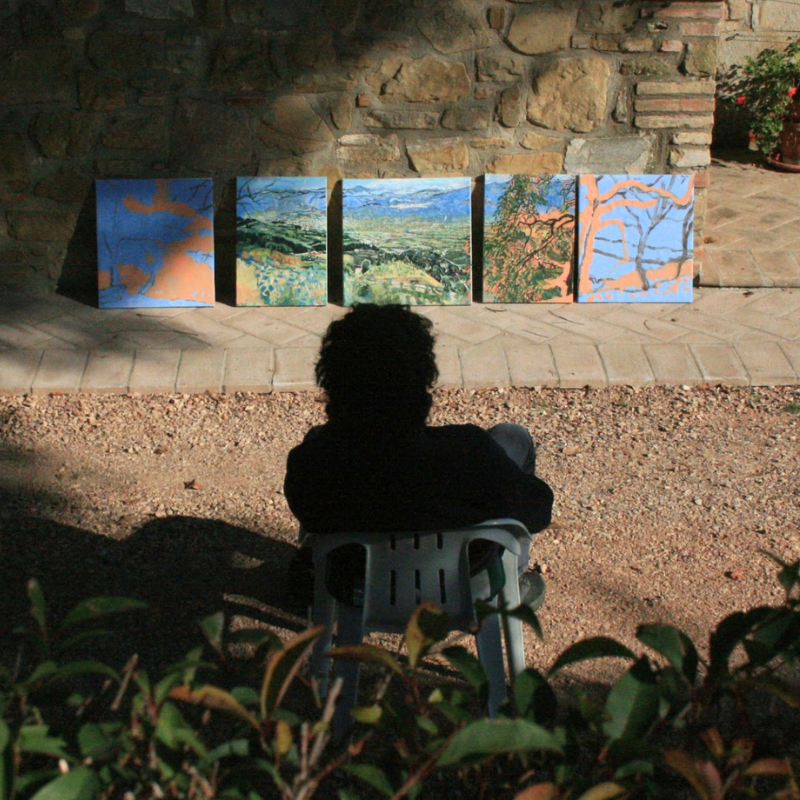
You can see more of Julian’s work on his website, or join Julian on his courses here at St Ives School of Painting: Julian Vilarrubi.
13/4/2026
Share on
Related Stories
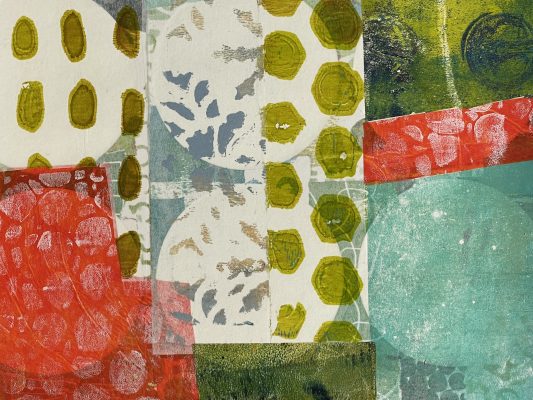
The Rise of Gelli Printing: Why This Playful Printmaking Technique Is Everywhere
In recent years, Gelli Printing has surged in popularity across the creative world. From professional artists and illustrators to hobbyists, teachers, and journalers, more people than ever are discovering the joy of this accessible and experimental form of printmaking. Scroll through social media or wander into a modern art studio, and chances are you’ll spot...
Art Club Collective: Term Three
Welcome to the third edition of The Art Club Collective – a space where we gather together the stories, moments, and artwork that emerge from inside Art Club each month. At the end of every term, we will take a step back and look at what’s been created – the small wins, the breakthroughs, the...
The Roy Ray Legacy Fund
Roy Ray attended St Ives School of Painting as a student in the 1960s and was fundamental in its success from the late 1970s to early 2000s. As Principal, he was instrumental in bringing more accessible contemporary art courses and welcomed even more visitors to the St Ives art community. About Roy Ray and St...