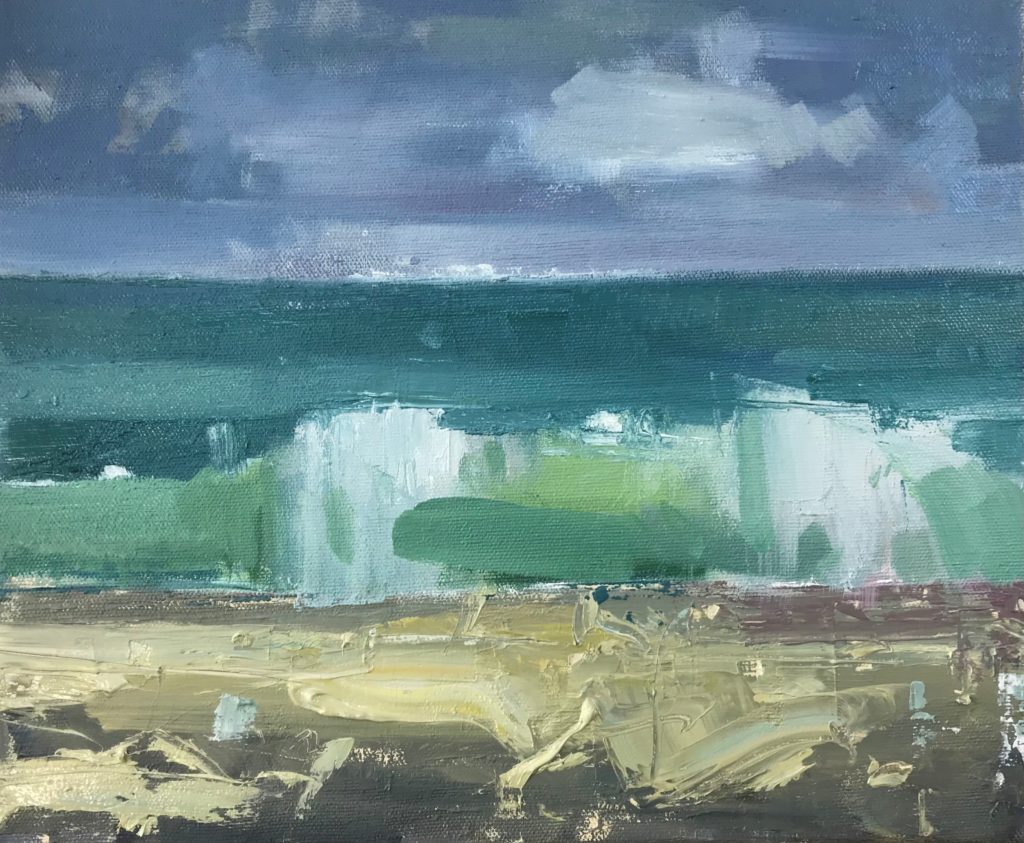
The Wave (recording)
Oil / Landscape
We haven’t scheduled this course yet. Please email us to register your interest for future availability.
Register InterestCourse details
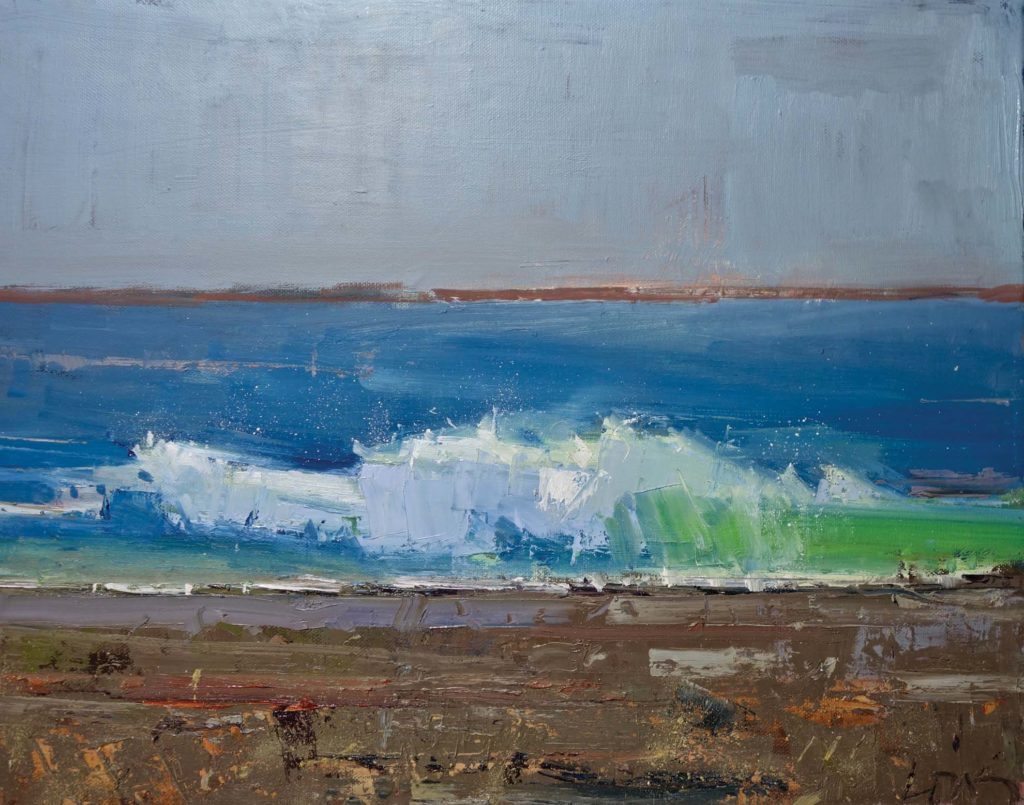
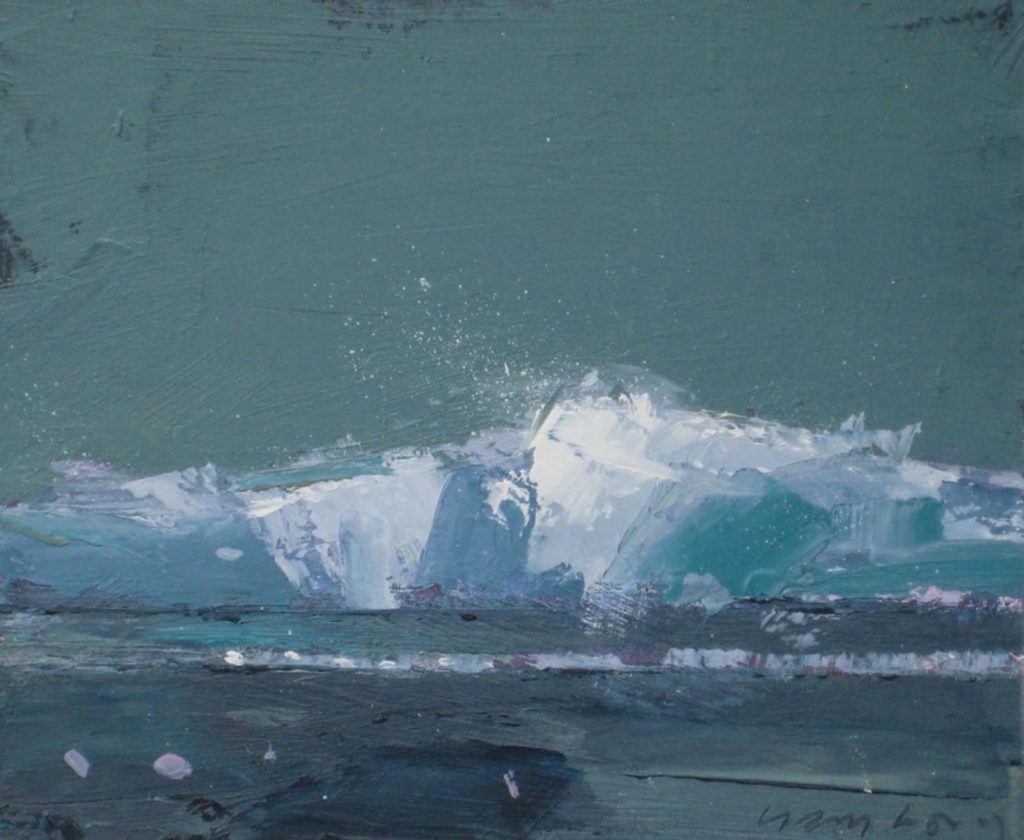
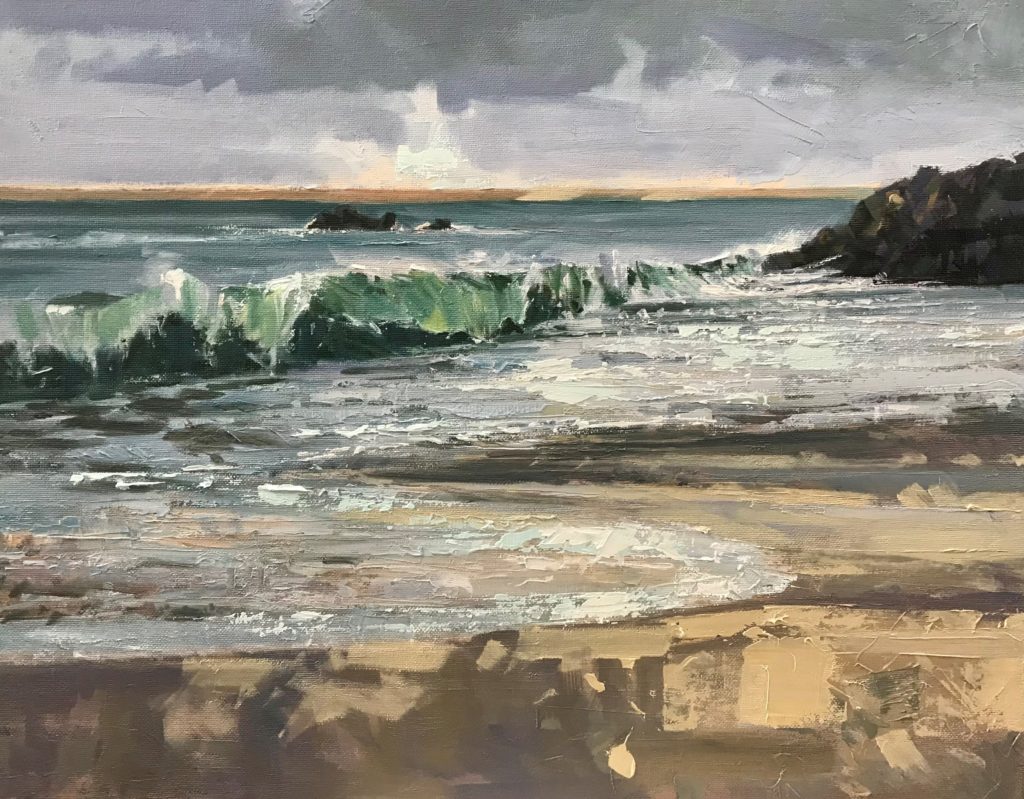
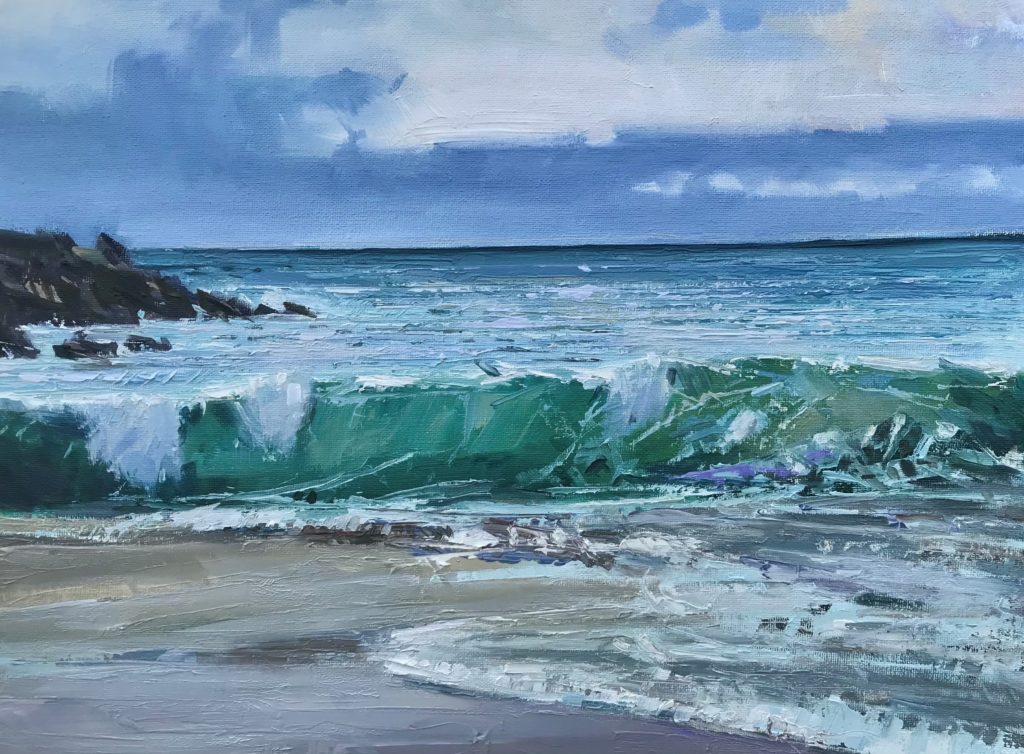
How to convey that fleeting moment when a wave crashes on the shore, its drama, energy and movement? Learn the secrets to capturing this dramatic moment in oils.
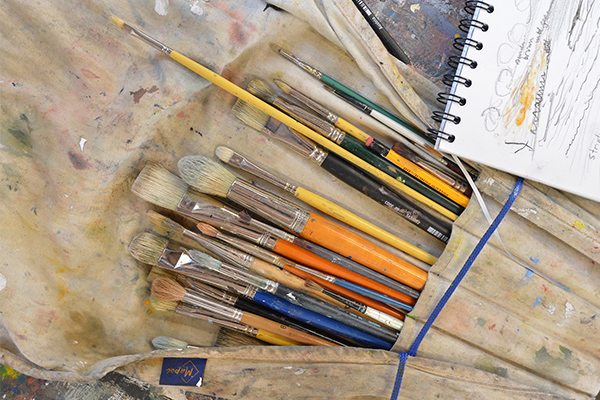
You will need to gather your own materials for the course and have access to the internet. You will receive a handbook on setting up ready for the course covering equipment and materials.
This course focuses on the particular challenge of capturing the life and soul of the moving wave. Use an expressive approach in oils to capture the dramatic moment when the power of the sea transforms itself into rolling surf. Wherever you are in the world transport yourself to the dramatic coastline around St Ives working from a recording made especially for the course.
Learn how to work with gouache to make annotations on colour and weather. You will gain confidence in using a limited palette and work with a palette knife to capture drama and movement. Then utilize the recording of a live session with Gary for three hours of translating sketches and colour notes into a finished oil painting. You can then use these skills to respond to whatever landscape inspires you, not just the coast.
Share your work with others on social media using the #schoolofpainting
You can pause, rewind and watch again as often as you like until the session expires 60 days after purchase
Recordings & Content
Preparation Tasks
Preparing the Ground
You will work through in your own time a series of tasks to get ready for painting. On purchasing this recorded course, we will send you a specially produced recording to work from along with your videos. The more you experiment the more this will become second nature. Cover how to make annotations, tonal studies in charcoal moving into colour studies in gouache. Armed with lots of studies you will be ready to move into oils.
Painting in Oils
Moving Into Oils
Gary starts the session showing his own approach to working in oils starting with mixing your palette and showing examples of work. If you have an easel either desk or standing have this set up ready, otherwise work on the table. Gary will talk you through your materials and set up and how to start to put your drawing down on to the canvas. Learn to select and crop your colour study.
Gary will show you how to start your painting working with thin washes and then build up. Explore a range of mark making styles and tools to create a confident painting with movement and energy.
What you will get out of this course
- An understanding of the properties of oil paint so you can have more control of the paint and get the effect you want.
- Confidence in colour mixing so you can develop your own personal palette that you can recreate rather than rely on guesswork.
- The skills to develop paintings from drawing studies.
- Confidence in using a variety of tools and techniques to get a range of marks and effects. This will help you create paintings that are interesting and striking.
- Insight into the particular challenge of capturing in oils a moving wave
Who would this course suit?
Whether you are a complete beginner in oil paints or would like to build your confidence working with them, this course is a wonderful starting point. If you love painting landscape but feel stuck, this course gives useful tools for loosening up and animating your paintings.
Taught by
What to Bring
You will receive a handbook on setting up ready for the course covering equipment and materials. We will guide you on how best to set up in your own home environment whatever that might be from the kitchen to the studio.
You will need to use oil paint and either low odour white spirit or Zest It, if you are sensitive to solvents.
You will need a laptop or tablet with audio and camera enabled so you can have a screen near where you are working. A phone is not ideal as you will struggle to see enough. You will also need reasonable broadband connection and speed.
How does this online course work?
You can pause, rewind and watch again as often as you like until the session expires 60 days after purchase
You will be invited to join our Facebook Alumni group so you can share your discoveries with fellow students from around the world.
FAQs
Online Art Courses
Will I be able to extend access to my online course?
Yes. If your course expires before you’ve had a chance to complete it, you can purchase an extension to your access for a small additional fee.
Extension options range from £5 for 14 days on shorter courses to £20 for 30 days on longer courses. You can purchase an extension through your online account for up to 6 months after your original course expiry date.
Please note that extension length and cost vary depending on the course.
How do I log in to my online account?
To log in to your account, please follow these steps:
- Go to our website: www.schoolofpainting.co.uk
- Click on the ‘Log in’ button (usually found near the top right of the page)
- Enter the email address and you used when booking
- Click “Log in” to access your account
Once logged in, you’ll be able to view your bookings, outstanding payments, online courses and any relevant account information.
If you’ve forgotten your password, simply click ‘Forgot password?’ on the login page and follow the instructions to reset it.
If you have any trouble accessing your account, please email us and we’ll be happy to help.
Can I learn painting online from home?
Yes. Our online painting courses allow you to learn from professional artists wherever you are. You can pause demonstrations, revisit lessons and work through practical exercises in your own time.
Are online art courses suitable for beginners?
Many of our online art courses are suitable for beginners. Course descriptions explain the recommended level, materials and experience so that you can choose a course that feels manageable and relevant to your interests.
How do online art courses work?
Once you have purchased an online course, you can access it through your account and work through the video tuition and supporting resources at a time that suits you. Access periods vary from 60 – 180 days, just check the individual course page before booking.
For live webinars, once you book a place, we will share a link with you in advance so you can join us at the relevant start time – this is typically via Zoom. A recording of the webinar will be shared with you after the webinar so you can re-watch in your own time.
Do you offer online art courses?
Yes. We have more than 90 online art courses covering painting, drawing, colour, landscape, abstraction, mixed media and other creative subjects. The courses are taught by practising artists and can be followed from home at your own pace.
How do I choose the right art course?
Start by considering how you would like to work. You may want to learn a particular medium, improve a skill such as drawing or colour mixing, explore a subject such as landscape or still life, or develop a more personal approach. Each course page explains the content, materials, level and teaching approach to help you decide. Our friendly, helpful team are always available to help further.
Please call us on 01736 797180 to discuss your options or email [email protected].
Who teaches your art courses?
Our courses are led by practising artists – including Jill Eisele, Alice Mumford, Iona Sanders and Neil Canning – all with extensive knowledge of their chosen subjects and materials. Each tutor brings their own artistic experience, working methods and approach to teaching, giving students the opportunity to experience a wide range of ideas and techniques.
In Person Courses
How large are your art classes?
Our studio courses are taught in small groups of around 10 to 12 people, allowing tutors to provide individual guidance alongside group demonstrations and discussions.
What is included in an art course?
Course fees include professional tuition from a practising artist and use of the School’s studio facilities. Materials and equipment are all included in our in person courses, workshops and life drawing sessions – so you can just turn up and get started. Teas and coffees are also provided throughout the day.
Can I attend an art course on my own?
Absolutely. Many students come to St Ives School of Painting independently. Courses offer a welcoming and sociable environment, with plenty of opportunities to meet other people who share an interest in making and learning.
What art courses do you offer in St Ives?
We offer a varied programme of art courses in St Ives, including painting, drawing, printmaking, mixed media and life drawing. You can choose from one-day workshops, short summer sessions and more immersive three- and four-day studio courses. We also offer longer development courses for those looking to take their practice to the next level.
Do I need any previous art experience?
Not always. We offer courses for all levels, including complete beginners, intermediate students and more experienced artists. You can look for the experience level listed on the individual course page to find the most suitable option for you. If you need any guidance on what course might suit you best, contact on our friendly team on 01736 797180 and they will be able to help.
How do I get my work home?
Tutors have special techniques for transporting oil paintings and for our 3 day courses we will give you a plastic folder with a handle. These are also available to purchase for £3.50 or do bring a portfolio.
Please note: For the course Bigger, Bolder, Braver with Boo Mallinson, we will provide a large A1 size plastic folder for your work but please consider how you will be able to transport the larger canvases home safely before signing up for the course as we will not be able to store large paintings in the studio. On this course you will be painting on a 50cms x 50cms and a 1m x 1m canvas alongside smaller pieces.
For international students we are happy to arrange transportation of your work back home, postal costs will be borne by you.
What do I need to bring?
You don’t need to bring anything with you unless we specify beforehand. All materials, aprons and tools are provided, however some people do like to bring along their favourite set of brushes or sketchbooks.
What do I do for lunch?
Courses allow an hour’s break for lunch and there are numerous places nearby or you are welcome to bring a packed lunch into the studio.
What times do courses run?
Most of our courses start at 10am and end at 4.30pm on the first day. Subsequent days we start at 9.30am ending at 4pm.
Short workshops start at 10am in the Summer and 9.30am/ 1.30pm during September festival
Can I bring my dog?
The studios are busy places with lots of equipment and not suitable for bringing a pet dog. We can accommodate assistance dogs with prior notice so we can make suitable adjustments. If you wish to bring an assistance dog please call 01736 797180 or email [email protected]
Choosing an Art Course
Do you run life drawing classes in St Ives?
Yes. We hold regular life drawing sessions in St Ives, including Thursday evening and Saturday morning classes. These welcoming, tutored sessions are open to a range of experience levels and provide an opportunity to practise drawing from a life model. Our life drawing sessions are held just a 5 minute walk from our studios at The Island Centre.
Do you offer art courses for adults?
Yes. We run art classes and courses for adults throughout the year, from accessible introductory workshops to more intensive courses for people looking to deepen their creative practice.
What types of painting can I learn?
Our courses cover a wide range of approaches, including oil painting, acrylic painting, watercolour, gouache, landscape painting, still life, portraiture and abstraction. We also offer courses exploring colour, composition, mark-making and creative confidence.
You might also like...
Coves, Rocks + Cliffs in Watercolour
Thu 11 Feb 2027 - 2.5 hr
David Webb
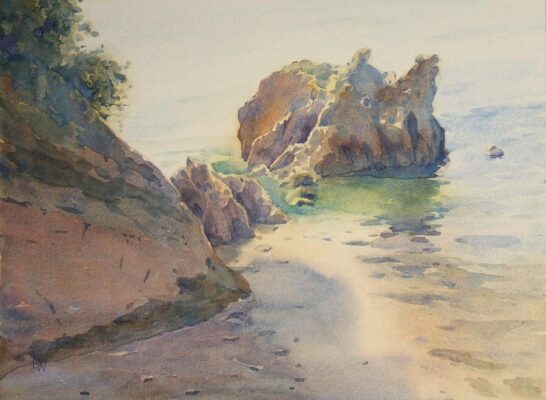
Learn how to use watercolour to depict coves, rocks and cliffs with artist David Webb in this webinar recording. Learn to look at a scene with an artist’s eye and choose which elements are important and which can be left out.
Exploring Acrylics
Thu 11 Feb 2027 - 1.5hr
Iona Sanders
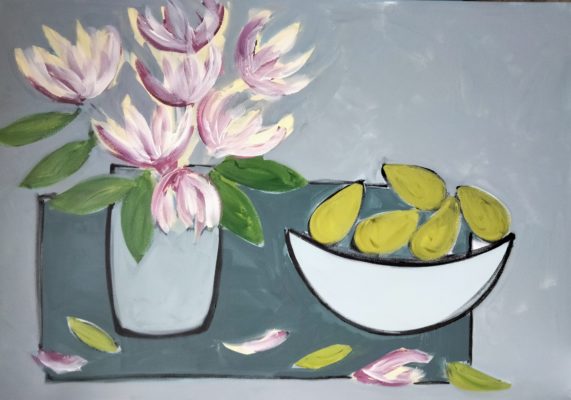
Explore working wet on wet in acrylics and loosen up your approach with this fun and intuitive course discovering your inner voice.
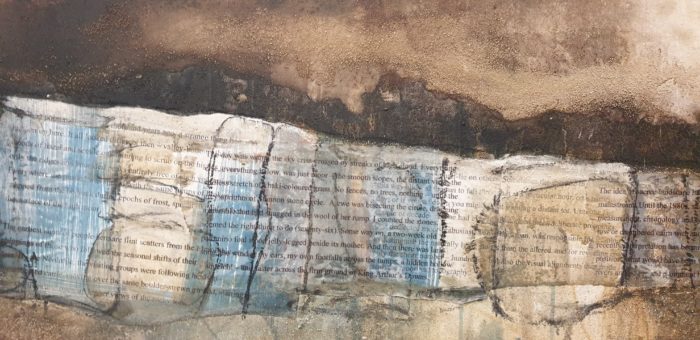
Diving Deeper into Abstract Landscapes
Thu 11 Feb 2027 - 1.5 hours
Natalie Day
Find new ways to connect with the landscape around you with this expressive and explorative online webinar.
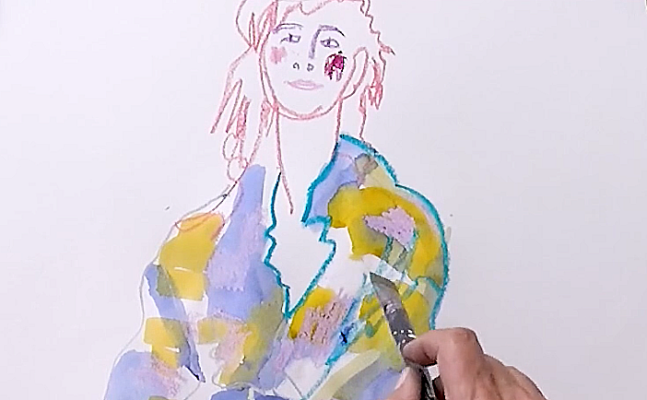
Figure - Form, Shape + Colour (rec)
Thu 11 Feb 2027 - 2hrs
Camilla Dixon
Learn how to extract the essence of the figure from life and onto paper, with simple guided exercises working from a live model.
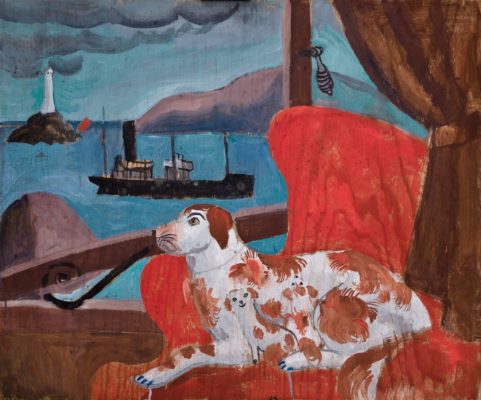
Postcards from St Ives - Christopher Wood
Thu 11 Feb 2027 - 1.5 hour
Alice Mumford
Join artist Alice Mumford as she explores Christopher Wood's quest for a lyrical way of describing the world through line and rhythm.
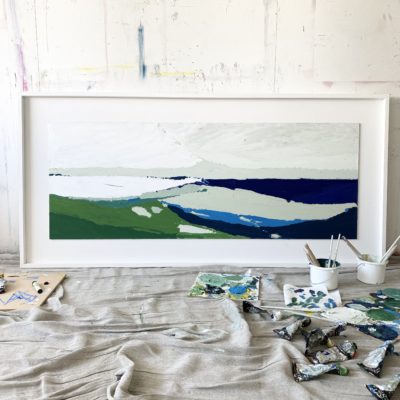
Abstracting Zennor in Autumn
Thu 11 Feb 2027 - 2 sessions
Martha Holmes
Following Martha’s hugely successful first webinar with us, we welcome her back to explore a rich Autumnal palette. Delve into abstract expressionism to create a landscape painting in oils with this two-part recording.
Pastel Painting - Seascapes (rec)
Thu 11 Feb 2027 -
Nina Squire
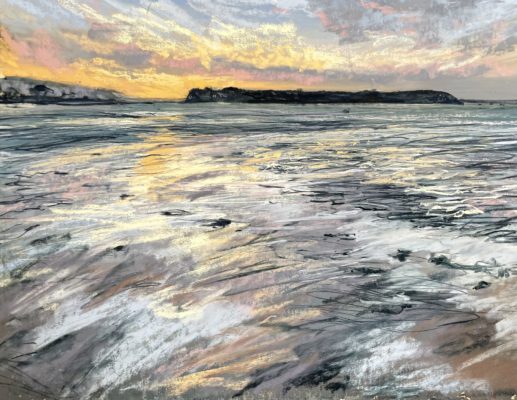
In this two-part webinar series, Dorset based artist, Nina Squire, shows you different ways of working with soft pastels to create painterly dynamic seascapes.