In Conversation: Helen Ward
We’re pleased to welcome artist Helen Ward to our team of artist tutors for 2026.
Helen is a visual artist whose work embraces experimentation, chance, and the creative possibilities of “mistake making,” developing a distinctive visual language that captures both observation and thought.
Helen graduated from Farnham University with a BA (Hons) in Fine Art, but it wasn’t until 2020 – after taking redundancy during the Covid lockdown – that she finally had uninterrupted time to fully commit to her practice.
Embracing the opportunity, she began sharing her work consistently on Instagram, which quickly became a vital platform for visibility and connection. Over the past five years, her audience has grown dramatically, leading to international collectors and a wide range of opportunities.
We caught up with Helen ahead of her first studio course at St Ives School of Painting, taking place in April.
What’s a small ritual or habit you have before (or after) you start making art?
I quite often sit quietly drinking tea, looking at my sketchbooks or staring around my studio at things that I’ve pinned up. For me it feels like listening inwards. Sometimes I have to start somewhere so sketchbooks and drawing are key to helping me achieve that state of mind through the act of doing.
What’s your ideal soundtrack whilst you work, or do you prefer silence?
Gotta’ have tunes! I have a fair range of music on my playlist. Paul Weller if I need to sing, ‘A decade of Ibiza’ if I need to dance, and lots of other things. There’s
always something playing if I’m making.
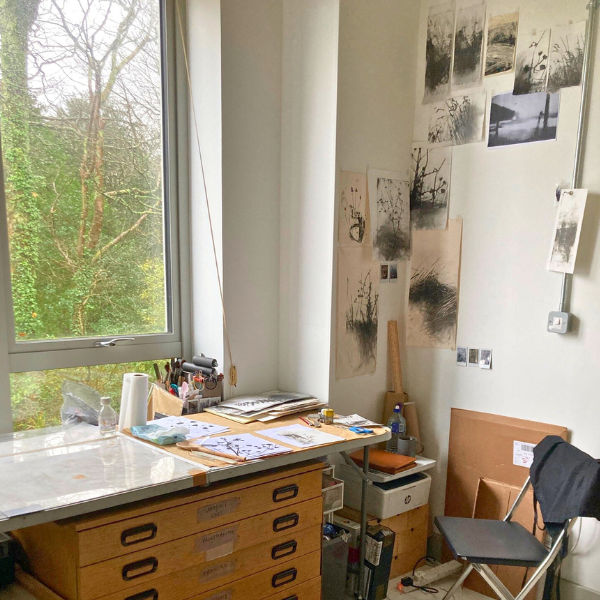
How does your workspace setup influence the way you create?
My workspace setup is really important. You need to have enough space to do what you need to, but not too much that it feels impersonal – you have to feel safe and at home in your space.
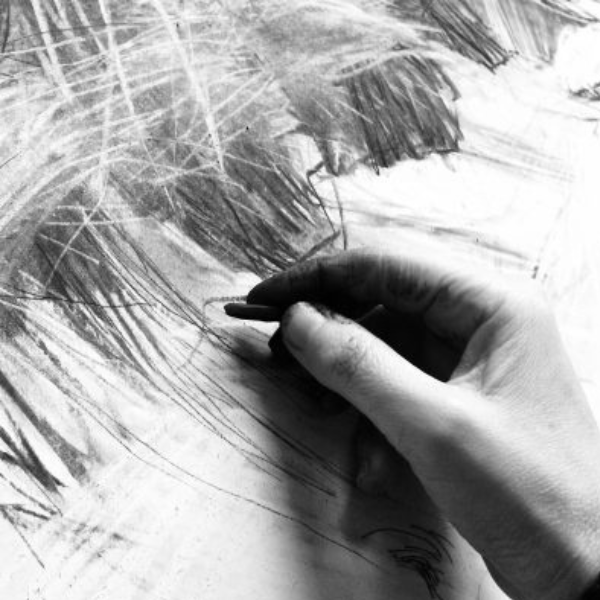
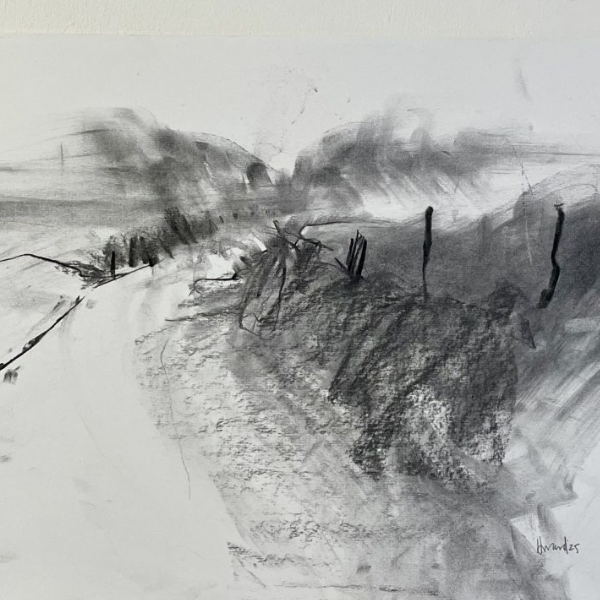
Drawing lies at the heart of Helen’s practice – a means to see, understand, and express what cannot be otherwise communicated. Her process is investigative and iterative, recording the history of making through decisions, errors, and discoveries. From spontaneous plein air sketches to considered studio studies, her drawings reflect a constant engagement with the world around her.
What do you do when you hit a creative block – push through or step away?
Understanding the creative process is an ongoing thing for me. I have learnt a lot in the last five years about what works best and I’m still learning!
Going back a year or so I would just keep going making, making, doing. But recently I have found that sometimes it is better to step back think, reconnect, listen and allow
your imagination the space to do its job. Considering and valuing this listening/reflecting time takes some practice but the more I work in this way the more centred I become and the more focused my work becomes with it.
What’s one lesson you’ve learned that changed how you approach your art?
There are certain times when the work just flows and others when it’s difficult to see the way forward but it’s all part of the process.
If you could spend a day in any artist’s studio (past or present), whose would it be and why?
If I had to name one it would probably be Robert Rauschenberg during his earlier combines. I would love to see how he pulled it all together, magic!
What’s the most unexpected place you’ve found inspiration?
I was never a fan of Jackson Pollock but when I saw his work in New York I was literally blown away. The rhythm, movement and music in those paintings was something I have never seen before. I was also surprised by my response to them.
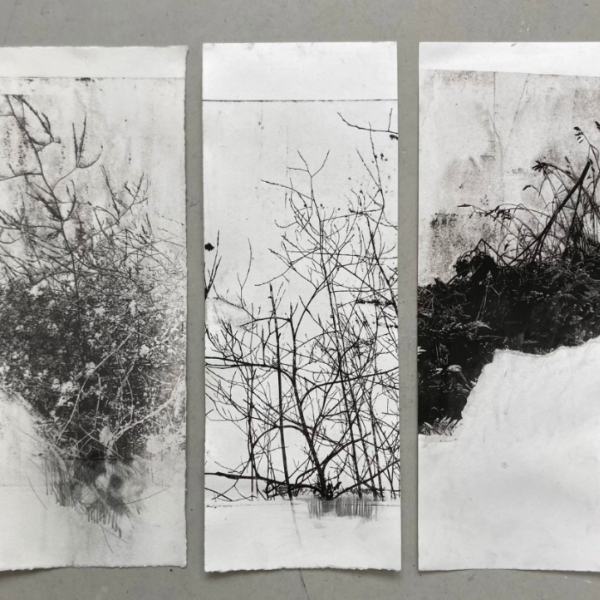
In her printmaking, Helen explores the versatility of paper lithography, developing imagery through the use of photography, drawing and sketchbook work to create richly layered compositions.
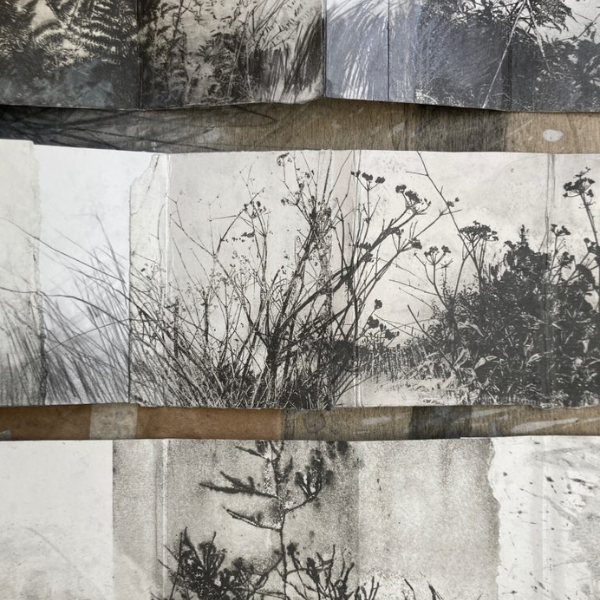
Her artists’ books extend this exploration into a spatial, narrative form. Starting from panoramic unfolding pages that document journeys through landscape, her books have evolved into, multi-layered objects combining original monotype print collage and different media. They invite viewers to experience time, place, and story gradually – like a long walk or a daydream revisited again and again.
One piece of advice you would suggest to students or someone interested in art
Always have an intention.
Is there a quote (art-related or not) that you find yourself returning to?
“Create the things you wish existed.”
What belief about art or creativity has stayed with you the longest?
I think that the importance of drawing and research of any given subject has always played a key part in my work. It’s how you get to know what is important to you and also what is not. It is the very start of your own unique expression, the roots.
What’s a creative risk you’re proud you took?
I think being an artist is fraught with risk! Everyday I am proud I have the courage to turn up, to make things, and put them out there.
How has your definition of “success” in art changed over time?
I don’t think it’s changed that much you know. I think the most successful work
is the work that’s truest to yourself, your own expression, your own voice.
You can see more of Helen’s work on her website, or join Helen on her course here at St Ives School of Painting: Paper Lithography: Marks, Surfaces, + Stories
2/2/2026
Share on
Related Stories
In Conversation: Julian Vilarrubi
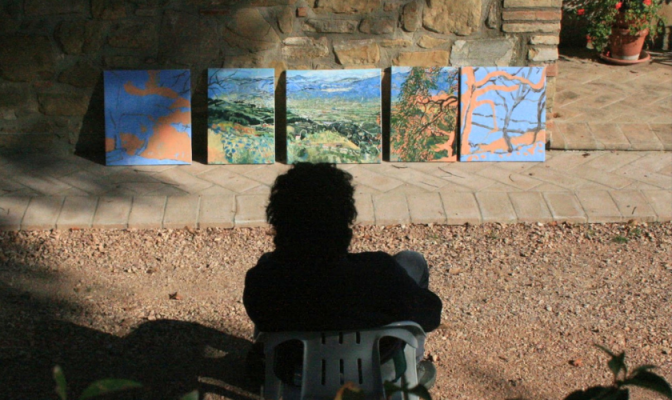
Ahead of his upcoming courses, we caught up with Brighton-based artist, Julian Vilarrubi. There’s something compelling about an artist who refuses to stay still – someone whose work is shaped as much by movement and observation as it is by tradition. Julian Vilarrubi is one of those artists. Trained at the prestigious Royal Academy Schools...
Your Monthly Roundup: November
A monthly round up of the latest news, insights and events. Sign up to our newsletter to receive this update straight to your inbox!
Stay Connected, Stay Inspired.
Even if you can’t make it to St Ives, there are still plenty of ways for us to stay connected and keep your creativity flowing. Here are a few ways we can continue to inspire and support you from wherever you are! Follow us on Social Media From artist interviews, course previews and how to...