Celebrating 250 Years of J.M.W. Turner
April 2026 marks the end of a year-long celebration: 250 years since the birth of J.M.W. Turner, one of Britain’s most influential and visionary painters. Across galleries, museums, and coastal landscapes, Turner has been celebrated not just as a historical figure, but as an artist who changed how we see the natural world.
Born on 23 April 1775, Turner was fascinated by light above all else. His seascapes dissolve into the wider atmosphere, where sky, water, and weather merge into something almost abstract. Long before abstraction had a name, he was already pushing his paintings toward it – capturing not just what a place looked like, but how it felt to stand within it.
As part of his search for dramatic coastal light and weather, Turner travelled extensively around Britain, including sketching tours in the early 19th century that took him through the south-west of England. Cornwall offered exactly the kind of coastline that obsessed him: open horizons, turbulent seas, and constantly changing skies.
He is known to have worked around Mount’s Bay – St Michael’s Mount, Penzance and the surrounding coastline – making quick sketches and watercolours on the spot. These weren’t finished pieces, but fast studies, trying to catch something before it changed.
A Few Fascinating Turner Facts
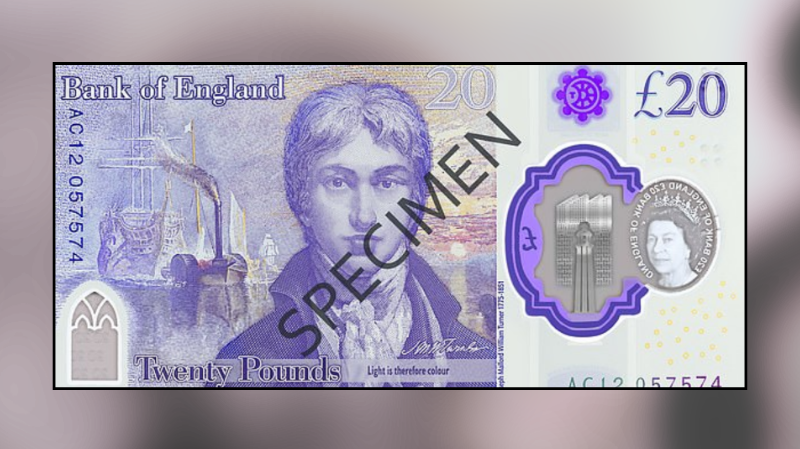
- Turner features on the £20 note issued by the Bank of England – a recognition of his enduring importance to British art and culture.
- During the 1841 census, he reportedly avoided being officially recorded by rowing out to sea, staying off the register entirely.
- He was admitted to the Royal Academy at just 14 years old, making him one of the youngest ever students in history
Painting Like Turner: Why His Sea and Sky Still Matter
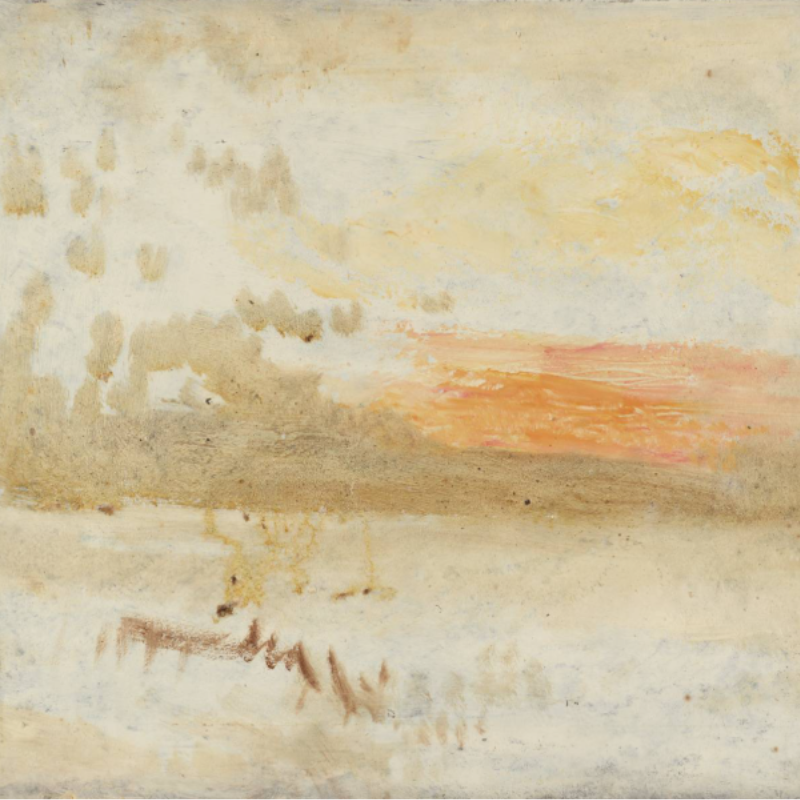
Turner’s coastal works are more than just depictions of the sea. They are studies in movement, energy, and perception. In his later seascapes, form often translates into sensation: spray, wind, light and even noise seem to take over the canvas.
He frequently worked in rapid watercolour sketches during his travels – capturing fleeting conditions rather than fixed scenes.
That idea remains for many contemporary painting approaches: working quickly, intuitively, and responding to materials.
Left: Sunset Seen from a Beach with Breakwater, JMW Turner, c. 1840-5, Courtesy of Tate
Step Into Turner’s World: Turner Sea + Sky Course
If Turner’s work resonates with you – not just visually, but in his method – our Turner Sea + Sky course offers a way to explore that for yourself.
Over the three-day course, you’ll be guided to:
- Respond to light, sea and sky as they move and shift
- Use watercolour in a looser, more instinctive way, echoing Turner’s rapid studies
- Simplify forms so that colour and atmosphere become the focus
- Experiment with scale, tone, and abstraction inspired by coastal environments
The course is explicitly inspired by Turner’s experimental coastal studies and his belief that landscape could be reduced to its essential elements of light and colour.
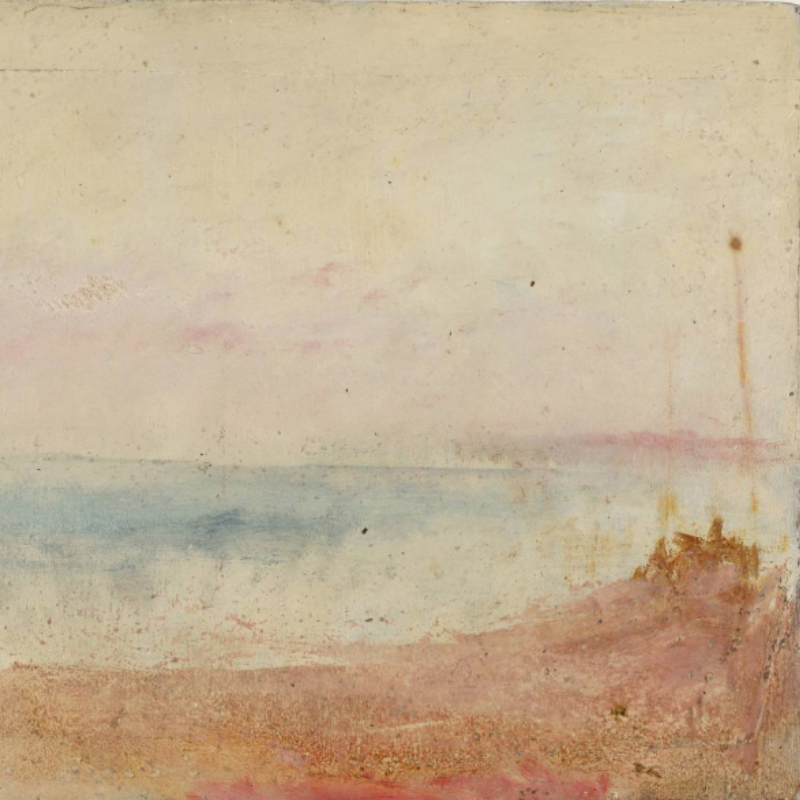
Right: Coast Scene, JMW Turner, c.1840-5, Courtesy of Tate
Why This Moment Matters
A 250th anniversary is not just about looking back. It’s about recognising why an artist still matters now.
Turner matters because he refused to treat nature as static. He saw weather as movement, light as emotion, and landscape as something alive and unstable. That way of seeing feels especially relevant today, when we are increasingly aware of changes in weather and climate.
Turner once said that light was his subject. But what comes through in his work is the experience of being there – the moment before a storm, or when the horizon almost disappears into haze.
Our Turner Sea + Sky course offers a way into that way of working. Not overly polished, not overthought – just looking, responding, and seeing what happens.
And 250 years on, it still feels like a good place to start.
22/4/2026
Share on
Related Stories

How to Get Back Into Making Art
January doesn’t need to be about becoming a new creative. For many, this time of year is quieter, slower, and a little disorienting. You might feel creatively flat after the Christmas break – or you might be standing at the beginning, unsure where to start. This guide isn’t about fixing yourself or setting ambitious resolutions....
Alfred Wallis: 100 Years On
This August marked 100 years since Alfred Wallis first picked up a paintbrush – beginning a remarkable, self-taught artistic career that continues to resonate across the art world. Read more about his incredible life and career, and discover how his paintings are still being appreciated today. Born on 8 August 1855 in Devonport, Plymouth, Alfred...
The Salt Path film in cinemas now
Discover The Salt Path, a poignant adaptation of Raynor Winn’s bestselling memoir. The film chronicles the transformative 630-mile trek along the South West Coast Path undertaken by Raynor and her husband, Moth, after losing their home and grappling with a terminal illness diagnosis. Directed by acclaimed theatre director Marianne Elliott and scripted by Rebecca Lenkiewicz,...