The Art of Paying Attention
Why painting might be the antidote to our distracted world.
We spend much of our day looking – but rarely noticing.
Painting asks something very different of us. To create art, you have to slow down. You have to look carefully. The subtle colours inside a shadow, the way light shifts across a surface, the structure beneath a plant or a landscape. What at first seems simple becomes more interesting with detail the longer you spend with it.
In that sense, creating art is not just about making something. It is about learning to pay attention again.
Learning to See
Artists often talk about “learning to see”. It’s one of those phrases that can sound mysterious until you experience it yourself.
What they mean is that creative practice changes how we look at the world.
A shadow stops being grey and becomes a mix of blues, purples and greens. A leaf becomes a collection of shapes and edges rather than just “a leaf”. A landscape reveals patterns of light and rhythm that might otherwise pass unnoticed.
The act of drawing or painting encourages a slow observation. Instead of rushing to identify things, you begin to study them – noticing relationships between colour, shape and movement.
This shift from quick recognition to patient observation is part of what makes creative practice so absorbing. Your mind becomes focused on the present moment, and other worries gradually fade into the background.
And yes, there’s a science to it.
Interestingly, what artists have long understood intuitively is increasingly supported by research.
Studies have shown that engaging in creative activities can significantly reduce stress and improve mood. Making art has been linked to lower levels of cortisol – the hormone associated with stress – and can help regulate emotional responses.
Creative work also encourages a mental state similar to mindfulness or meditation. When drawing or painting, attention becomes gently focused on one activity: the movement of the hand, the mixing of colour, the observation of light and form.
Psychologists sometimes describe this as a “flow” state – a period of deep engagement where distractions fall away and time seems to move differently.
This kind of focused attention can have powerful effects on wellbeing, helping people feel calmer, more present and mentally refreshed.
The Impact
One recent study found that simply visiting an art gallery and viewing original artwork reduced participants’ cortisol levels by around 20% (The Guardian), alongside measurable improvements in markers linked to stress and inflammation.
If simply looking at art can have this effect, the benefits of making art yourself can be even more powerful.
This growing body of research has led organisations such as the World Health Organization to recognise arts engagement as an important contributor to health and wellbeing. Across many studies, creative activities have been linked to improved mood, reduced anxiety and greater overall life satisfaction.
What these findings suggest is something artists have known for generations: engaging with art can help us feel more balanced, attentive and connected.
Experience the natural world through sketching
For many artists, this attentive way of working also deepens their relationship with the natural environment.
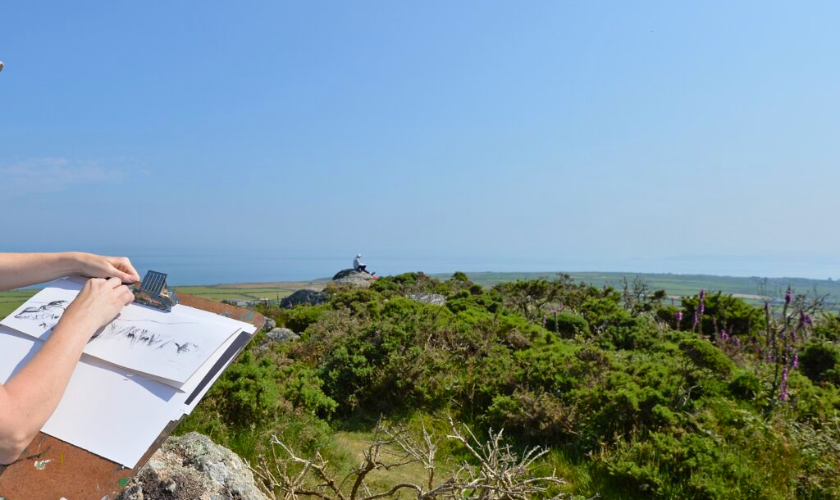
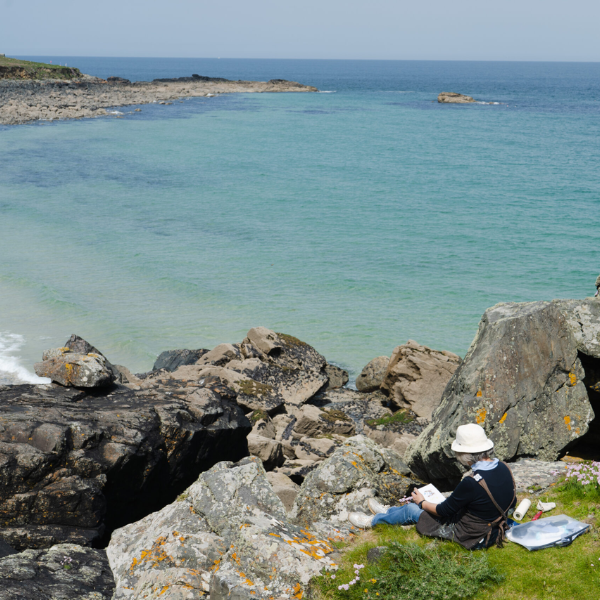
When you sketch outdoors or paint from observation, landscapes reveal themselves differently. A walk becomes slower. You notice the changing quality of light, the structure of plants, the movement of clouds or water.
The experience becomes less about arriving somewhere and more about being present along the way.
Creative practices like painting and drawing can therefore become a bridge between art and nature – helping us reconnect with landscapes we might otherwise pass through quickly.
Pause for thought: Next time you head out on a walk, why not take some paper and pencils, and along the way, sketch what you see. It might be the horizon, your favourite tree, or path in front of you.
A short exercise to help you focus
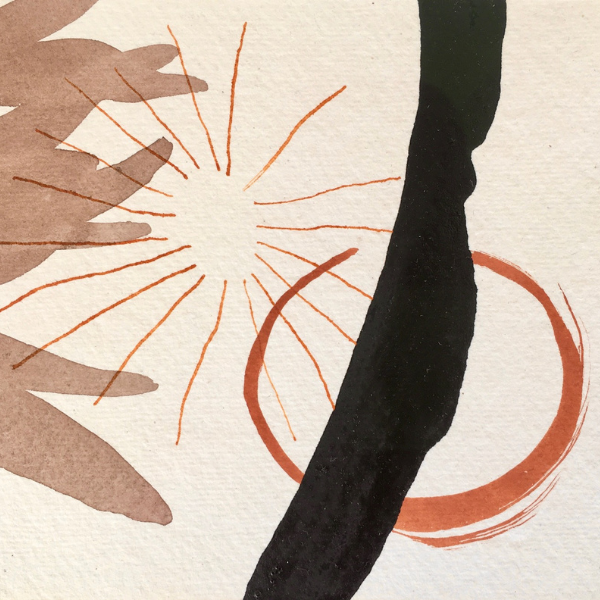
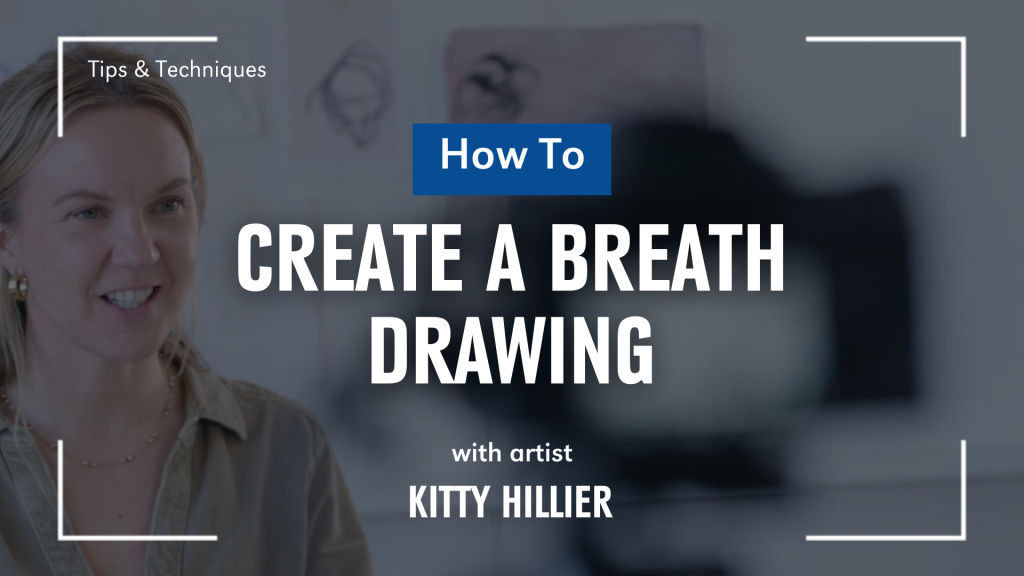
Artist Kitty Hillier often encourages simple exercises that help people ease into a creative mindset. Her approach emphasises play, experimentation and trusting intuition rather than worrying about results.
One exercise she regularly suggests is a breath drawing – a simple way of bringing attention to the body before beginning to draw.
By allowing your breathing to guide the movement of the pencil or pen across the page, the mind begins to slow and the hand becomes looser. It’s a small moment of pause before the act of making begins. Head over to our YouTube channel and try it for yourself!
An Invitation to Slow Down
Painting won’t stop the world from moving quickly.
But it does offer a rare opportunity to step outside that pace for a while – to notice things more carefully.
In doing so, it reminds us of something simple but easily forgotten: that paying attention can be quietly rewarding in itself.
And sometimes the most valuable thing we can do is slow down long enough to see what is already in front of us.
Join us in the studio or online and give yourself the space to slow down, look closely and reconnect with your creativity.
5/3/2026
Share on
Related Stories
Your Monthly Roundup: July
A monthly round up of the latest news, insights and events. Sign up to our newsletter to receive this update straight to your inbox!
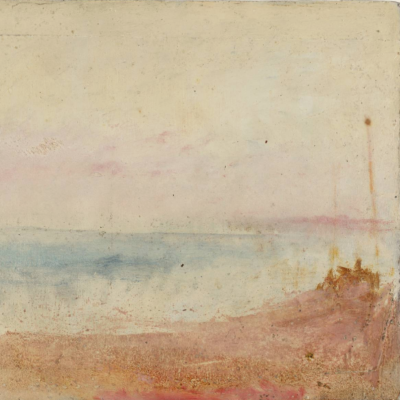
Celebrating 250 Years of J.M.W. Turner
April 2026 marks the end of a year-long celebration: 250 years since the birth of J.M.W. Turner, one of Britain’s most influential and visionary painters. Across galleries, museums, and coastal landscapes, Turner has been celebrated not just as a historical figure, but as an artist who changed how we see the natural world. Born on 23 April 1775, Turner was fascinated...
Your Monthly Roundup: May
A monthly round up of the latest news, insights and events. Sign up to our newsletter to receive this update straight to your inbox!