A Glimpse Inside St Ives School of Painting in 1948
Historic footage of our founder Leonard Fuller offers a rare window into the early years of St Ives School of Painting – and reveals how much of its creative spirit remains familiar today.
Another World, a short film preserved by the BFI National Archive, takes viewers through the streets, harbour and artistic community of post-war St Ives. Filmed in 1948, it captures the town at a moment in its history, as its longstanding tradition of landscape and marine painting met the ideas that would soon make St Ives an internationally important centre for modern art.
For us, one sequence is particularly special.
The film shows Leonard Fuller teaching a class inside the Porthmeor Studios and setting out through St Ives with a group of students. More than 75 years later, the sight feels familiar: a tutor surrounded by easels and attentive students, followed by a group walking together through the town, looking closely at the landscape around them.
Learning from the place itself
The footage provides a rare moving record of the School during its first decade.
St Ives School of Painting had opened in the Porthmeor Studios ten years earlier, in 1938, founded by Leonard Fuller and Borlase Smart. The studios were already part of a much longer artistic story. Since the late nineteenth century, artists had travelled to St Ives to paint its harbour, fishing community, rugged coastline and distinctive coastal light. The arrival of the railway in 1877 made the town more accessible, helping it develop into a thriving international artists’ colony.
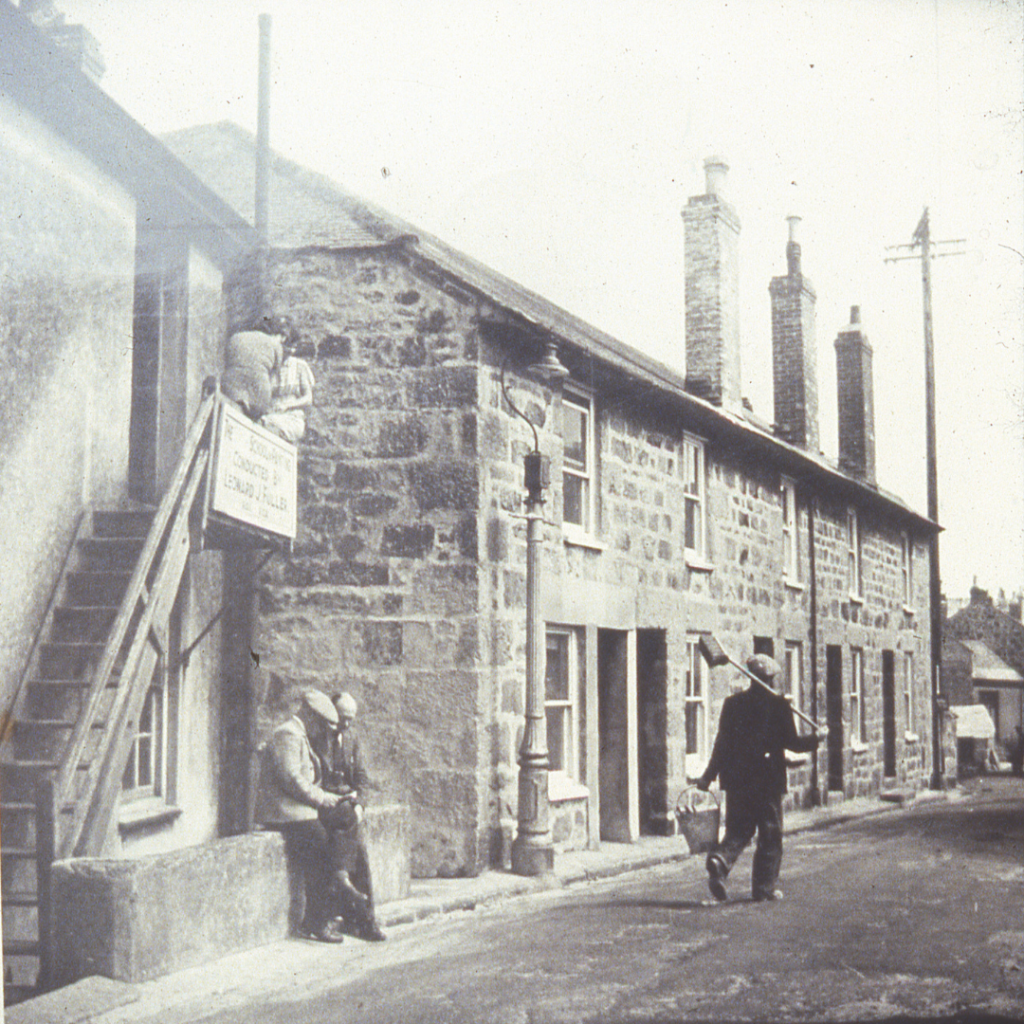
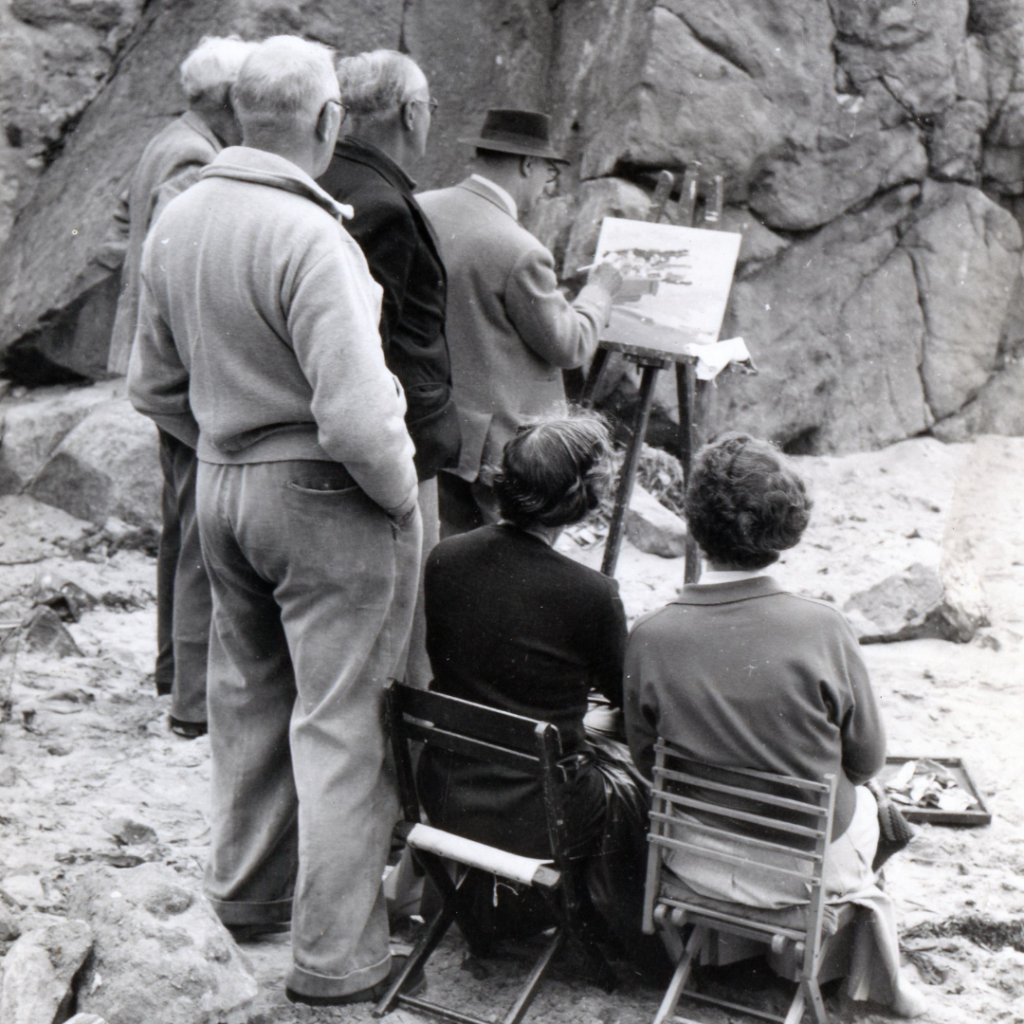
The old fishermen’s lofts overlooking Porthmeor Beach offered artists something particularly valuable – the opportunity to observe the changing sea and weather directly from their studios. By the time Fuller and Smart established the School, generations of painters had already learned from this landscape and from one another within these buildings.
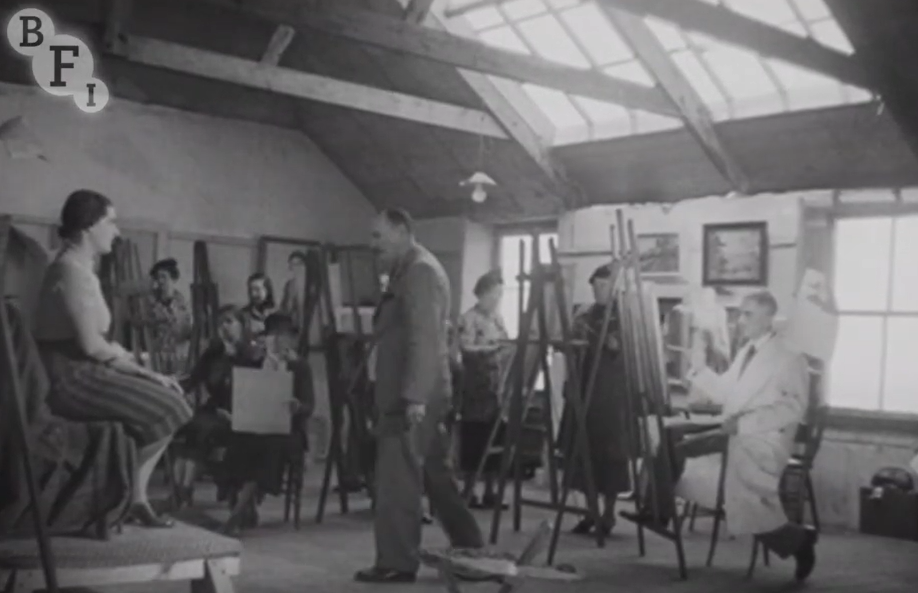
In the film, that relationship between place and practice is visible everywhere. Fuller’s students are not separated from the town around them. They move through its streets, observe its buildings and harbour, and encounter St Ives as a living subject.
It is a way of learning that continues here today. Students still gather in the same historic studios before heading outside with sketchbooks and materials. The streets, beaches, harbour and coastline continue to provide both subject matter and a starting point for experimentation.
Explore more of St Ives’ artistic history
The Beginning of an Art Colony | 1880s to 1920
Since the end of the nineteenth century, the clarity of light unique to St Ives and the romantic coastal scenery with its gigantic seas, rugged cliffs and wild moorland has seduced artists from around the world. The town itself, with its picturesque harbour and charismatic fisher folk, offered a wealth of subject material.
English Modernism in St Ives | 1920s to 1930s
In 1920 Bernard Leach, who would make St Ives internationally famous, arrived with the Japanese potter Shoji Hamada, and built Europe’s first oriental climbing kiln at Higher Stennack. Together they joined the ceramic traditions of the West and East and influenced the development of the studio pottery movement.
The “St Ives School” | 1945 to 1960s
Following the II World War, the established group of painters, sculptors and potters in St Ives and their growing reputation attracted a succession of younger artists. This younger generation formed the new school of abstract artists for which St Ives would become internationally famous for – both near and far.
20/7/2026
Share on
Related Stories
Art Club Collective: Term Three
Welcome to the third edition of The Art Club Collective – a space where we gather together the stories, moments, and artwork that emerge from inside Art Club each month. At the end of every term, we will take a step back and look at what’s been created – the small wins, the breakthroughs, the...
Where to go in West Cornwall | Tourist Guide
West Cornwall offers a unique blend of art, culture, and coastal adventures – making it one of the most inspiring places to visit in the UK. From rich artistic heritage to stunning beaches and vibrant events, there’s always something for everyone to enjoy. Whether you’re joining us for a workshop or looking for ideas to keep a partner or...
Bonnard The Revolutionary with Alice Mumford
Join Alice in our studio, as she takes her students on a gallop through the history of art, to demonstrate what a revolutionary Bonnard was. Part One Part Two Part Three