Course details
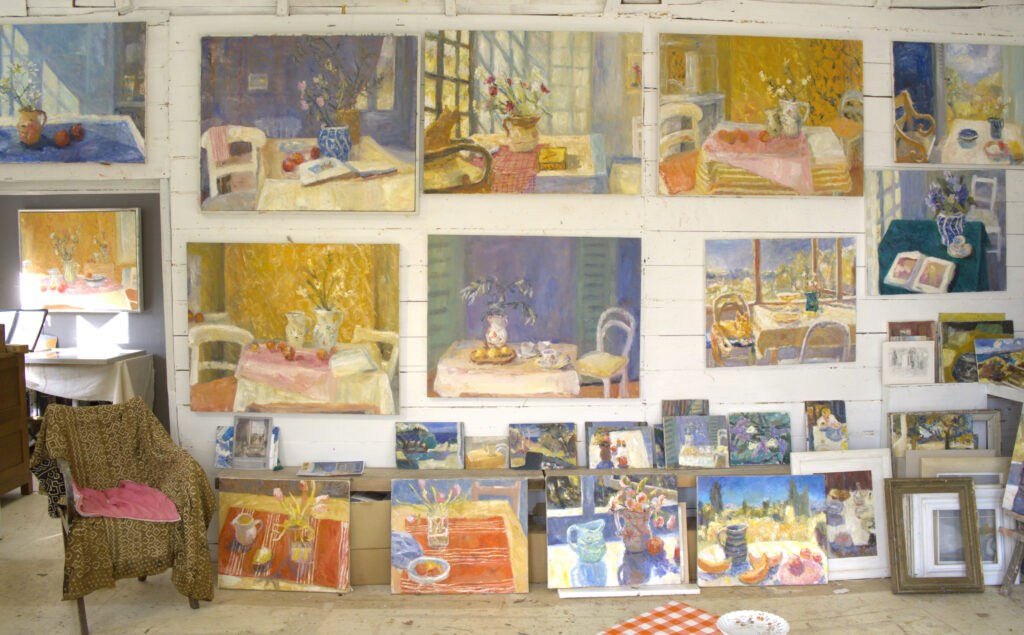
Do you sometimes wonder why a composition works in some paintings and not so well in others? Join Alice Mumford to investigate the common themes that underpin paintings from different eras in Western Art and how this can help your work.
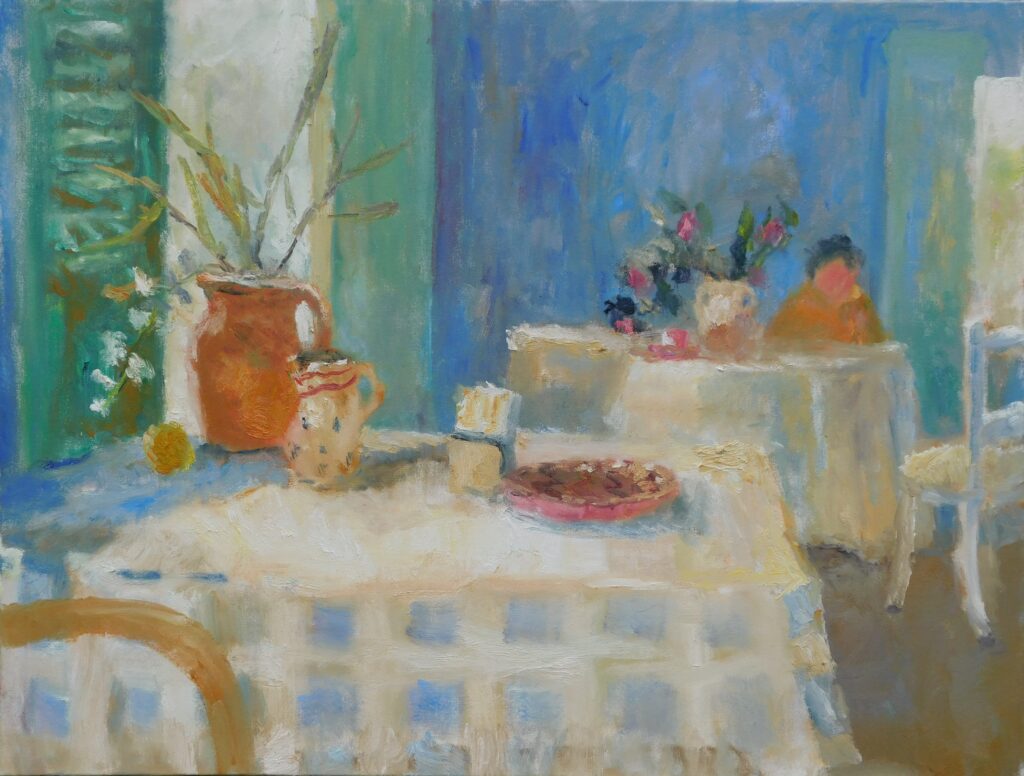
This new online course looks at key elements of composition such as how we navigate or enter and exit a painting. Alice will share the ideas that she uses in her own painting practice to solve practical problems and resolve a painting, ultimately teaching you to become a better ‘looker’ and a better ‘painter’.
Over the duration of the course you will be working through pre-recorded video footage of Alice demonstrating her concepts and bringing her ideas to life in front of the camera. Throughout the course you will be encouraged to do your own research into artists and paintings and experiment using whatever you have to hand, i.e., paper and glue, charcoal and paint to help develop your own understanding of composition.
A summary of the key eight themes explored in the course:
Static and Movement – How to identify powerful symmetry, naturalism, and mini dramas, how the eye “pairs up”
Spatial Tension – What is spatial tension, when does and doesn’t it work and how is it used in figurative and non-figurative paintings?
Triangles – How do you create the reassuring feeling of gravity in a painting and why would you want to?
Golden Section – Why has the golden section been of such influence on Western art forms throughout history, how to work out where the golden section is and how to make use of it
Romantic Landscapes – How attitudes and ideas about nature have influenced compositions in landscape painting, from the formal garden to rewilding, how to use the classical zigzag to enter and take the view around a landscape, why our relationship to the land has changed the way we depict landscapes
Breaking the Fourth Wall – How the fourth wall is used in paintings, how a mirror can provide a means of experimenting with the fourth wall
Top Trumps – How painters tackle large complex paintings where lots of things are going on and how they direct the viewer, how artists use different hierarchies, a bit like playing Top Trumps!, how to compose using light and line
Lost Horizons – Why the invention of perspective changed the way we respond emotionally to a painting, to try and draw emotionally and forget the horizon.
As part of this course there will also be a Bonus Lesson and two pre-recorded Q & A sessions available to watch, where you can watch Alice respond to students and see if your fellow students had the same questions as you!
Who is this course for?
This course is suitable for anyone with an interest in art. It will be useful for those who would like to get more out of their visits to galleries or for artists looking to improve their understanding of how to successfully compose pictures.
What will I learn?
1. A better understanding of composition
2. How to avoid composition clangers
3. How to alter paintings that don’t work
4. How to create harmony in your art work
5. How composition underpins an art work helping you read paintings with more confidence.
How does an online course work?
Upon purchase, the course will be available to view in your account. We would recommend watching one lesson a week. This will give you time to watch the lessons, carry out your own research and prepare for the next lesson. The pre-recorded classes are on average 45 minutes long and the Q and A sessions an hour.
You will be invited to join our Facebook Alumni group so you can share your discoveries with fellow students from around the world. You can also share your work live with others on social media using the #schoolofpainting and tagging us @stives painting
You can watch on demand, as often as you like, for up to 180 days after purchasing the course. You can watch on a PC, laptop or tablet and if you have chromecast or miracast you could even cast to your SmartTV from your phone.
Taught by
What to Bring
A list of materials will be available to see in your account upon purchase of the course. If there are any pre-course tasks to complete before the session they can be found here too along with any handouts and reference material relevant to the course.
You will need access to the internet and ideally a PC, laptop or a tablet with audio.
Timings and Breaks
Watch now at your leisure with plenty of opportunity to watch again as often as you like and let the ideas percolate.
You can revisit as often as you like for up to 180 days after purchasing the course.
What our students say
The topics covered were really interesting and informative. To think, as the artist, I can choose a type of compositional tool, and use it to make the work stronger, gives me more confidence when looking for a composition.
I looked forward to the lessons each week. I also enjoyed that Alice illustrates the points with her own art work, including real-time demonstrations, as well as showing examples from other artists . I really learnt a lot from her.
I always enjoy Alice’s presentations, she got a lovely warm and natural way about her. The content for each topic was generous and and well given. Inspiring and insightful overall. The course has been very helpful and I’m using what I learnt in my own paintings. I feel it’s improved my artwork.
This class was something I looked forward to each week and it never disappointed. When the summer’s over and the nights are long, I will definitely take this course all over again before it expires.
Firstly Alice’s natural, entertaining, thoughtful and enthusiastic presentation. This made it one of the best on line courses I have ever watched. The wide scope of material made it so educational for me – now in my 70’s and having not ever studied art. It encouraged me to learn more and to think about composition in new ways. So helpful.
I just loved it.
All of it!
1. Alice taking us through artworks in search of composition approaches she wished to highlight each week
2. Demonstrating her thoughts using paper/paint
3. I loved when she brought her own work in, showing how she might solve a particular composition challenge she saw in her painting
4. So helpful to have an “assignment” each week to apply a lesson
5. I loved Alice’s engaging lessons and appreciate her generosity as a tutor
FAQs
Art Courses
Do I need any previous art experience?
Not always. We offer courses for all levels, including complete beginners, intermediate students and more experienced artists. You can look for the experience level listed on the individual course page to find the most suitable option for you. If you need any guidance on what course might suit you best, contact on our friendly team on 01736 797180 and they will be able to help.
Online Art Courses
Will I be able to extend access to my online course?
Yes. If your course expires before you’ve had a chance to complete it, you can purchase an extension to your access for a small additional fee.
Extension options range from £5 for 14 days on shorter courses to £20 for 30 days on longer courses. You can purchase an extension through your online account for up to 6 months after your original course expiry date.
Please note that extension length and cost vary depending on the course.
How do I log in to my online account?
To log in to your account, please follow these steps:
- Go to our website: www.schoolofpainting.co.uk
- Click on the ‘Log in’ button (usually found near the top right of the page)
- Enter the email address and you used when booking
- Click “Log in” to access your account
Once logged in, you’ll be able to view your bookings, outstanding payments, online courses and any relevant account information.
If you’ve forgotten your password, simply click ‘Forgot password?’ on the login page and follow the instructions to reset it.
If you have any trouble accessing your account, please email us and we’ll be happy to help.
Can I learn painting online from home?
Yes. Our online painting courses allow you to learn from professional artists wherever you are. You can pause demonstrations, revisit lessons and work through practical exercises in your own time.
Are online art courses suitable for beginners?
Many of our online art courses are suitable for beginners. Course descriptions explain the recommended level, materials and experience so that you can choose a course that feels manageable and relevant to your interests.
How do online art courses work?
Once you have purchased an online course, you can access it through your account and work through the video tuition and supporting resources at a time that suits you. Access periods vary from 60 – 180 days, just check the individual course page before booking.
For live webinars, once you book a place, we will share a link with you in advance so you can join us at the relevant start time – this is typically via Zoom. A recording of the webinar will be shared with you after the webinar so you can re-watch in your own time.
Do you offer online art courses?
Yes. We have more than 90 online art courses covering painting, drawing, colour, landscape, abstraction, mixed media and other creative subjects. The courses are taught by practising artists and can be followed from home at your own pace.
How do I choose the right art course?
Start by considering how you would like to work. You may want to learn a particular medium, improve a skill such as drawing or colour mixing, explore a subject such as landscape or still life, or develop a more personal approach. Each course page explains the content, materials, level and teaching approach to help you decide. Our friendly, helpful team are always available to help further.
Please call us on 01736 797180 to discuss your options or email [email protected].
Who teaches your art courses?
Our courses are led by practising artists – including Jill Eisele, Alice Mumford, Iona Sanders and Neil Canning – all with extensive knowledge of their chosen subjects and materials. Each tutor brings their own artistic experience, working methods and approach to teaching, giving students the opportunity to experience a wide range of ideas and techniques.
In Person Courses
How large are your art classes?
Our studio courses are taught in small groups of around 10 to 12 people, allowing tutors to provide individual guidance alongside group demonstrations and discussions.
What is included in an art course?
Course fees include professional tuition from a practising artist and use of the School’s studio facilities. Materials and equipment are all included in our in person courses, workshops and life drawing sessions – so you can just turn up and get started. Teas and coffees are also provided throughout the day.
Can I attend an art course on my own?
Absolutely. Many students come to St Ives School of Painting independently. Courses offer a welcoming and sociable environment, with plenty of opportunities to meet other people who share an interest in making and learning.
What art courses do you offer in St Ives?
We offer a varied programme of art courses in St Ives, including painting, drawing, printmaking, mixed media and life drawing. You can choose from one-day workshops, short summer sessions and more immersive three- and four-day studio courses. We also offer longer development courses for those looking to take their practice to the next level.
How do I get my work home?
Tutors have special techniques for transporting oil paintings and for our 3 day courses we will give you a plastic folder with a handle. These are also available to purchase for £3.50 or do bring a portfolio.
Please note: For the course Bigger, Bolder, Braver with Boo Mallinson, we will provide a large A1 size plastic folder for your work but please consider how you will be able to transport the larger canvases home safely before signing up for the course as we will not be able to store large paintings in the studio. On this course you will be painting on a 50cms x 50cms and a 1m x 1m canvas alongside smaller pieces.
For international students we are happy to arrange transportation of your work back home, postal costs will be borne by you.
What do I need to bring?
You don’t need to bring anything with you unless we specify beforehand. All materials, aprons and tools are provided, however some people do like to bring along their favourite set of brushes or sketchbooks.
What do I do for lunch?
Courses allow an hour’s break for lunch and there are numerous places nearby or you are welcome to bring a packed lunch into the studio.
What times do courses run?
Most of our courses start at 10am and end at 4.30pm on the first day. Subsequent days we start at 9.30am ending at 4pm.
Short workshops start at 10am in the Summer and 9.30am/ 1.30pm during September festival
Can I bring my dog?
The studios are busy places with lots of equipment and not suitable for bringing a pet dog. We can accommodate assistance dogs with prior notice so we can make suitable adjustments. If you wish to bring an assistance dog please call 01736 797180 or email [email protected]
Choosing an Art Course
Do you run life drawing classes in St Ives?
Yes. We hold regular life drawing sessions in St Ives, including Thursday evening and Saturday morning classes. These welcoming, tutored sessions are open to a range of experience levels and provide an opportunity to practise drawing from a life model. Our life drawing sessions are held just a 5 minute walk from our studios at The Island Centre.
Do you offer art courses for adults?
Yes. We run art classes and courses for adults throughout the year, from accessible introductory workshops to more intensive courses for people looking to deepen their creative practice.
What types of painting can I learn?
Our courses cover a wide range of approaches, including oil painting, acrylic painting, watercolour, gouache, landscape painting, still life, portraiture and abstraction. We also offer courses exploring colour, composition, mark-making and creative confidence.
You might also like...
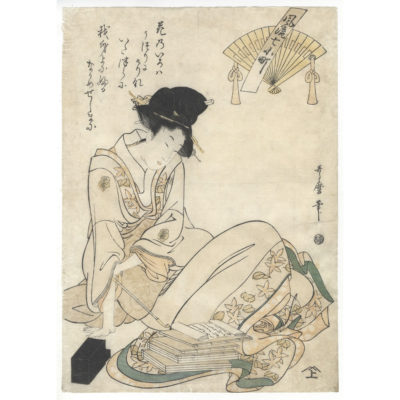
Figure - The Folded Line
Fri 22 Sep 2028 - 2 hours
Tom Rickman
Join artist Tom Rickman for this exploration of folded material on the human form. Working from a model learn how drapery not only covers or reveals but animates and extends the body in this online webinar.
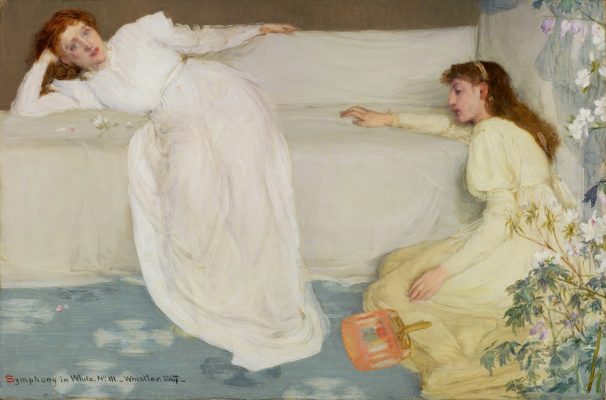
Figure - Whistler's Woman in White
Fri 22 Sep 2028 - 2 hours
Gary Long
Join artist Gary Long for this Whistler-inspired recording. Draw and paint from a clothed model in our Porthmeor Studios.
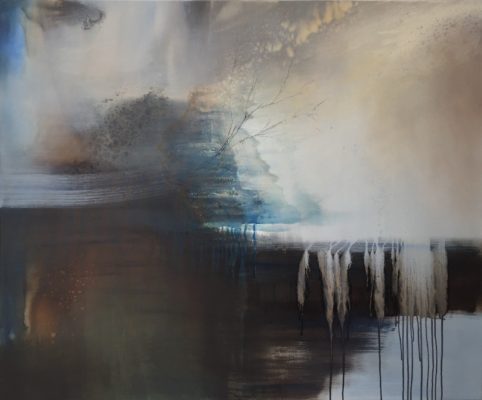
Expressive Mark Making
Fri 22 Sep 2028 - 1.5hrs
Amy Albright
Join artist Amy Albright as she helps you to free-up your art practice and energize your paintings.
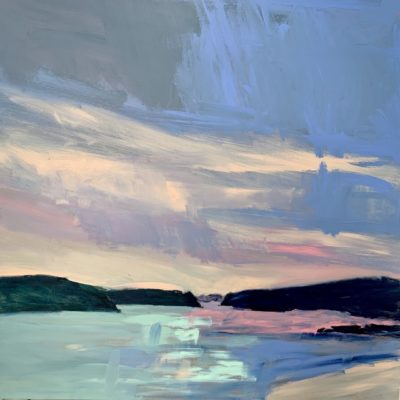
Light, Colour, Texture
Fri 22 Sep 2028 - 1.5 hr
Alex Yarlett
Join us for this energetic webinar led by new tutor Alex Yarlett exploring capturing the atmosphere, emotions and feelings of a place.
Coastal Light in Oil
Fri 22 Sep 2028 -
Gary Long
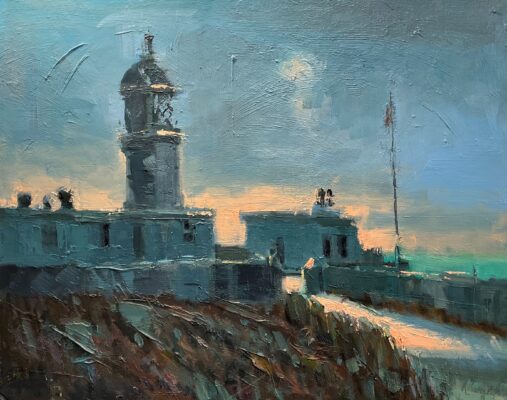
Join artist, Gary Long, on location and in the studio as he shares his oil painting journey, from preparatory drawings, discussing colour mixing, layering, brush techniques to the creation of depth and dimension in his drawings and paintings of Pendeen Watch.
Creative Journaling for Artists (rec)
Fri 22 Sep 2028 -
Laura Menzies
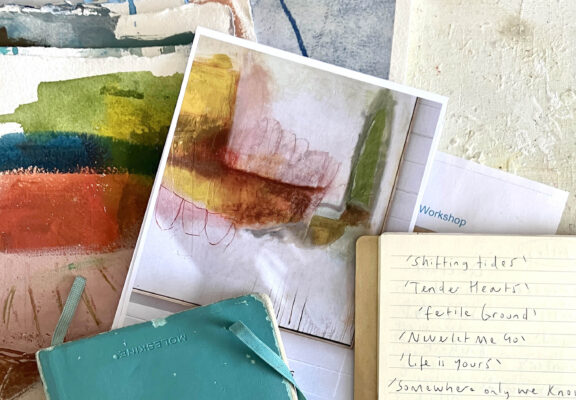
In this course you will be encouraged to explore creative play in your art journals, allowing you to capture your personal curiosities and interests to develop your visual language and bring clarity to your practice.
Joan Eardley- A Painter's Painter
Fri 22 Sep 2028 - 1 hr
Jill Eisele
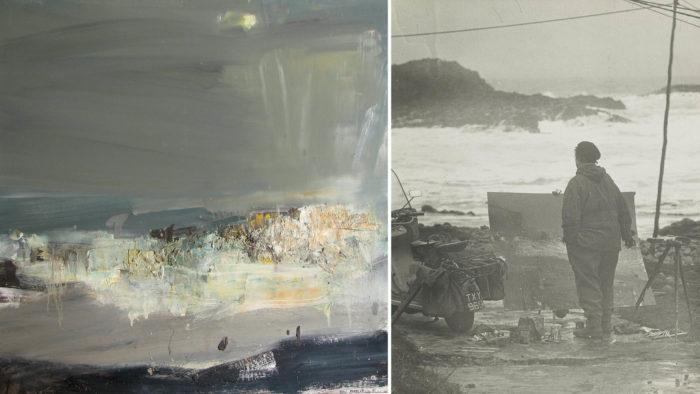
Watch Jill Eisele in this recording as she takes us on an artist's journey to Joan Eardley’s Catterline on the wild east coast of Scotland. Explore how Eardley continues to inspire painters today.