Course details
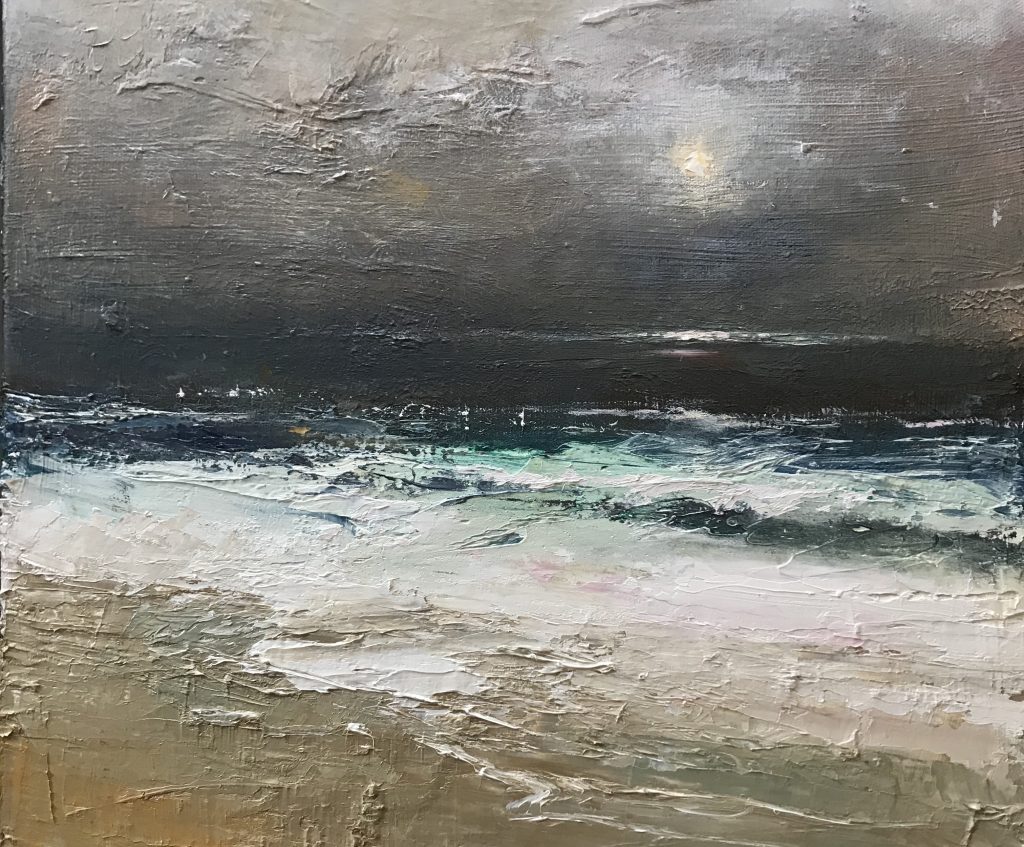
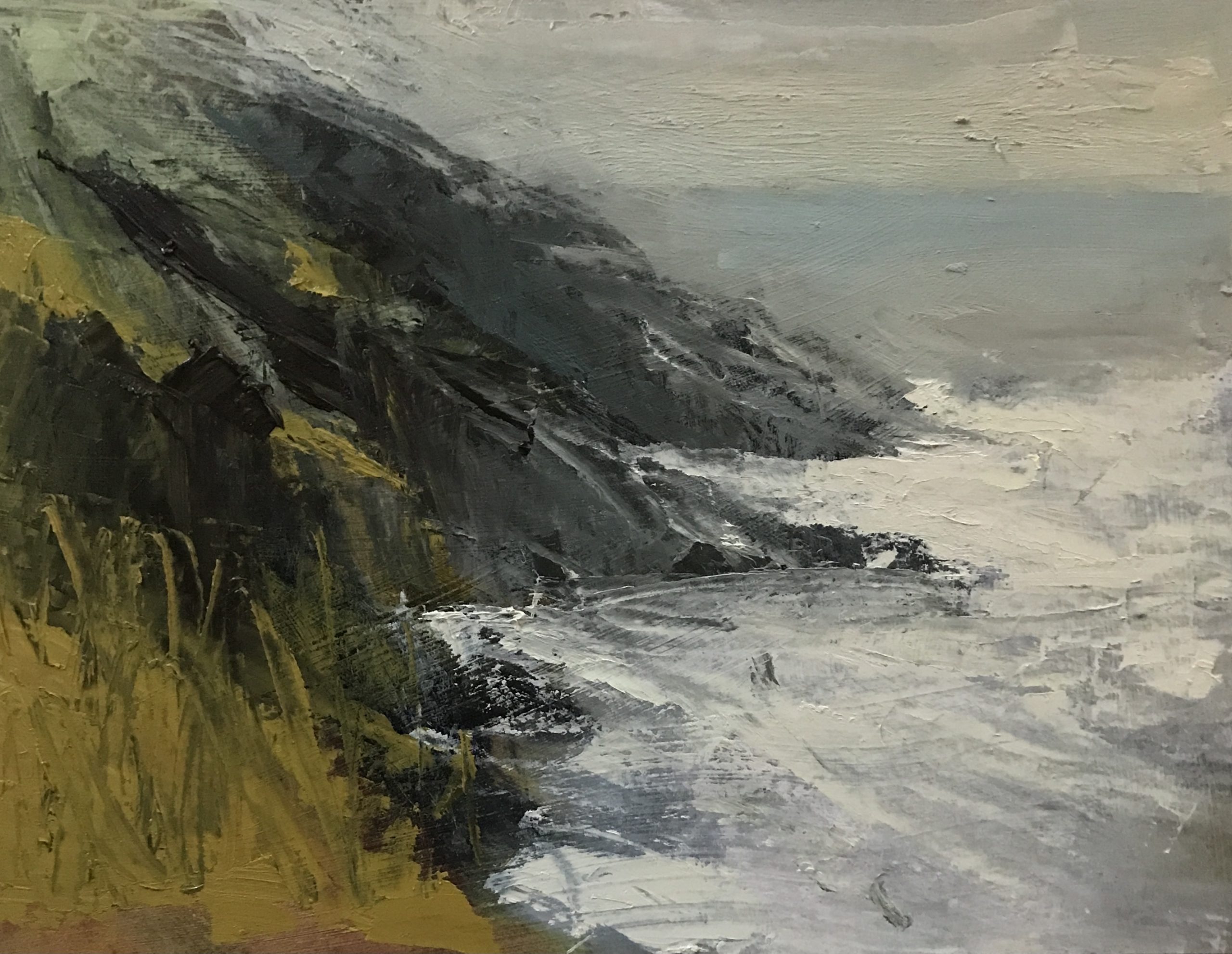
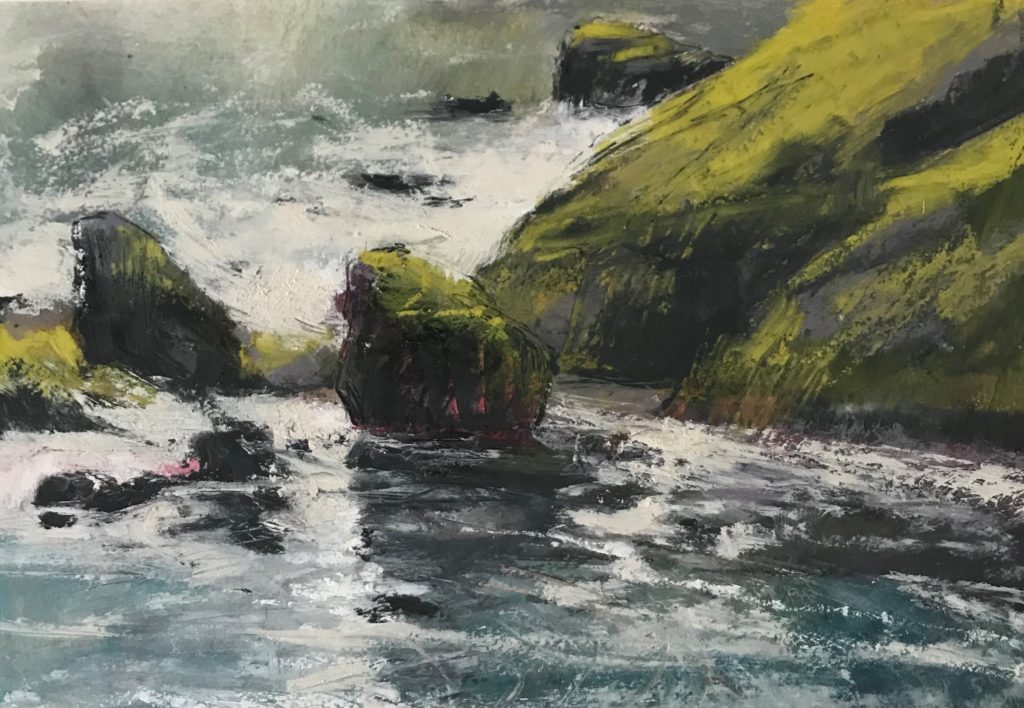
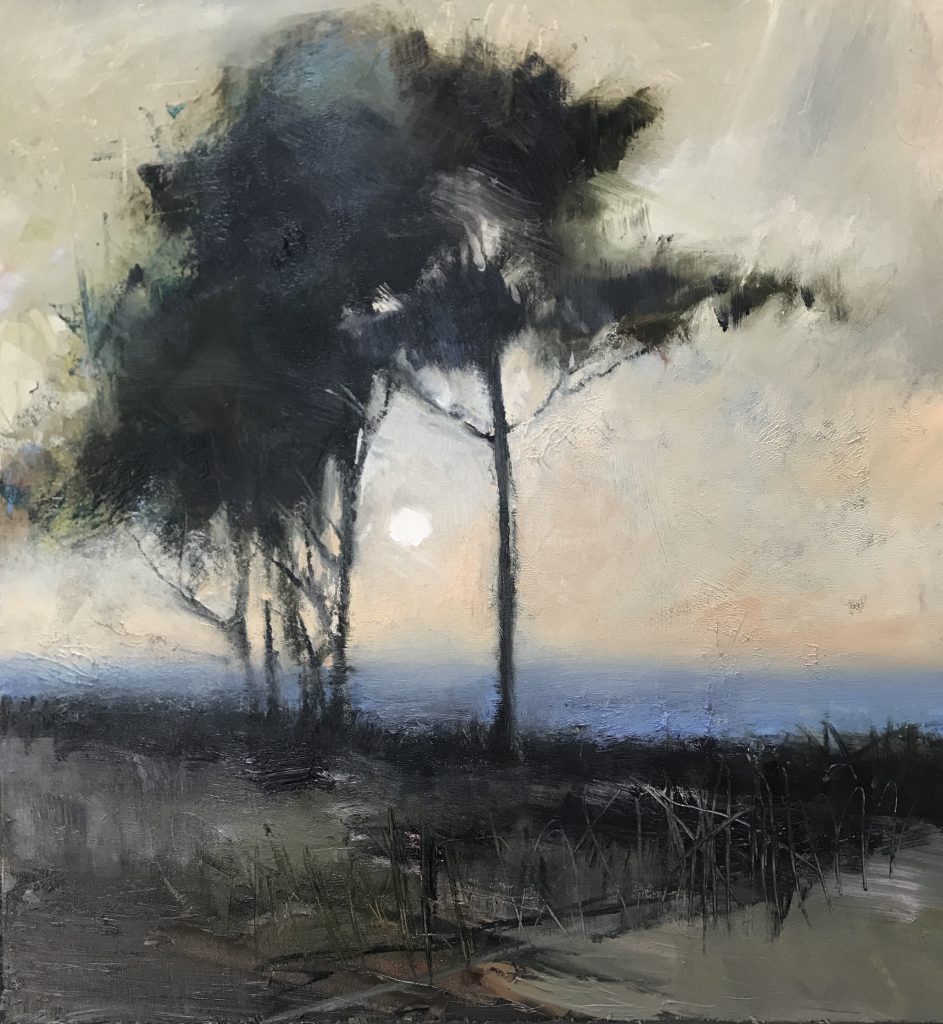
This course revels in the bounty of materials available to you as a painter. Use differences in texture and viscosity to describe organic coastal forms. Combine sheer washes and sprays with thicker, impasto marks by layering, scraping and saturating, building the dramatic expanse of the sea.
Plunge into painting the ocean in all its mesmerising wildness. Learn from the masters of layering and gesture – Claude Monet, Cy Twombly, Joan Eardley and more – to create energy and texture from beneath the surface of your paintings. Jill Eisele offers her professional insight into techniques that often took artists years to develop – and how to apply them in your own expressive seascapes.
Over the three days you’ll gradually incorporate colour and materials to build layers of interest, experimenting with how different consistencies react to one another. Rough and viscous textures like salt, wax and oil bars combine with washes, glazes and inky pools, replicating the movements, meetings and retreating of the sea, land and sky.
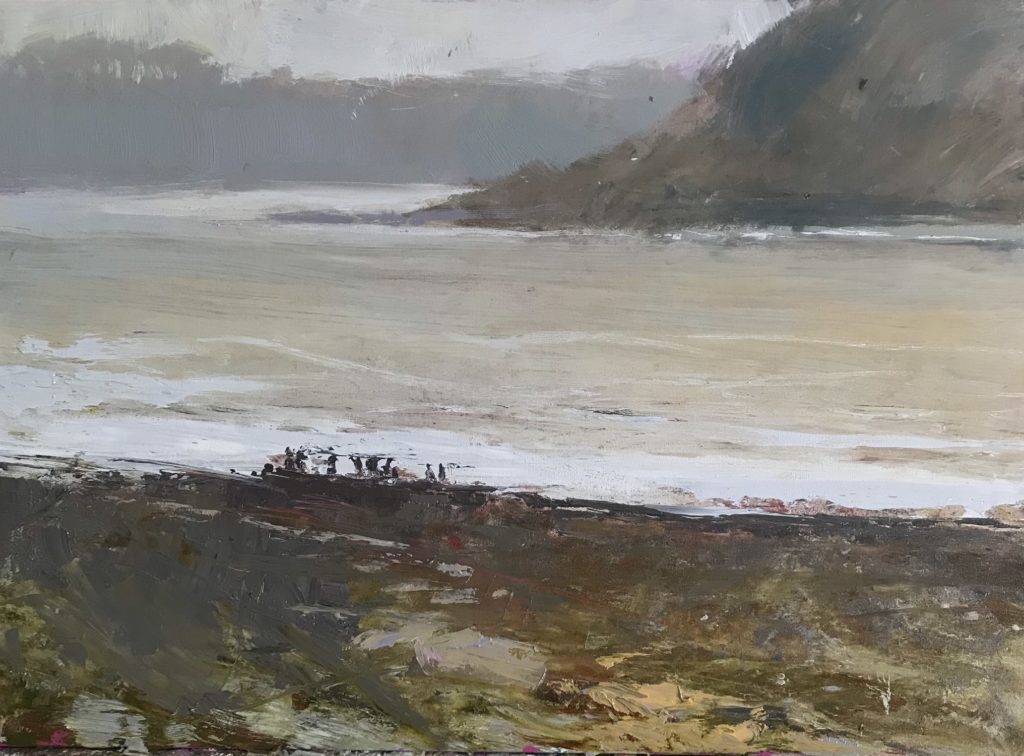
You’ll spend time surrounded by the sea, working en plein air – a method that revolutionised Monet’s work, allowing him to ‘seize’ the experience of a landscape and truly capture it in his paintings. Work with specific colour palettes and combinations to evoke tone and mood in your paintings. Learn to control saturation and translucency of colour to build intensity.
Collecting from the treasure trove of research and experiments you’ve gathered, you’ll create vibrant, semi-abstract paintings with a powerful personal connection to the ocean.
Day to day plan
This is a rough indication of what to expect over the course. However sometimes the structure of the days may alter depending on the nature of the group and weather.
Day 1
After a brief introduction we will explore the work of artists such as Monet, Tress and Twombly, specifically how they created texture in their surfaces. We will spend time both outside and in the studio, experimenting with a variety of materials in monochrome and creating surfaces to use in the coming days. We will then explore colour control, saturation and translucency.
Day 2
We will continue to explore colour today, creating depth using washes and ink. We will then explore earth tones and gestural mark making using a palette knife.
Day 3
After some sketching outside we will consolidate work and research from previous days to create semi-abstract paintings. We’ll apply principles of composition and structure gleaned from deconstructing historic works to create strong, interesting paintings.
What will I learn?
- Professional insight into the techniques used by expressive landscape painters.
- Exploration and experimentation in a wide variety of materials.
- A technical understanding of colour theory.
- Confidence and control in using colour to create saturation, translucency and glazes.
- An understanding of principles of structure and composition to create strong paintings.
Who would this course suit?
If you’re inspired by the ever-changing ocean and would like to put that inspiration into practice, whatever your experience, this course is for you. Jill Eisele’s positivity and enthusiasm create the ideal conditions for venturing into experimentation and abstraction. If gestural and luscious landscape paintings appeal to you, this is a wonderful opportunity to learn the tips and techniques for creating textured and intriguing seascapes.
Ahead of your oil painting course with us if you would like to brush up your skills, you are entitled to 25% off our online “Getting Started with Oil Painting” course here. You will be given a code after purchasing our studio oil painting course.
Our studio ‘Beginner’s Oil Painting’ courses can be found here.
Taught by
What to Bring
Our studios are fully equipped and we provide you with all the materials you need for your course. However, if you have a favourite set of brushes or any specialist materials that you would prefer to use, please bring them with you.
Timings and Breaks
The first day starts at 10am and finishes at 4.30pm, please aim to arrive ten to fifteen minutes before the start time.
All course days after that start at 9.30am and finish at 3.30 on Sunday after a short lunch break to try an enable people to get home that day.
There are plenty of nearby places to eat and we will serve tea and coffee at break times during the day.
What our students say
Jill was extremely knowledgeable about her subject and very good at passing on that information. Very patient, helpful and encouraging.
The course was beyond what I could have hoped for. Jill is a wonderful teacher, she planned the course so intricately, gave us so many ideas, techniques, knowledge, expertise and amazing encouragement. I don’t think I have ever learnt so much from anyone in such a short space of time. I’m so inspired to keep painting and experimenting and trying to capture the light of St.Ives.
A bit mind blowing in a positive way. Learnt so much and have such an urge now to go and try it all out.
FAQs
Art Courses
Do I need any previous art experience?
Not always. We offer courses for all levels, including complete beginners, intermediate students and more experienced artists. You can look for the experience level listed on the individual course page to find the most suitable option for you. If you need any guidance on what course might suit you best, contact on our friendly team on 01736 797180 and they will be able to help.
Art Courses in St Ives
How do I log in to my online account?
To log in to your account, please follow these steps:
- Go to our website: www.schoolofpainting.co.uk
- Click on the ‘Log in’ button (usually found near the top right of the page)
- Enter the email address and you used when booking
- Click “Log in” to access your account
Once logged in, you’ll be able to view your bookings, outstanding payments, online courses and any relevant account information.
If you’ve forgotten your password, simply click ‘Forgot password?’ on the login page and follow the instructions to reset it.
If you have any trouble accessing your account, please email us and we’ll be happy to help.
Do you offer art classes for children and teenagers?
Yes. Our Young Artists Programme includes art workshops for children and teenagers, with sessions designed for different age groups. During the summer, we also run creative workshops for children aged 7-13.
How large are your art classes?
Our studio courses are taught in small groups of around 10 to 12 people, allowing tutors to provide individual guidance alongside group demonstrations and discussions.
What is included in an art course?
Course fees include professional tuition from a practising artist and use of the School’s studio facilities. Materials and equipment are all included in our in person courses, workshops and life drawing sessions – so you can just turn up and get started. Teas and coffees are also provided throughout the day.
Can I attend an art course on my own?
Absolutely. Many students come to St Ives School of Painting independently. Courses offer a welcoming and sociable environment, with plenty of opportunities to meet other people who share an interest in making and learning.
Do you offer beginner painting courses?
Yes. Our programme includes beginner-friendly painting courses covering materials such as oils, acrylics and watercolours. These courses introduce you to essential tools and techniques while giving you plenty of time to practise and explore your own ideas.
How do I choose the right art course?
Start by considering how you would like to work. You may want to learn a particular medium, improve a skill such as drawing or colour mixing, explore a subject such as landscape or still life, or develop a more personal approach. Each course page explains the content, materials, level and teaching approach to help you decide. Our friendly, helpful team are always available to help further.
Please call us on 01736 797180 to discuss your options or email [email protected].
Who teaches your art courses?
Our courses are led by practising artists – including Jill Eisele, Alice Mumford, Iona Sanders and Neil Canning – all with extensive knowledge of their chosen subjects and materials. Each tutor brings their own artistic experience, working methods and approach to teaching, giving students the opportunity to experience a wide range of ideas and techniques.
How do I get my work home?
Tutors have special techniques for transporting oil paintings and for our 3 day courses we will give you a plastic folder with a handle. These are also available to purchase for £3.50 or do bring a portfolio.
Please note: For the course Bigger, Bolder, Braver with Boo Mallinson, we will provide a large A1 size plastic folder for your work but please consider how you will be able to transport the larger canvases home safely before signing up for the course as we will not be able to store large paintings in the studio. On this course you will be painting on a 50cms x 50cms and a 1m x 1m canvas alongside smaller pieces.
For international students we are happy to arrange transportation of your work back home, postal costs will be borne by you.
What times do courses run?
Most of our courses start at 10am and end at 4.30pm on the first day. Subsequent days we start at 9.30am ending at 4pm.
Short workshops start at 10am in the Summer and 9.30am/ 1.30pm during September festival
In Person Courses
What art courses do you offer in St Ives?
We offer a varied programme of art courses in St Ives, including painting, drawing, printmaking, mixed media and life drawing. You can choose from one-day workshops, short summer sessions and more immersive three- and four-day studio courses. We also offer longer development courses for those looking to take their practice to the next level.
What do I need to bring?
You don’t need to bring anything with you unless we specify beforehand. All materials, aprons and tools are provided, however some people do like to bring along their favourite set of brushes or sketchbooks.
What do I do for lunch?
Courses allow an hour’s break for lunch and there are numerous places nearby or you are welcome to bring a packed lunch into the studio.
Can I bring my dog?
The studios are busy places with lots of equipment and not suitable for bringing a pet dog. We can accommodate assistance dogs with prior notice so we can make suitable adjustments. If you wish to bring an assistance dog please call 01736 797180 or email [email protected]
Choosing an Art Course
Do you run life drawing classes in St Ives?
Yes. We hold regular life drawing sessions in St Ives, including Thursday evening and Saturday morning classes. These welcoming, tutored sessions are open to a range of experience levels and provide an opportunity to practise drawing from a life model. Our life drawing sessions are held just a 5 minute walk from our studios at The Island Centre.
Do you offer art courses for adults?
Yes. We run art classes and courses for adults throughout the year, from accessible introductory workshops to more intensive courses for people looking to deepen their creative practice.
What types of painting can I learn?
Our courses cover a wide range of approaches, including oil painting, acrylic painting, watercolour, gouache, landscape painting, still life, portraiture and abstraction. We also offer courses exploring colour, composition, mark-making and creative confidence.
You might also like...
Postcards from Wilhelmina Barns-Graham
Fri 22 Sep 2028 - 1.5 hours
Hilary Jean Gibson
Follow in the footsteps of St Ives artist Wilhelmina Barns-Graham and explore her unique approach to painting and drawing the rocks and waves of the famous rugged coastline of St Ives.
Online Art Club Three: Landscape
Fri 22 Sep 2028 - 4 x 90 min sessions
Iona Sanders + Camilla Dixon
The third term of art club explores landscape, taking inspiration wherever you are, urban or rural, a view from your window, an imaginary place or memory. This online course includes four recordings, each lasting 90 minutes.
Seeing the Light
Fri 22 Sep 2028 - 2.5 hours
Kieran Stiles
When artists talk about light, what do they mean? How does it work, and what does it say? Explore different concepts and methods of representing light in this 2 and a half hour recorded online course led by artist Kieran Stiles.
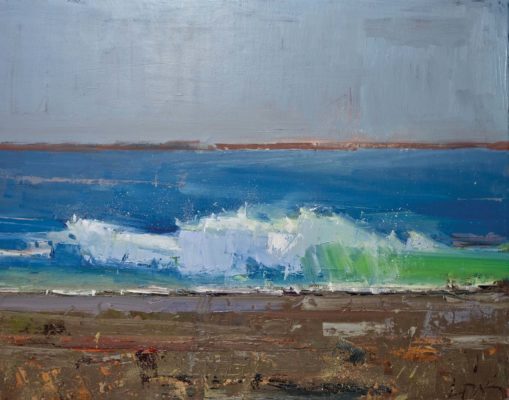
Where Sea Meets Land
Mon 10 - Wed 12 May 2027 - 3 days
Gary Long
Learn the secrets to capturing the dramatic encounter between sea and land in oils. Convey that fleeting moment when a wave crashes on the shore, its drama, energy and movement in this seascape oil painting course.
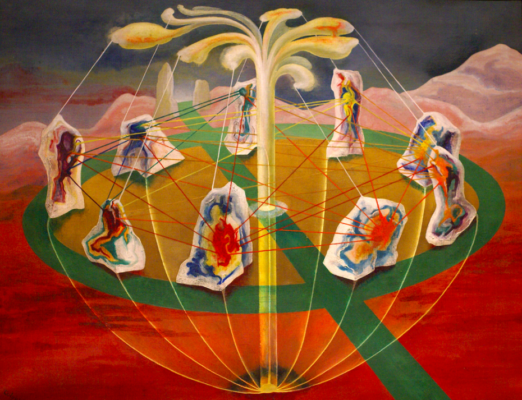
Postcards from St Ives - Ithell Colquhoun
Fri 22 Sep 2028 - 1.5hrs
Kate Southworth
Join artist Kate Southworth for this Ithell Colquhoun-inspired recording. See how living and working in the sacred sites and magical landscapes of west Cornwall shaped Colquhoun's diverse practice.
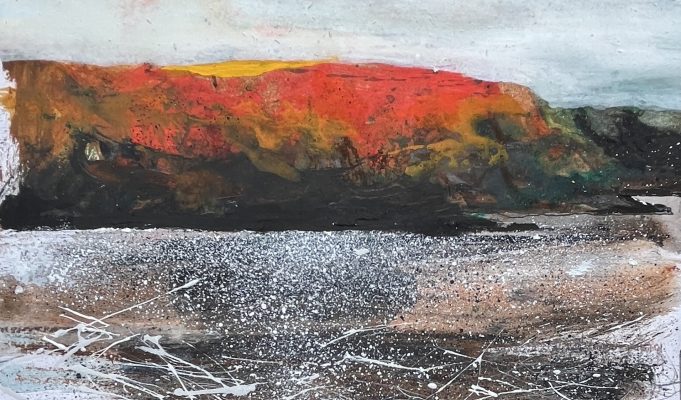
The Texture of Nature
Mon 13 - Wed 15 Sep 2027 - 3 days
Kieran Stiles
As artists, how do we turn our direct experiences of the landscape into a visual vocabulary? And how can we incorporate physical elements into rich textures?
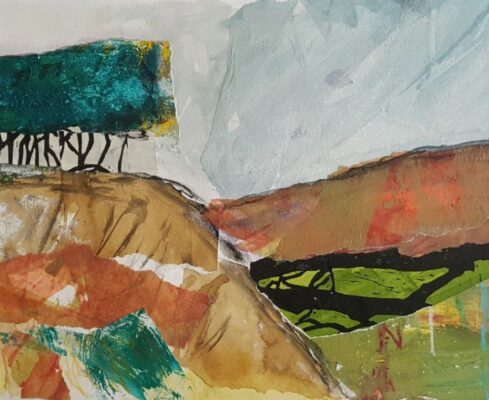
Abstract Landscapes: Inspired by Lanyon
Mon 7 - Fri 11 Jun 2027 - 5 days
Natalie Day
Create lively contemporary paintings inspired by Peter Lanyon’s dynamic approach to landscape.