Sir Terry Frost RA: A Life in Colour and Light
This month, as we celebrate the birthday of Sir Terry Frost RA (1915–2003), we reflect on his bold arcs, circles, and vivid contrasts that defined post-war modern art – and on the extraordinary journey that led him there.
From POW to Painter
Born in Leamington Spa, Frost worked in factories before World War II. Captured as a soldier in Crete, he spent four years as a prisoner of war, where, encouraged by fellow artist Adrian Heath, he began painting. Frost later said this period gave him a “spiritual awakening,” a sense of perception that stayed with him for life.
The St Ives Years
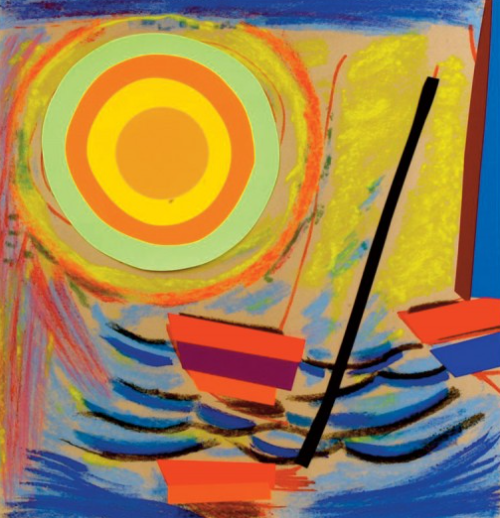
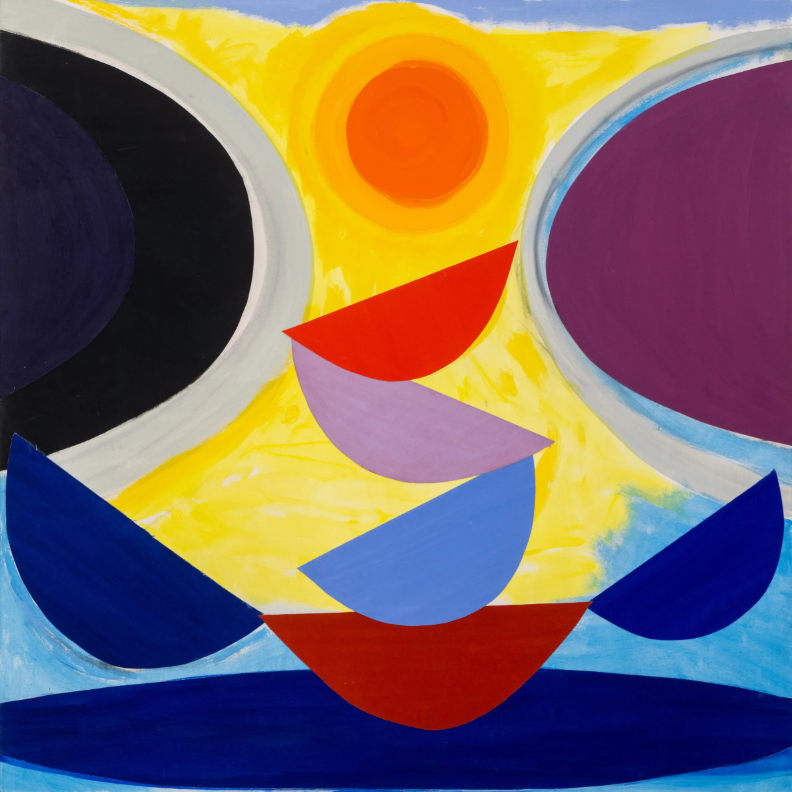
After the war, Frost studied at Camberwell School of Art under Victor Pasmore and joined the growing St Ives art community in Cornwall, working briefly as Barbara Hepworth’s assistant. There, surrounded by the sea, light and the rhythms of boats, he developed his signature language of geometric abstraction.
Colour, Rhythm, and Energy
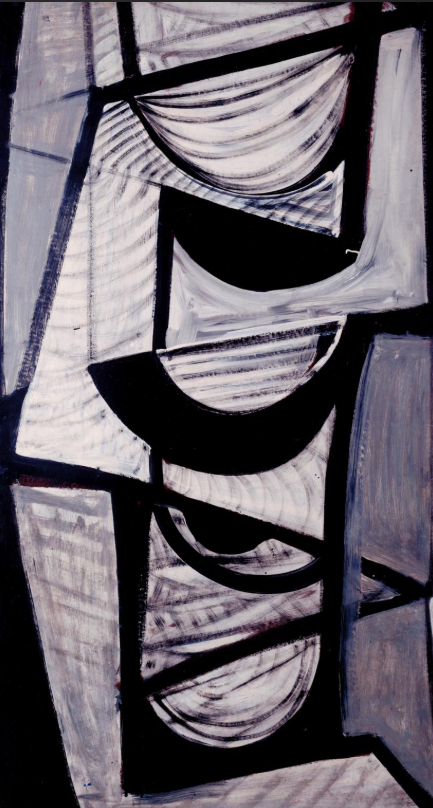
Frost’s paintings, prints, and collages translate emotion and motion into pure form. His works like Black and White Movement (1952) turn the everyday – sails, tides, sunlight – into visual music. He believed abstraction could express feeling as directly as poetry or dance.
Teaching and Recognition
Alongside his studio practice, Frost taught at Bath, Leeds, and Reading, inspiring generations of artists. His career brought major exhibitions, a Royal Academy fellowship, and finally a knighthood in 1998. A 2000 retrospective at the Royal Academy confirmed his place among Britain’s leading modernists.
“Painting is about the celebration of life.”
Terry Frost
Why Terry Frost Still Resonates
What makes Frost a compelling figure even today?
- Emotional clarity through abstraction
Frost once remarked that his paintings aim not to depict what he saw but to evoke what he felt: the emotional response to movement, light, colour. His often spontaneous, poetic forms carry a directness that remains powerful. - A lifelong dialogue of form and medium
Frost’s practice spanned painting, printmaking, sculptural construction and mobile work. The interchange between them enriched his visual language. You can see in his prints the echoes of shapes from his paintings, and in his three-dimensional work the sculptural elements that underlies his compositions. - Rooted in place, but universal in scope
Though deeply tied to Cornwall and the play of light and sea, his vocabulary of form transcends locality to speak in universal visual terms. The shapes, curves, arcs, circles, luminous planes, are familiar but reconceptualised. - An inspirational narrative
His origin story – becoming an artist in a POW camp, turning hardship into creative awakening remains a poignant testament to resilience. And his quote “I honestly do not think that awakening has ever left me” captures the sense that art was not just a career but a continuing spiritual journey
Frost’s Legacy
Terry Frost’s art radiates optimism – a belief in the power of colour and form to evoke joy. His sons Anthony and Stephen, and grandson Luke, have each continued his creative spirit in their own ways.
From the darkness of a POW camp to the light of the Cornish coast, Frost’s life and art remind us that creativity can turn even hardship into harmony.
14/10/2025
Share on
Related Stories
How to Start Painting after 20 Years
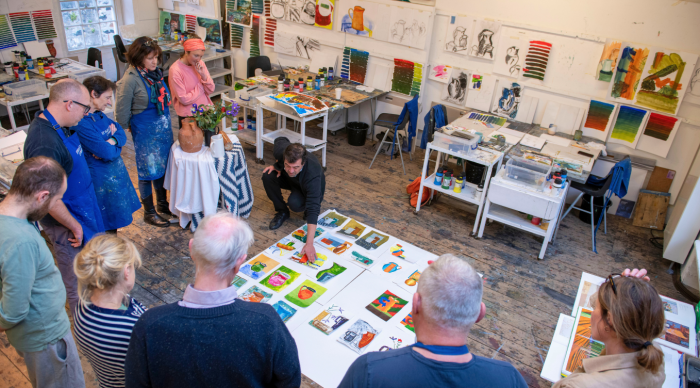
We often hear from people who haven’t painted in years and aren’t sure where to begin. Recently, one of our own team decided to find out for herself. From Office Manager to Amateur Artist “I haven’t painted in over 20 years… where do I even start?” It’s something we hear all the time from prospective...
Celebrating 250 Years of J.M.W. Turner
April 2026 marks the end of a year-long celebration: 250 years since the birth of J.M.W. Turner, one of Britain’s most influential and visionary painters. Across galleries, museums, and coastal landscapes, Turner has been celebrated not just as a historical figure, but as an artist who changed how we see the natural world. Born on 23 April 1775, Turner was fascinated...

Your Monthly Roundup: January
A monthly round up of the latest news, insights and events. Sign up to our newsletter to receive this update straight to your inbox!