In Conversation: Saul Cathcart
Saul Cathcart’s paintings move between abstraction and representation, drawing on more than 20 years of painting outdoors in Cornwall. His training in sculpture still informs his interest in form and space, while his approach to landscape is guided by close observation and an openness to colour beyond what is literally in front of him. On his Finding Your Landscape course, he helps students develop a more personal response to place through layered studio work and painting outdoors.
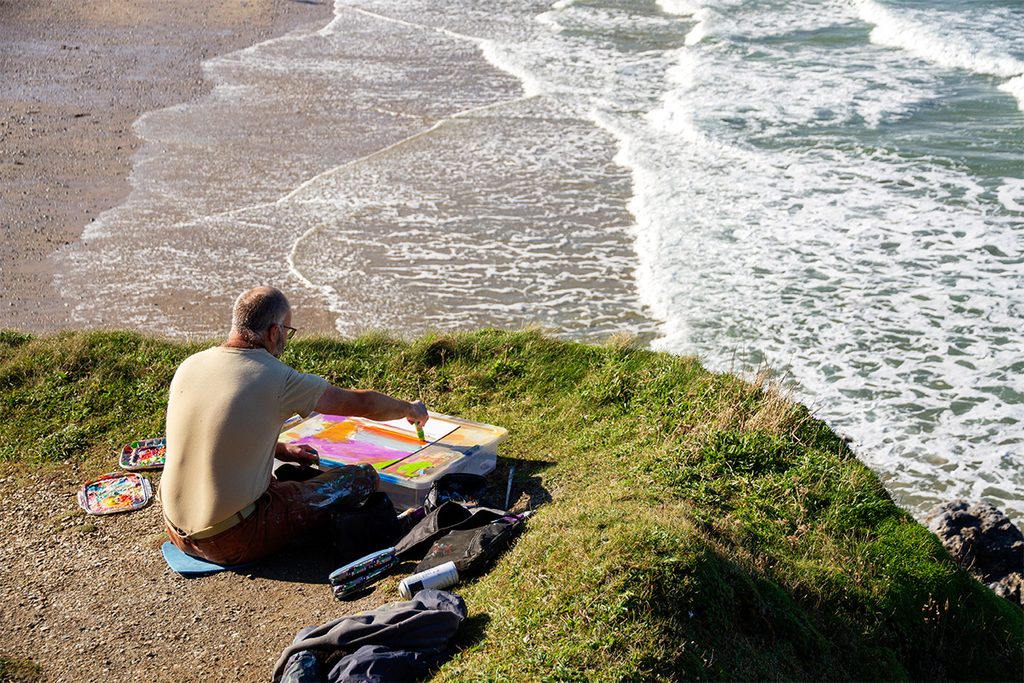
In this conversation, Saul reflects on why returning to the same location can reveal something new, and how he decides when a painting needs to move closer to or further from the landscape. He also shares what helps him take risks, work through uncertainty and find his own visual language.
In 2027, Saul Cathcart will bring his tuition to St Ives School of Painting for the first time, through his course Finding Your Landscape.
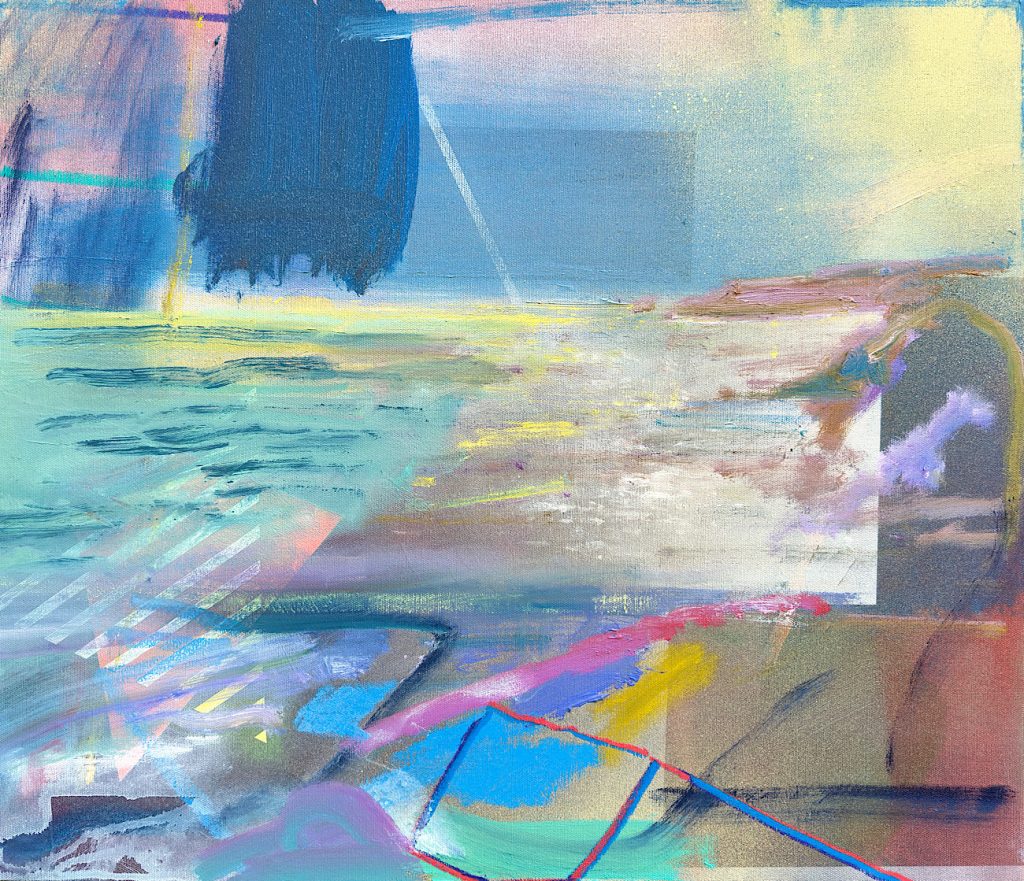
You originally trained in sculpture. Do you think that still influences the way you construct a painting or think about form and space?
Yes. My whole desire to study sculpture back then was because I was stuck with a lack of knowledge.
I remember thinking: “How can I paint the feeling of a three-dimensional scene without the knowledge of making art in the physical world?”
I wanted to expand and improve my understanding of space and form with the idea of coming back to painting with the ability to bend it to my will! I saw my degree as training and preparation, in a way.
Open space is where I feel at my best, so capturing that on a 2D surface feels like a nice little task. I want to try to achieve this not only through perspective and proportion, but by the balance of colour in an abstract sense, to suggest multiple ways of seeing and feeling the landscape.
With sculpture, there is never one single angle from which to view something. Shifting your position can change your interpretation in a second.
Some paintings lean more in one direction than others or express more of an obvious feeling, but all are hopefully full of contrasts, allowing for a push and pull, balance and flow.
Saul Cathcart
You’ve described moving between abstraction and representation “like the tide going in and out.” How do you know when a painting needs more connection to the landscape – and when it needs to move further away from it?
It’s when one way feels like it’s dominating the painting and holding it back.
As soon as something is leaning too heavily in one direction, I want to obscure it or take the edge off and bring it back. This just feels more real to me. Nothing is ever so clearly black or white.
It’s about being open to all the senses and following the heart. You have to listen to what a painting needs and be brave enough to follow it through. Some paintings lean more in one direction than others or express more of an obvious feeling, but all are hopefully full of contrasts, allowing for a push and pull, balance and flow.
You often paint places you know intimately. Does familiarity give you greater freedom, or can it make it harder to see a landscape differently?
This is an easy question for me to answer! Painting the same place multiple times is never, ever the same.
I feel like I relax a bit more when I’m painting somewhere I’ve made multiple good paintings from. Something is going right here, and that’s a special thing. The confidence just seems to build and build on itself.
They embody a meeting point between the tangible and intangible, where gesture, pressure and resistance echo the rhythms of the natural world. This embodied relationship with materials directly informs my teaching.
Having said this, I’m always looking for new spots that tick all the boxes – not too far to walk, private enough, on grass or sand, sheltered, some kind of connection, etc.
There are some spots I do feel quite protective over! One is close to where my parents’ ashes are.
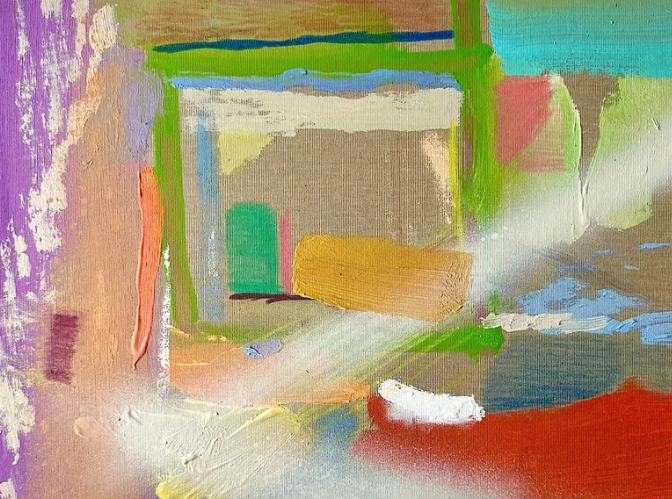
When you arrive somewhere to paint, what makes you choose one viewpoint over another?
It’s usually just intuition, but sometimes it’s practical. It can be to do with what the tide is doing, where the sun is setting or how many dogs are on the beach. Dogs don’t always understand that paintings are precious!
But it’s mainly about how I am feeling. If I’m feeling brave, I might want to feed off the energy of the waves by being closer to them, or if I’m feeling philosophical, I might head up a cliff to paint the perspective my mind needs.
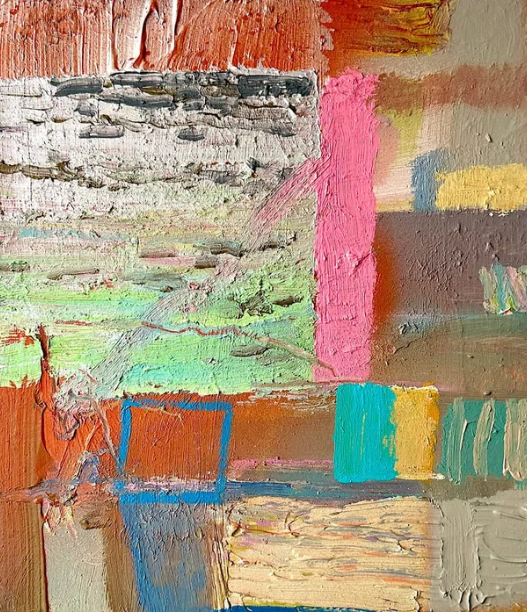
Is there a stretch of the Cornish coast that continues to challenge or surprise you?
To be honest, St Ives.
I have been painting locally to where I live a bit further up the coast in recent years, so I haven’t painted around the Island and Porthmeor for a while.
On occasion, I do feel the famous St Ives light, but I’m continually intrigued to see how differently it potentially affects my work as opposed to other often incredibly light-filled parts of Cornwall…
But the places I’m always itching to get back to are all the beaches surrounding Trevose Head.
I see colour everywhere, so it can be justified somehow if you choose to think about it. We are constantly picking it up from things around us in our environment and our daily lives.
Saul
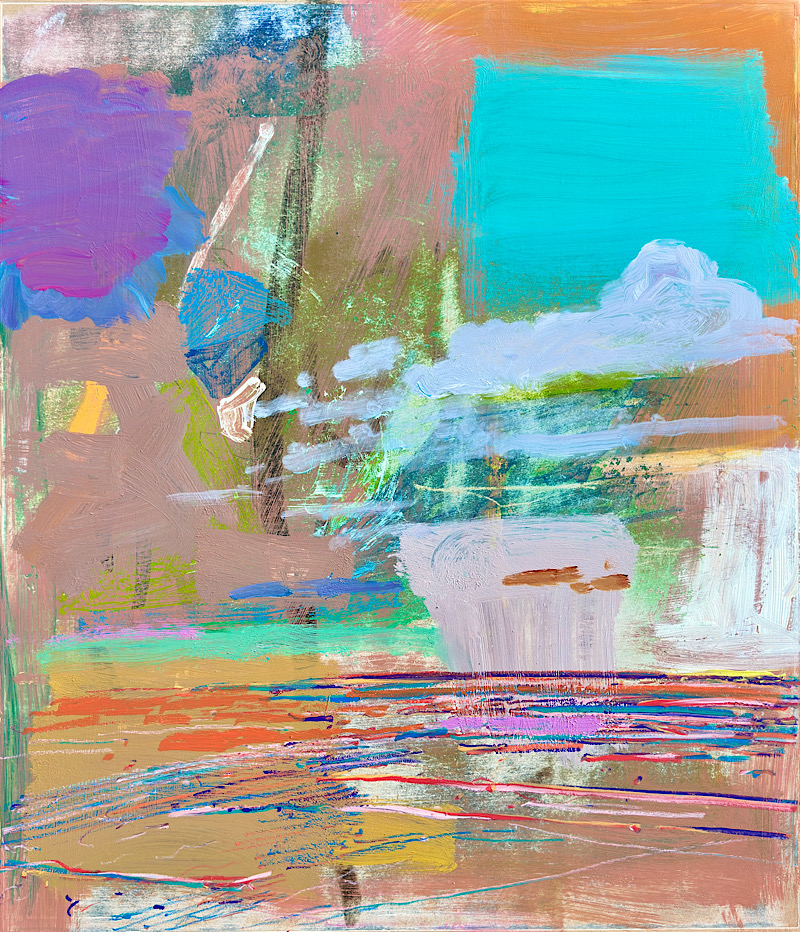
Colour in your work isn’t always taken directly from what is in front of you. Where do those unexpected colours come from?
They come from me. They are what I want to see. They are what my heart desires. I don’t want my brain kicking in and disallowing me to use them for lack of reason, thus potentially stifling something great and the very act of creation itself.
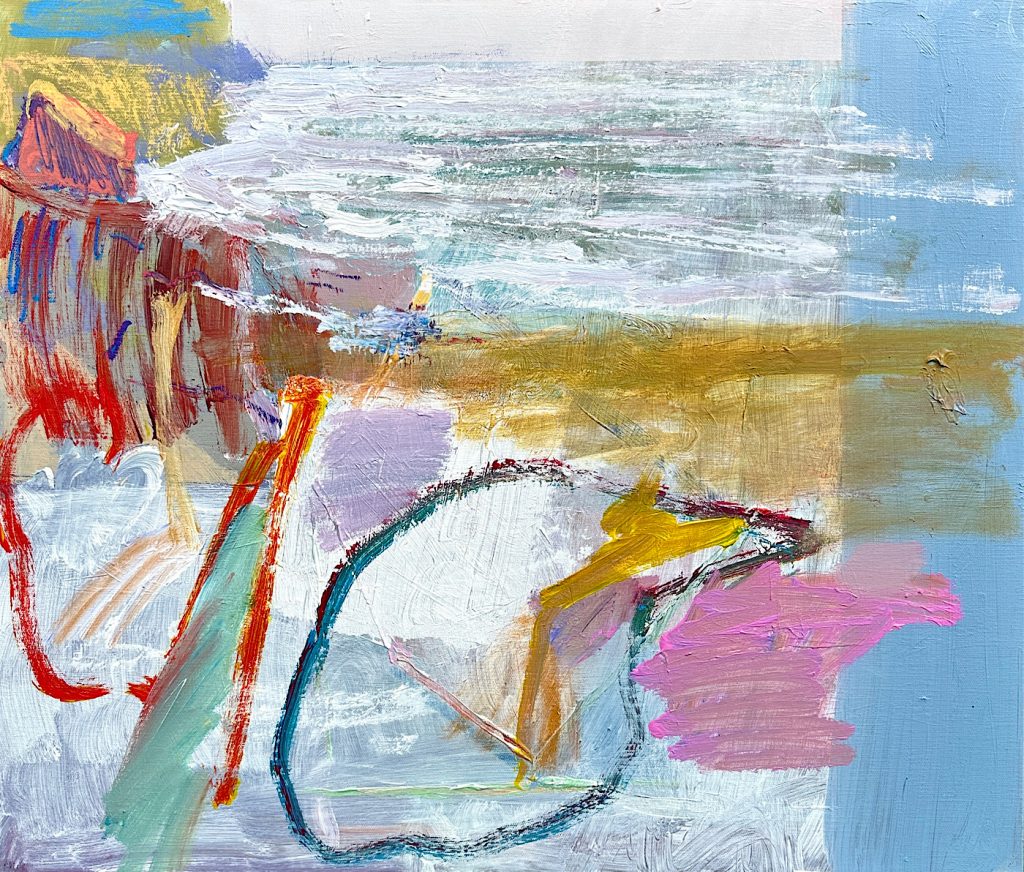
I see colour everywhere, so it can be justified somehow if you choose to think about it. We are constantly picking it up from things around us in our environment and our daily lives. I live and work in Cornwall, so the colours are my response to how I personally experience it.
Sometimes they can also literally be from what’s behind me, out of the frame of the picture. Countless times, I’ve stood up from creating something and packed everything up to see vivid greens and bright oranges from lichen or someone’s surfboard!
You can only find your true, unique self/style through practice and experimentation.
You can’t force it.Saul
There’s often a moment when continuing could transform a painting or negatively impact what is already working. How do you decide whether to take that risk?
The desire to find something new.
This urge to get the ultimate sense of satisfaction is the lure. Sometimes it’s worth risking it because the feeling of holding back is not a nice one.
It’s usually only when I’ve painted a few recent pieces that I think are good that I have the confidence to do so, though. I equally hate the feeling of knowing you had something good and have lost it forever.
But that’s the game, isn’t it? That’s the skill. That’s the real thing you learn, and you learn it only through your mistakes.
You encourage students to work on several paintings at once. How do you find that this helps in your practice?
It helps you be freer. You can push some pieces more than others and leave something you might be unsure about or that is telling you to stop. You can experiment and get a better feel for what direction individual paintings want to go by taking the pressure off and not feeling like one painting has to have it all.
Your course is called Finding Your Landscape. What helps someone move from painting the view in front of them to creating a landscape that feels personal to them?
By not getting too transfixed with what they can and can’t do. You have to let go of what you want the outcome to be and focus on the task at hand – the work.
You can only find your true, unique self/style through practice and experimentation. You can’t force it.
But it’s actually very simple because it comes out naturally through the process of layering, learning and editing. You then start to understand what it is you actually like through discovering what you don’t. Sometimes we can trick ourselves into thinking we know what we want and find that it’s actually something completely different, or even something we had all along.
Quickfire with Saul
What is always on your studio playlist? Or do you prefer quiet?
I actually prefer quiet. I used to listen to stuff, but the importance of making the work demanded more of my focus.
If I were to listen to something while creating, it would probably be some ’90s favourites like Pearl Jam or Dave Matthews Band.
I do have a guitar in my studio and often play my own stuff if I’m procrastinating! Probably a bit too much.
If I’m doing practical stuff like framing or priming canvas, I’ll put on Radio 4.
What is the best piece of advice you have received during your career?
I really don’t know! I feel like I’ve pretty much had to find everything out myself. My degree was very much focused on that, which was good in a way because it taught me to be self-sufficient.
But I was once gifted a weekend printing workshop with the Devon-based artist Michael Honner, and something he said really stuck with me. It was about performing an action in art; he told us to “Think, pause, commit.”
This beautifully sums up my own approach to creating. It’s not just blind intuition; there is so much contemplation involved, yet you will never progress if you don’t trust yourself and make decisions. This quick reminder really helps me if I’m stuck.
Which artist, past or present, would you most like to share a studio with for a day?
I think Damien Hirst. I love how confident he is. He believes in what he is doing and doesn’t care what anyone else thinks.
Saul Cathcart teaches Finding Your Landscape from 17 – 19 May and 18 – 20 Oct .
Browse all of our Art Courses in Cornwall here.
30/10/2026
Share on
Related Stories
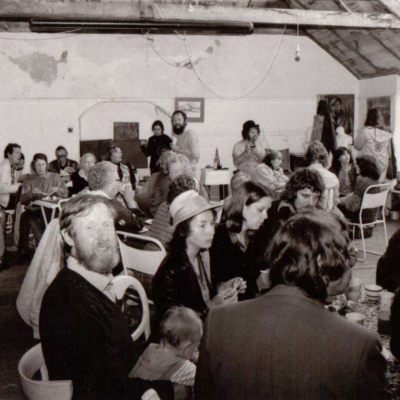
The Roy Ray Legacy Fund
Roy Ray attended St Ives School of Painting as a student in the 1960s and was fundamental in its success from the late 1970s to early 2000s. As Principal, he was instrumental in bringing more accessible contemporary art courses and welcomed even more visitors to the St Ives art community. About Roy Ray and St...
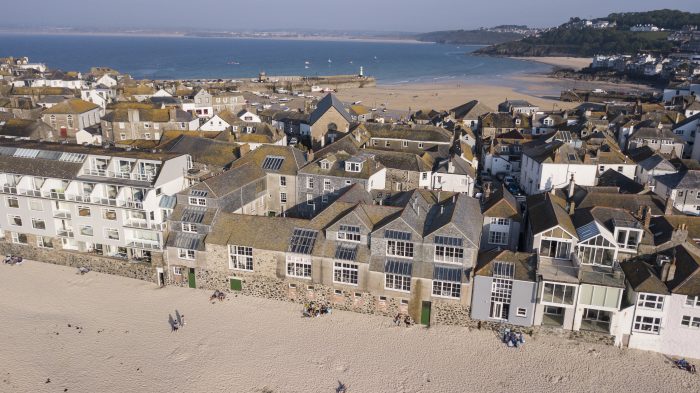
The Turning Point: How St Ives School of Painting Survived + Evolved
Through our new short film, The Turning Point, we explore a pivotal period in the School’s history: from its founding in 1938 to its decline, renewal and continuing purpose today.
How to Get Back Into Making Art
January doesn’t need to be about becoming a new creative. For many, this time of year is quieter, slower, and a little disorienting. You might feel creatively flat after the Christmas break – or you might be standing at the beginning, unsure where to start. This guide isn’t about fixing yourself or setting ambitious resolutions....