In Conversation: Alison Orchard
Alison Orchard first came to St Ives School of Painting at 14, when she and her mum spent a week painting on the cliffs, sketching the cobbled streets and trying life drawing. Now, returning as a tutor and exhibiting next door at the Penwith Gallery, she describes it as “completing the circle”.
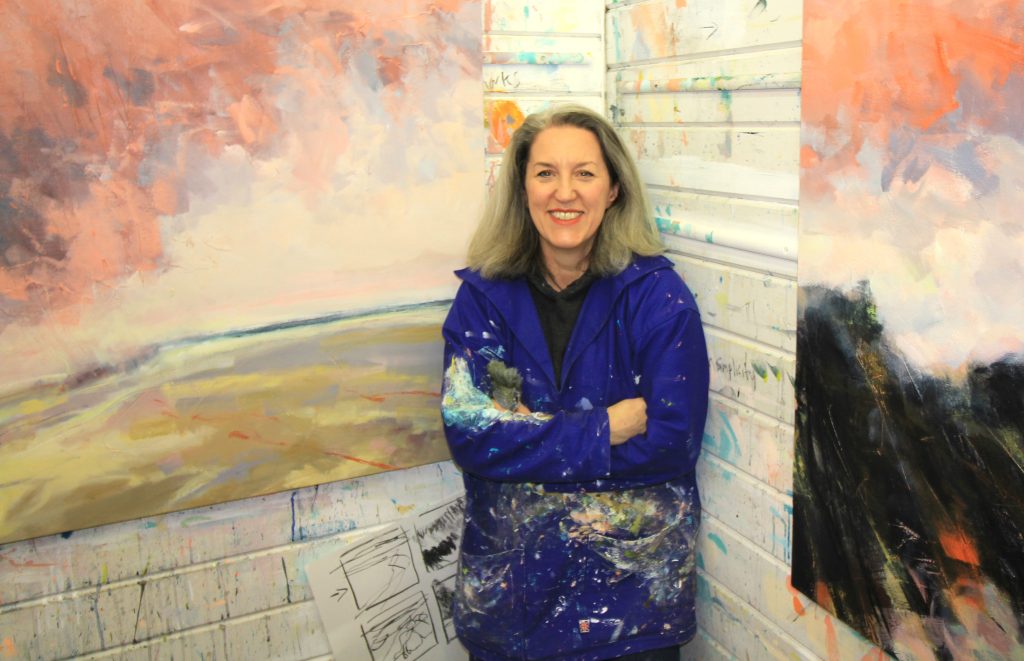
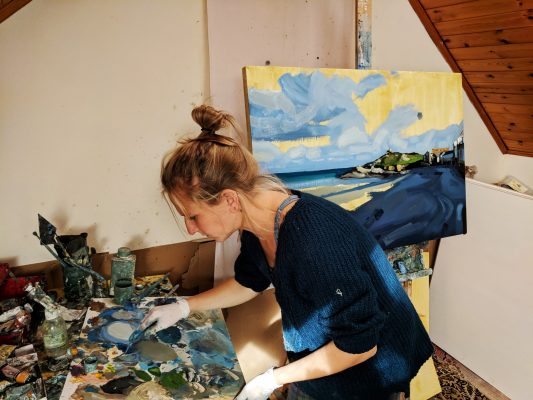
After studying sculpture, painting and illustration, Alison built a career as a commercial illustrator and designer before turning her focus fully to fine art. Her paintings draw on years spent observing the Cornish coast and the landscape around her Hampshire studio, often combining drawing with layers of paint, collage and other materials.
In this Q&A, Alison looks back on her early memories of St Ives, talks about the places and experiences that shape her work, and shares how sketching and a more open approach to abstraction can help us see the landscape differently.
In 2027, Alison will bring her tuition to St Ives School of Painting for the first time, through her course, Layered Landscapes: From Sketch to Studio.
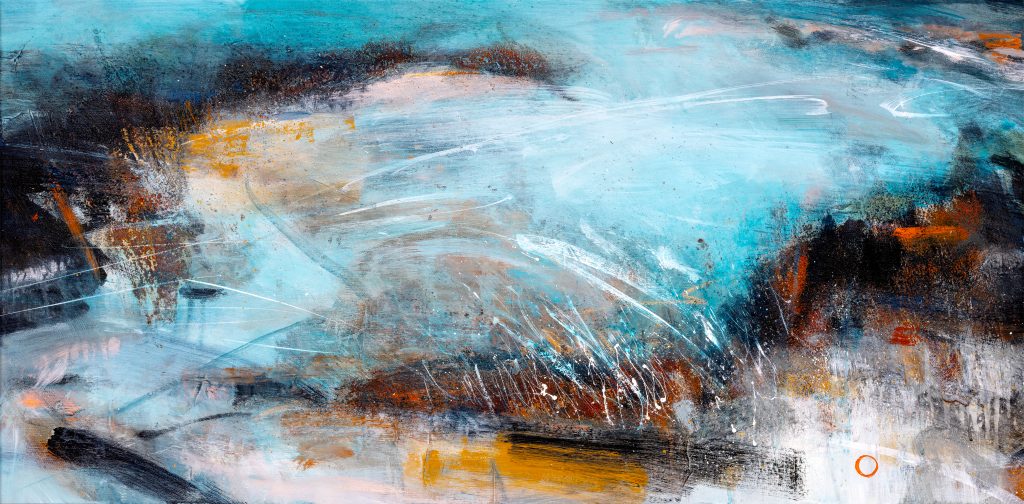
You first came to St Ives School of Painting as a teenager. What do you remember about that experience, and how does it feel to be returning now as a tutor?
It feels incredible to be welcomed as a tutor, alongside exhibiting at the Penwith gallery next door. I feel that I have completed the circle. Of course the School feels quite luxurious now, compared to the slightly scruffy and leaking building it was, but always so full of character. I love that it has been sympathetically restored and you can still feel the history embedded in those walls!
I first visited when I was around 14 years old. My mum had booked us onto a week long course at St Ives School of Painting – a treat for us both. It was my first experience of life in an artist community, my first time painting on the cliffs, sketching the cobbled streets and life drawing. The tutors were so encouraging and made me feel that I might have a glimpse of talent worth pursuing.
I remember the life drawing evenings where the studio would be packed like sardines with local artists, visitors and the very tall Harbour Master, either seated on wooden donkey’s at the front or easels at the back. The intensity of concentration as we made our charcoal drawings and then spilling out and down to the Artist’s bar at the Sloop where we could try and join in all the art conversations. It was a perfect introduction to a very different expressive artist life and I loved it.
I remember meeting Brian Pearce in his studio and John Emanuel – the wind rattling through the windows in his chaotic studio at Porthmeor.
Alison Orchard
We stayed with the artist Roy Ray, whose wife Beryl ran the B&B at their home. I remember being shocked that they didn’t have a television but evenings were filled with laughter, crazy party games, impromptu guitar and singing. Roy’s paintings were on the wall and I was inspired by some layered collages which I later used as inspiration for my art degree.
I remember meeting Brian Pearce in his studio and John Emanuel – the wind rattling through the windows in his chaotic studio at Porthmeor. I recall the energy I felt sitting on the cliffs behind the art school, painting, with the force of the wind and the salty air, looking down at the crashing waves. It was quite a dramatic landscape to be surrounded by. I loved popping next door to see the work on display at The Penwith Gallery; paintings by artists at the top of their game: The Terry Frost’s, Peter Lanyon’s, Barbara Hepworth’s sculptures. I never dared imagine I would have any of my own paintings on the walls.
You trained in sculpture and painting before working as a commercial illustrator and designer. What has each of those disciplines contributed to the artist you are today?
I was fortunate to have an excellent art teacher, who was a sculptor and painter. He always had a sketchbook on the go and instilled in me the importance and pleasure of capturing a moment on paper. Drawing is still an integral part of my teaching and my practice. Working with sculpture has taught me to draw in a more fluid abstract way, seeing around the subject in all dimensions. I also embrace painting in a multi-dimensional way, stacking marks, adding collage or stitched elements, collecting found objects for inspiration.
When I graduated, I worked as an Illustrator at the Daily Telegraph. I learnt about copy deadlines, taking shortcuts when needed and about letting go. When a page was dropped and your illustration was cut from the paper you didn’t have time to get to precious about it. I spent many years working on commercial projects and came to realise that I wanted to create art with meaning, that was valued. The experience has helped me navigate galleries and commission projects and stay true to my core values.
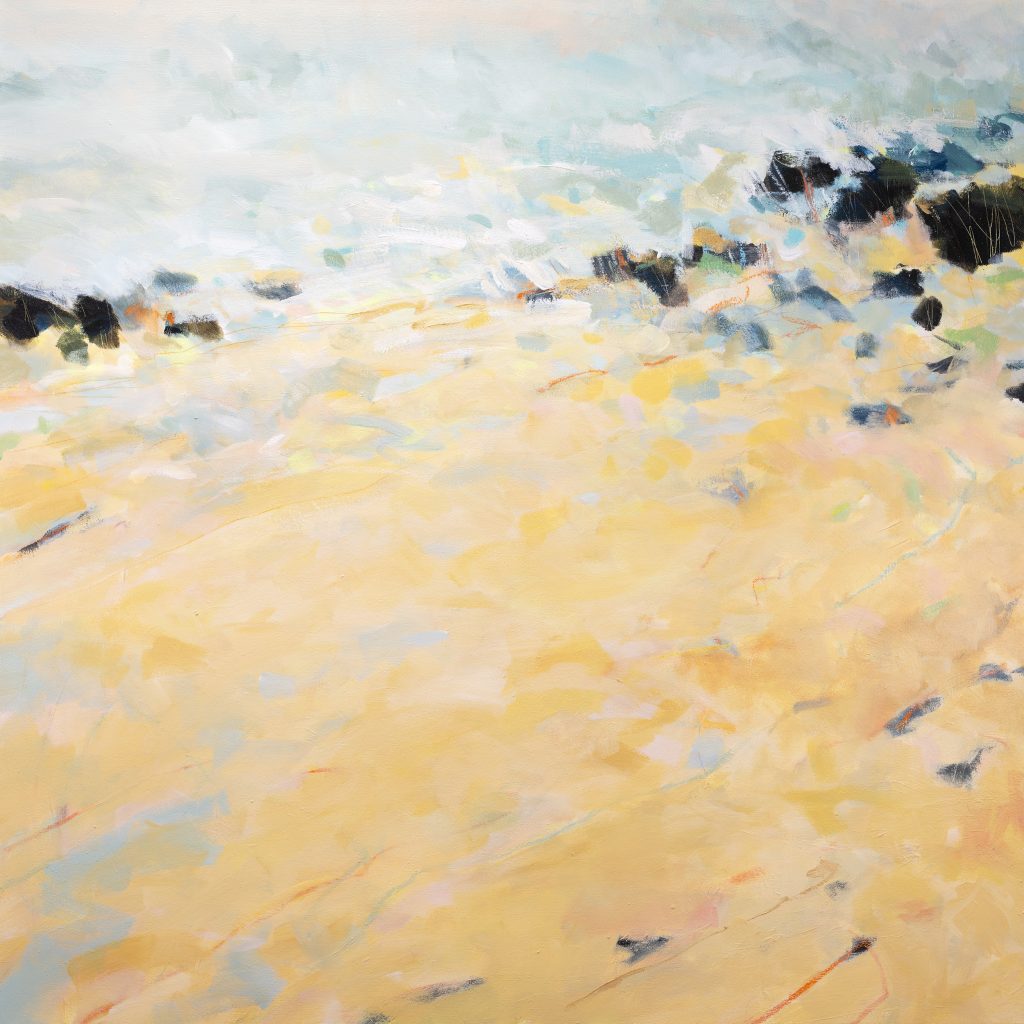
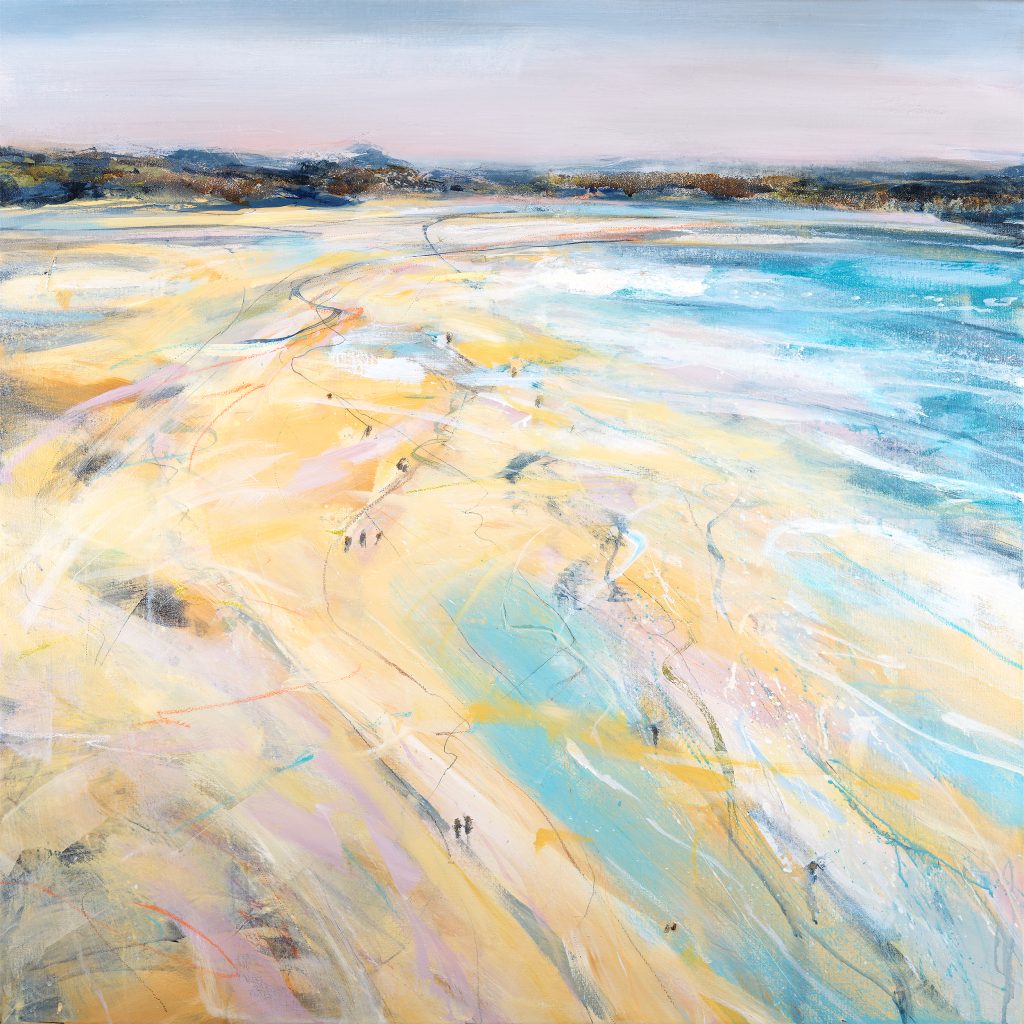
I like the transient nature of the coast, erosion of rocks, marks left on the sand, changing tides.
Alison
Your work is shaped by both the Cornish coast and the landscape around your Hampshire studio. What does each location bring out in your painting?
Something has always drawn me to the sea; it is where I feel most alive and free. I try to capture that feeling of immense possibilities, vast horizons, the sounds of the waves and being connected to something bigger than you are. I like the transient nature of the coast, erosion of rocks, marks left on the sand, changing tides; this encourages me to layer marks in my painting, covering things up and scraping paint back to reveal what’s underneath.
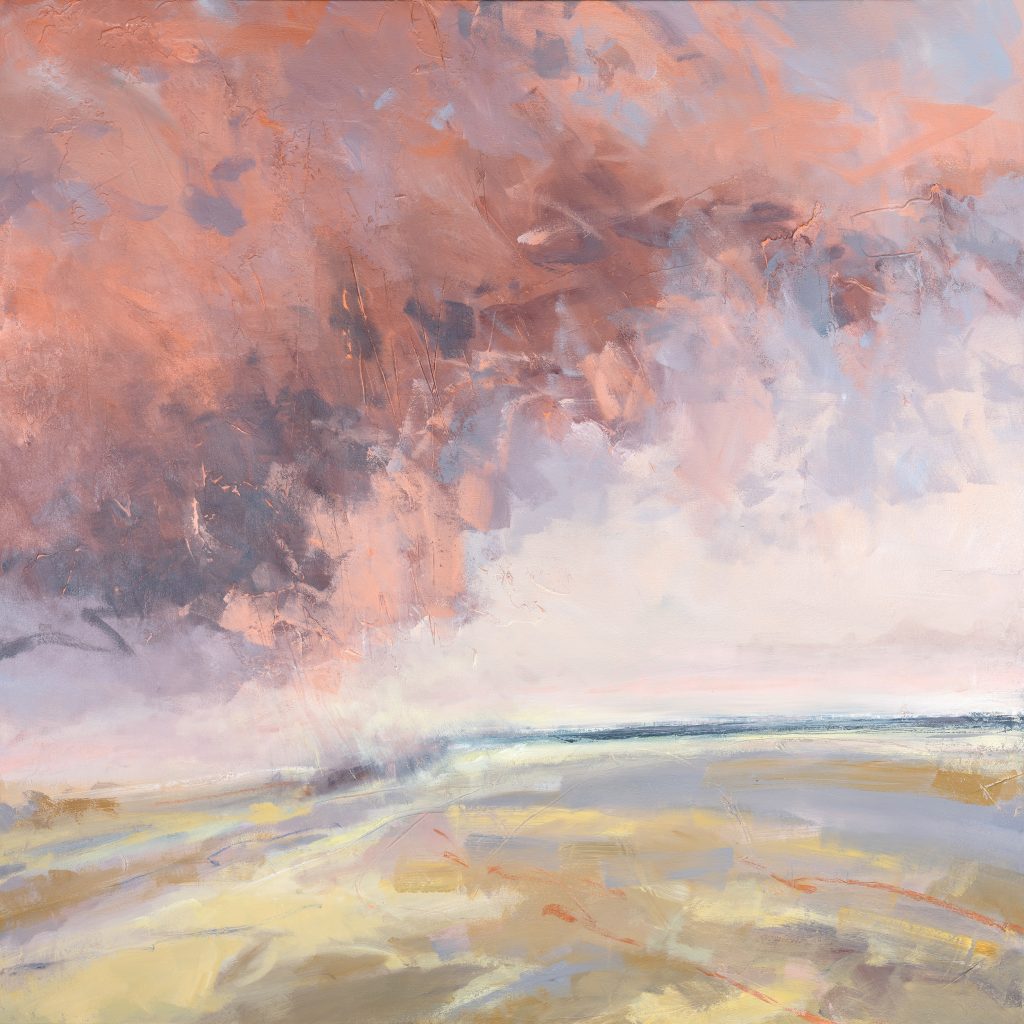
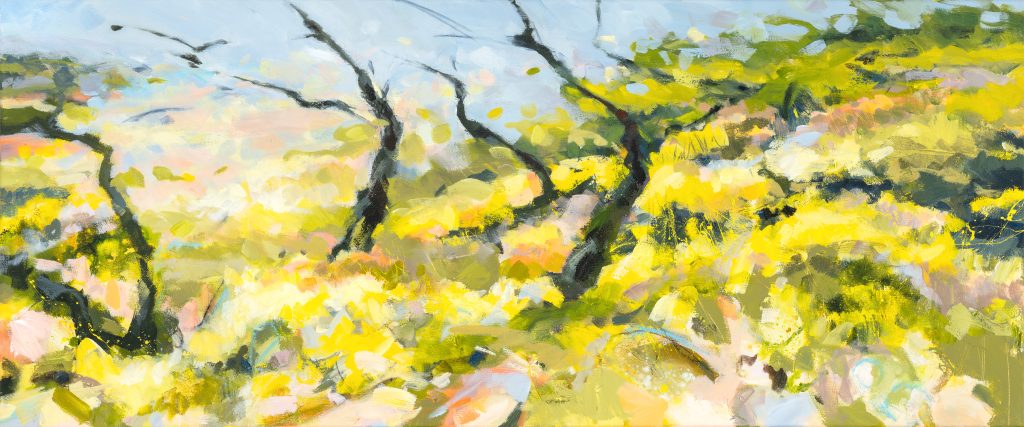
At home I am surrounded by woodlands and heathland. Here I embrace the changing colours of the seasons, the textures and protective comfort of the trees. I am also slightly obsessed by painting the big skies around the Devil’s Punchbowl near my studio.
It’s not too hard to paint an acceptable painting, but it takes a leap of faith sometimes, often making that bold move, to turn it into something with a bit of magic.
Alison Orchard
You’ve spoken about wanting your paintings to make people pause. What do you think gives a painting that ability to stop someone in their tracks?
Wow, if I could bottle that I would be worth a fortune! It is the artist’s eternal quest. It emerges when an artist is painting in an honest way that is authentic and raw, that doesn’t apologise and embraces the process and qualities of the materials. It’s something that catches your eye and draws you to look further and then gives you more.
It might be in the intensity or subtlety of the colour or an unexpected thickly applied daub of paint. It’s not too hard to paint an acceptable painting, but it takes a leap of faith sometimes, often making that bold move, to turn it into something with a bit of magic.
When you sketch outdoors, what are you looking to bring back to the studio?
I sketch for many reasons, as a kind of meditation, as observation practice, to pass the time on trains or to create a visual diary. When I am sketching for my painting practice I like to look and then make marks, tones, lines to capture how I feel about a place. It doesn’t need to be a beautiful drawing but it does need to transport me back to how it felt at the time.
What makes a useful sketch for you – does it need to resemble the landscape?
I have created large paintings on the back of a few drawn lines from a tiny sketchbook – they say so much more than a photograph because I have sat and looked properly.
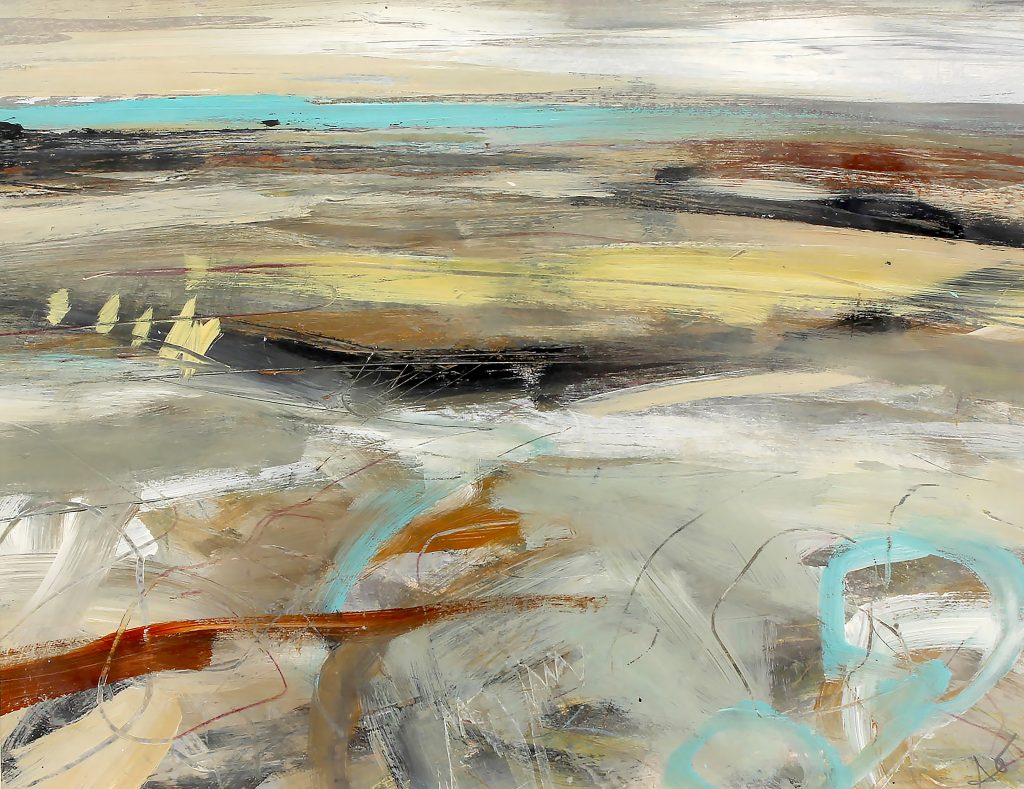
For someone who wants to move away from a literal landscape but doesn’t know where to begin, what is a useful first step towards abstraction?
There are several easy exercises that I teach in my workshops to help you to paint in a more abstract way. Learning to simplify your studies is always helpful. Learning to look for shapes and patterns helps too.
Sketch as often as possible and look at different types of abstract art to really help you to find a connection and a better understanding. It’s often a question of being more confident and open to different possibilities.
What do you hope students will start to see differently when they return to the landscape after your course?
My students often talk about how they find they are looking at things differently after my workshops – obsessing over the shapes and textures of the landscape; trying to work out how to mix the colour of the sky. As an artist you start to look at things with wonder, like a small child. I hope that I can inspire them to sketch confidently outdoors and translate those ideas into fabulous paintings.
Quickfire with Alison Orchard
Early morning or evening light?
Evening sunsets on the beach or hill top, preferably with my plein air painting kit!
Music or silence while you work?
Jazz CD’s to get lost in the sound and remind you to pause when the album ends.
One artist, past or present, that you would like to share a studio with?
Joan Mitchell, Abstract Expressionist painter – I’d probably be too intimidated to ask her to smoke outside, but she would totally force me to paint bigger and bolder and not care what anyone thought about it.
Alison Orchard teaches Layered Landscapes: From Sketch to Studio at St Ives School of Painting from 25-27 June and 29-31 October 2027. Note that there is limited availability remaining for the June dates.
Discover more of Alison’s work here.
14/10/2026
Share on
Related Stories
Your Monthly Roundup: September
A monthly round up of the latest news, insights and events. Sign up to our newsletter to receive this update straight to your inbox!
In Conversation: Hester Berry
From the shifting light of the Devon landscape to the challenge of knowing when a painting is finished, we speak to new tutor Hester Berry about observation, artistic influence and helping students find a painting language of their own. For Hester Berry, almost any landscape can become the beginning of a painting. It does not...
Why St Ives Is The Perfect Place For A Creative Escape
Wondering where to go on holiday this year? If you are looking for a slower pace, space to disconnect and reset – St Ives could be an ideal location. St Ives has long been celebrated as one of the UK’s most inspiring coastal towns. With its unique light, artistic heritage, and slower pace of life,...