Alfred Wallis: 100 Years On
This August marked 100 years since Alfred Wallis first picked up a paintbrush – beginning a remarkable, self-taught artistic career that continues to resonate across the art world. Read more about his incredible life and career, and discover how his paintings are still being appreciated today.
Born on 8 August 1855 in Devonport, Plymouth, Alfred Wallis spent his early life in extreme poverty. The only surviving son among his siblings, he later followed his family back to Penzance after his mother’s death in 1866.
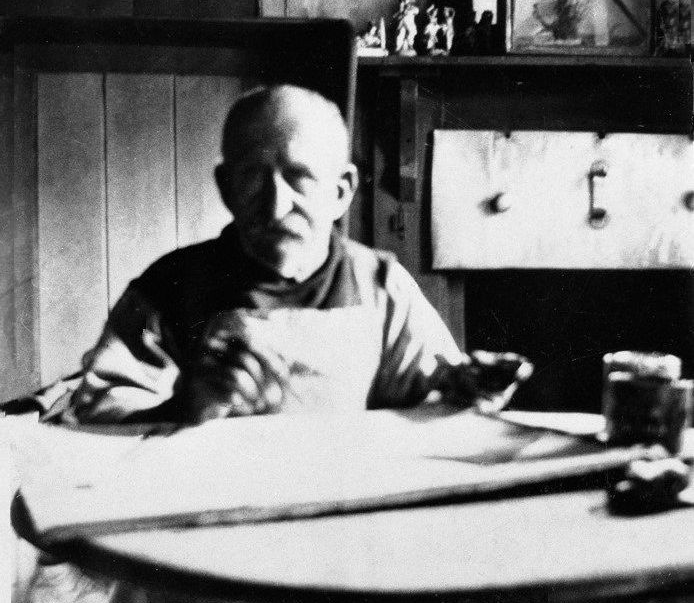
His formative years were shaped by the sea. Apprenticed to a basket maker by age 15, Wallis then crewed on local fishing luggers before embarking on voyages to Newfoundland as a merchant sailor in his early 20s. A storm aboard the Belle Aventure in 1876 marked the end of his seafaring days and pushed him toward a more stable, albeit humble, life – working in marine stores in St Ives, where he and his wife Susan retired in 1911.
After Susan died in 1922, Wallis faced solitude in the Downlong area of St Ives, living in a cottage just a few doors down from Porthmeor Studios, supported by community jobs and Salvation Army services. (Sources: Wikipedia & AlfredWallis.co.uk)
Wallis turned 70 in August 1925, qualifying for the Old Age Pension. The stability allowed him to finally adopt painting as more than a pastime. With brushes from a paper-hanger’s shop, household paint, and cardboard scraps from a grocer, he launched what would become an impressive second life as an artist.
His first works were shown to a few friends; one told how Mr Armour admired them, encouraging him: “You done a mighty fine job by en.” From that moment, Wallis “wen on painten” for the next seventeen years. (Source: AlfredWallis.co.uk)
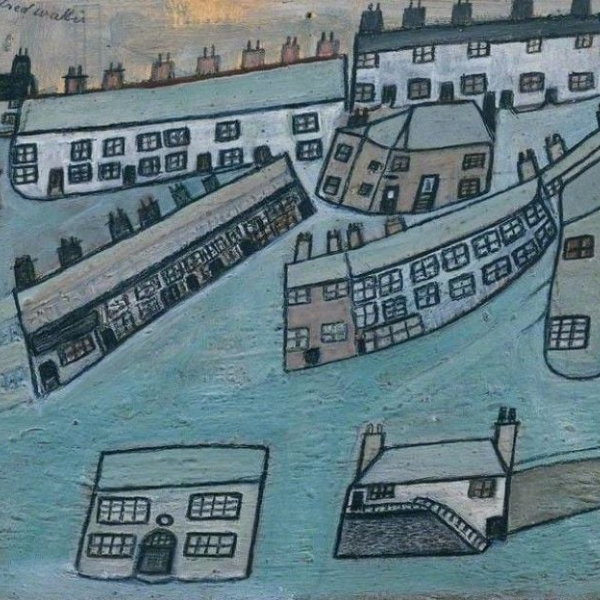
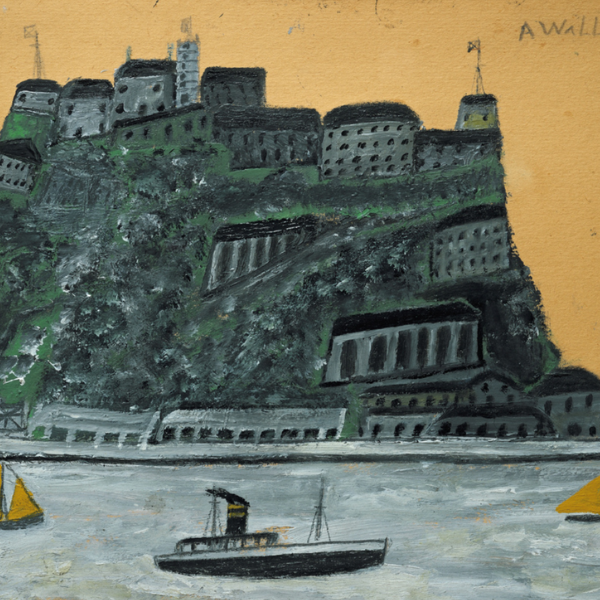
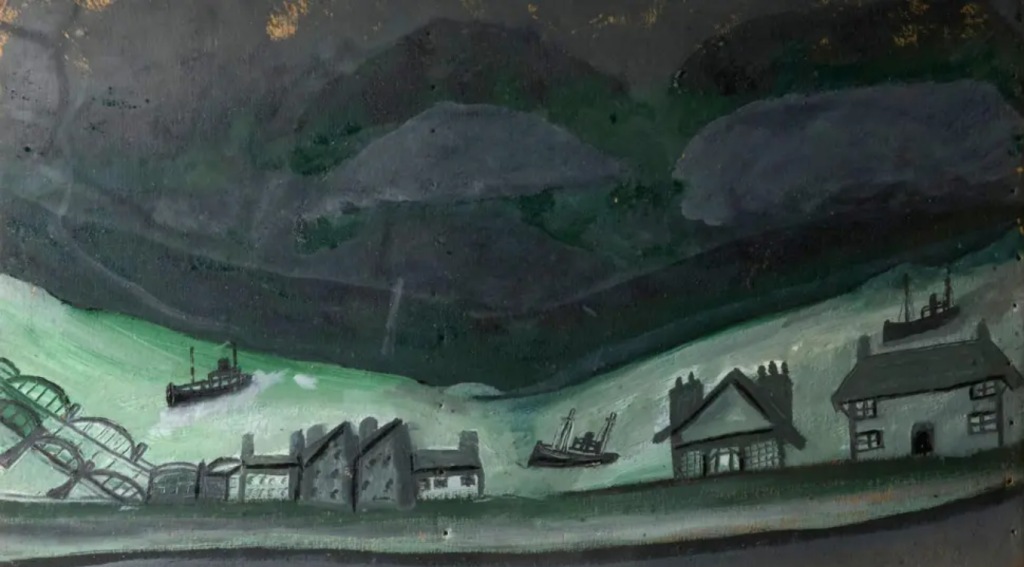
Wallis painted entirely from memory, both preserving a maritime era and capturing a personal narrative. His style was naïve but potent, scale was determined by emotional significance rather than perspective, often resulting in works that resemble early cartographic visions. Subjects ranged from luggers and schooners to coastal landmarks, memories of his maritime experiences.
“Something that has grown out of the Cornish seas and earth and which will endure”.
Ben Nicholson when describing Wallis’ work
In August 1928, young artists, Ben Nicholson and Christopher Wood, discovered Wallis in St Ives. Captivated by his raw vision, they quickly championed his work, introducing him to progressive art circles. Nicholson later described Wallis’s work as “something that has grown out of the Cornish seas and earth and which will endure”.
Jim Ede, another champion of modern British art, went on to collect dozens of Wallis’s paintings, later housing them at Kettle’s Yard in Cambridge.
Recognition & Legacy
Despite admiration from major artists and critics, Wallis remained in poverty. In 1941, destitute and ill, he was admitted to Madron Workhouse, where he continued to paint until his death on 29 August 1942.
His funeral took place at Barnoon Cemetery, a short walk from St Ives School of Painting and Downlong where Wallis spent a lot of his life. His grave remained unmarked until the noted potter Bernard Leach created a tile memorial, depicting an old man beneath a lighthouse, intended to honour the humble spirit of Wallis’s life and work.
Today, Wallis’s work is celebrated in collections like Tate St Ives and remains in Kettle’s Yard. More recently, an unearthed Alfred Wallis painting of Forth Rail Bridge in Scotland which has been in a private collection for nearly 90 years, went under the hammer at London auction house Rosebery’s, where it sold for £20,000.
11/9/2025
Share on
Related Stories
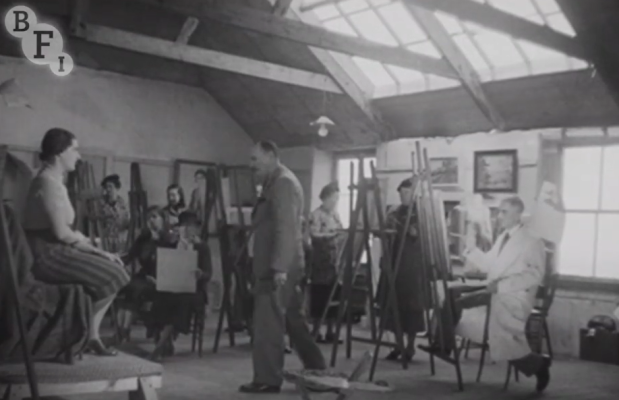
A Glimpse Inside St Ives School of Painting in 1948
Historic footage of our founder Leonard Fuller offers a rare window into the early years of St Ives School of Painting – and reveals how much of its creative spirit remains familiar today. Another World, a short film preserved by the BFI National Archive, takes viewers through the streets, harbour and artistic community of post-war...
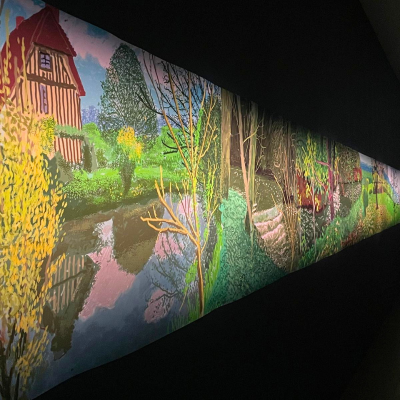
Remembering David Hockney: A Life of Looking
Following the passing of David Hockney, and as we approach what would have been his 89th birthday, we are taking a moment to reflect on the extraordinary legacy of one of Britain’s most influential artists. Born in Bradford in 1937, Hockney’s career spanned more than seven decades, moving through drawing, painting, printmaking, photography, stage design...
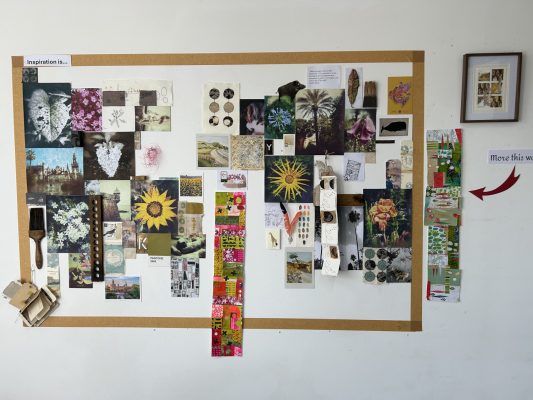
In Conversation: Lesley Plumridge
We’re pleased to welcome artist Lesley Plumridge to our team of artist tutors for 2026. Based at the creative hub of Krowji in Redruth, Lesley is a mixed media designer and maker whose work thrives on experimentation, curiosity, and play. A graduate of Falmouth University (BA First Class Honours in Textile Design, 2005), her practice...